

Bible Stories app
Stories of the Bible, told out loud
Narrated Bible stories, book guides and hard questions answered. Listen offline, anywhere.


Category
Bible Chapters Explained
 37 min
Bible Chapters Explained
Daniel Saw the End of the World Thousands of Years Ago. Here Is What He Wrote
An old man stands on the bank of the Tigris River. He was taken from his home as a boy, forced to serve kings who did not know his God, and has outlived more than one empire. Then a figure clothed in linen appears, with a face like lightning and eyes like burning fire, and shows Daniel the end of the world. Many people assume the Bible's words about the end must be a book of terror, or a code for clever people to crack. But Daniel did not write to frighten anyone. He wrote for people who feel small and afraid in a world that seems out of control, people who watch good things crumble and wonder if God has forgotten them. In this episode, we follow Daniel through his visions in the order he came to understand them. We look at the great statue of gold, silver, bronze, iron, and clay, and the stone cut without hands that becomes a mountain filling the earth. We see four beasts rise from a stormy sea, a heavenly courtroom where the books are opened, and one like the Son of Man coming with the clouds of heaven to receive an everlasting kingdom. We trace the ram and the goat, the Anointed One who would be cut off, the measured season of trouble, and the promise of resurrection at the very end of the book. Daniel was never given a date he could circle. What he was given, over and over, was a verdict, and it falls on the side of God and His people. He was not finally pointing at a date. He was pointing at a Person. Bible verses included in this episode: “In the days of these kings shall the God of heaven set up a kingdom, which shall never be destroyed: and the kingdom shall not be left to other people, but it shall break in pieces and consume all these kingdoms, and it shall stand for ever.” (Daniel 2:44) “I saw in the night visions, and, behold, one like the Son of man came with the clouds of heaven, and came to the Ancient of days, and they brought him near before him.” (Daniel 7:13) “To finish the transgression, and to make an end of sins, and to make reconciliation for iniquity, and to bring in everlasting righteousness.” (Daniel 9:24) “And many of them that sleep in the dust of the earth shall awake, some to everlasting life, and some to shame and everlasting contempt.” (Daniel 12:2) “And they that be wise shall shine as the brightness of the firmament; and they that turn many to righteousness as the stars for ever and ever.” (Daniel 12:3) “But go thou thy way till the end be: for thou shalt rest, and stand in thy lot at the end of the days.” (Daniel 12:13) If the world around you feels like it is coming apart, or you feel old, forgotten, and far from home, Daniel's last words are for you. The kingdoms that frighten you have an expiration date, and the One who meets us at the end is the Son of Man, with kindness in His eyes and a kingdom in His hands. Go your way, one faithful day at a time. You shall rest, and you shall rise, and you shall stand in your place among His own.
 33 min
Bible Chapters Explained
Ezekiel and the Valley of Dry Bones: When God Brings Back What You Thought Was Dead
Our bones are dry. Our hope is lost. We are cut off. Those three sentences were spoken by God's own people in exile in Babylon. The temple was ash, the throne of David sat empty, and every visible evidence of God's promises had been destroyed. So they wrote the ending themselves: it is over. Heaven heard those three sentences. God's answer was to carry a prophet out in the Spirit and set him down in the middle of a valley full of bones, bones so old and so dry the sun had bleached them white. Then He made that prophet watch what He does with things everyone has agreed are finished. In this episode, we walk through Ezekiel chapter 37. We meet Ezekiel, a priest who never served a day in the temple, who lost his homeland, his calling, and his wife. We follow him as God walks him back and forth through the devastation, asks him, "Can these bones live?", and commands him to preach to the dead. We watch the bones rattle together, receive sinews, flesh, and skin, and still lie without breath, until God sends the ruach, the wind, breath, and Spirit, and they stand up an exceedingly great army. And we see how the vision reaches forward to the two sticks joined as one, to the promised shepherd from David's line, to the tomb of Lazarus, to the risen Jesus breathing on His disciples, and to the gospel itself. Salvation is not self improvement. It is resurrection. It always was. Bible verses included in this episode: “And He said to me, ‘Son of man, can these bones live?’ So I answered, ‘O Lord God, You know.’” (Ezekiel 37:3) “Thus says the Lord God to these bones: ‘Surely I will cause breath to enter into you, and you shall live.’” (Ezekiel 37:5) “And breath came into them, and they lived, and stood upon their feet, an exceedingly great army.” (Ezekiel 37:10) “I will put My Spirit in you, and you shall live, and I will place you in your own land.” (Ezekiel 37:14) “I am the resurrection and the life. He who believes in Me, though he may die, he shall live.” (John 11:25) “But God, who is rich in mercy, because of His great love with which He loved us, even when we were dead in trespasses, made us alive together with Christ.” (Ephesians 2:4-5) This message is for anyone with a valley of their own: a marriage that stopped sharing a heart, a child who walked away, a faith that has gone dry, or a calling buried long ago. God knows exactly how dead it is, He has heard your hopeless sentences, and He answers them without anger. So do not write the ending yourself. Keep the word of God moving over your valley, and ask Him for the breath. Can these bones live? He has already shown us His answer.
 37 min
Bible Chapters Explained
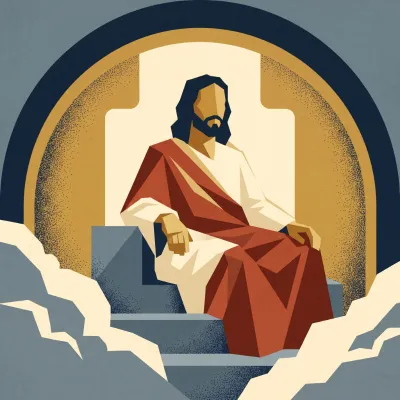
What Jesus Did the Moment He Returned to Heaven
On the slope of the Mount of Olives, a group of ordinary men once stood with their eyes fixed on the sky, watching their teacher and friend rise away from them until a cloud hid Him from their sight. Then the hill went quiet. We usually stop the story there. But there is another side to that morning, a side the men on the hill could not see. From heaven's side, it was not a goodbye. It was an arrival, a homecoming, and the beginning of the work Jesus is still doing for you right now. For many believers, the ascension is the least understood part of the whole story of Jesus. Yet what He did the moment He returned tells us whether the cross actually worked, where He is now, and what He is doing about our sin, our prayers, and our future. In this episode, we explore what Jesus did on the other side of the cloud. He returned to the glory He shared with the Father before the world began. He sat down at the right hand of the Majesty in heaven, because the work of purification for sins was finished. He entered the true sanctuary, heaven itself, to appear for us in God's presence. He was exalted to the highest place, received the kingdom Daniel saw, carried our humanity to the throne, began to intercede for His people, and poured out the promised Holy Spirit. Bible verses included in this episode: “After he said this, he was taken up before their very eyes, and a cloud hid him from their sight.” (Acts 1:9) “After he had provided purification for sins, he sat down at the right hand of the Majesty in heaven.” (Hebrews 1:3) “The Lord says to my Lord: Sit at my right hand until I make your enemies a footstool for your feet.” (Psalm 110:1) “For Christ did not enter a sanctuary made with human hands that was only a copy of the true one; he entered heaven itself, now to appear for us in God's presence.” (Hebrews 9:24) “Therefore God exalted him to the highest place and gave him the name that is above every name.” (Philippians 2:9) “He always lives to intercede for them.” (Hebrews 7:25) “Exalted to the right hand of God, he has received from the Father the promised Holy Spirit and has poured out what you now see and hear.” (Acts 2:33) This message is for anyone who believes Jesus died and rose, but on some days feels He is far away. When you are afraid, remember that He sat down. When you cannot pray, remember that He always lives to intercede for you. When you feel alone, remember that by His Spirit He is closer than your own breath. You are not standing on an empty hill under an empty sky. He has not left you. He has gone ahead of you, and He is holding you all the way home.
 29 min
Bible Chapters Explained
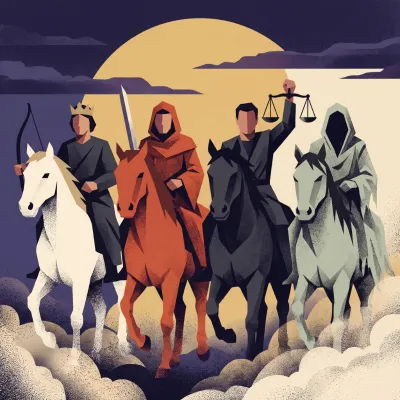
The Four Horsemen of the Apocalypse: The Book of Revelation
The book of Revelation was not written to frighten God's people. It was written to comfort them. Its first readers were ordinary believers in a hard and hostile world, afraid of what tomorrow would bring. And the vision John sends them does not begin with the horses. It begins in a throne room, with God seated at the center of everything, worshiped without pause. The word apocalypse does not mean disaster. It means an unveiling, the pulling back of a curtain so you can finally see what was there all along. Conquest, war, hunger, and death have ridden through every century. Revelation lets you see them clearly, and see the one thing you could never see with your own eyes: whose hand breaks the seals and sets the limits. In this episode, we walk through the four horsemen of Revelation chapter 6. We begin with the sealed scroll that no one was worthy to open, and the Lion of Judah who turns out to be a Lamb that was slain. We look at the living creatures who call each rider forward, the white horse of conquest, the red horse of war, the black horse of famine with its scales and its day's wage for a quart of wheat, and the pale horse named Death with Hades following behind. We trace how the prophets Jeremiah and Ezekiel spoke of the same sword, famine, plague, and wild beasts, and why the martyrs under the altar cry out, "How long?" Every rider is given, permitted, and limited. Evil in this vision is real, but it is never sovereign. Bible verses included in this episode: “Worthy is the Lamb who was slain.” (Revelation 5:12) “And I looked, and behold, a white horse! And its rider had a bow, and a crown was given to him, and he came out conquering, and to conquer.” (Revelation 6:2) “Its rider was permitted to take peace from the earth, so that people should slay one another, and he was given a great sword.” (Revelation 6:4) “A quart of wheat for a denarius, and three quarts of barley for a denarius, and do not harm the oil and wine!” (Revelation 6:6) “And its rider's name was Death, and Hades followed him. And they were given authority over a fourth of the earth, to kill with sword and with famine and with pestilence and by wild beasts of the earth.” (Revelation 6:8) This message is for anyone who watches the news and feels that everything is coming apart, or who feels the pale rider waiting at the end of the hall. The Bible does not tell you the riders are not real. It tells you they are not in charge. The riders are real, but they are held. The seals are broken, but only by wounded and loving hands. They answer to a Lamb, and the Lamb is for you.
 36 min
Bible Chapters Explained
The 40 Days Jesus Was Tempted in the Wilderness, and How He Won
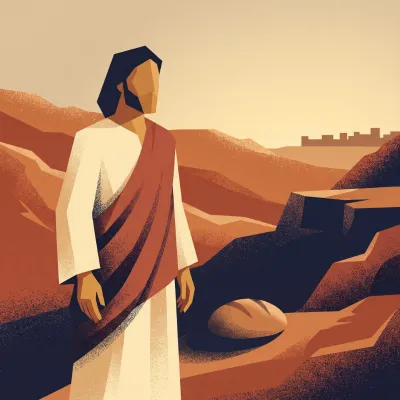
Before there was a battle, there was a voice. Jesus stood in the Jordan River, heaven opened, and the Father declared His love out loud. If you were writing the story, the next chapter would be triumph. Instead, the very next verse says the Spirit led Him into the wilderness to be tempted by the devil. We tend to believe that if God loves us, He will keep us out of the wilderness. The Bible shows us something different. Sometimes the wilderness is not the place where God's love ran out. Sometimes it is exactly where His love is leading. In this episode, we walk into the desert with Jesus and watch closely. We explore why forty is the number of testing, from Noah to Moses to Elijah, and how Jesus stepped into Israel's own story to stand where God's people had stumbled. We look at the three temptations, stones into bread, the leap from the temple, and the kingdoms of the world, and how each one attacked His identity, tempted Him to test God, and offered a crown without the cross. Every answer Jesus gave came from Deuteronomy, the very book Moses preached to the generation that failed. Jesus did not win by reaching for a power we do not have. He won with four weapons within reach of every believer: a heart full of Scripture, an identity resting in the Father's love, the power of the Spirit, and a settled refusal to take the shortcut. Bible verses included in this episode: “This is my Son, whom I love; with him I am well pleased.” (Matthew 3:17) “Then Jesus was led by the Spirit into the wilderness to be tempted by the devil.” (Matthew 4:1) “It is written: ‘Man shall not live on bread alone, but on every word that comes from the mouth of God.’” (Matthew 4:4) “It is also written: ‘Do not put the Lord your God to the test.’” (Matthew 4:7) “Away from me, Satan! For it is written: ‘Worship the Lord your God, and serve him only.’” (Matthew 4:10) “Because he himself suffered when he was tempted, he is able to help those who are being tempted.” (Hebrews 2:18) “And God is faithful; he will not let you be tempted beyond what you can bear. But when you are tempted, he will also provide a way out so that you can endure it.” (1 Corinthians 10:13) This message is for anyone in a wilderness right now, whether it is a hospital room, an empty house, a body growing older, or a faith that feels dry. Being led into a wilderness is not evidence that God has abandoned you, and you are not fighting anything your Lord has not felt in His own body. If your life feels like day forty, hold on. Angels came in the morning. The Father's supply was never late. And the Son who won in the desert is not finished with you.
 33 min
Bible Chapters Explained
Isaiah Saw the Throne Room of God, and It Changed Him Forever
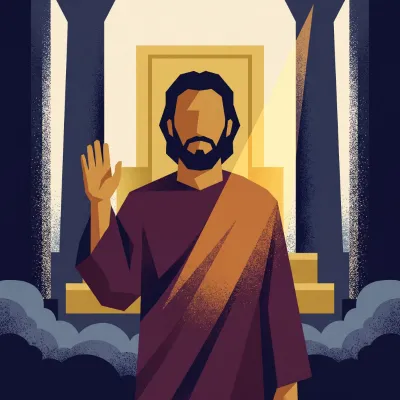
The most famous vision of God in the entire Old Testament is dated by a funeral. King Uzziah had ruled Judah for about fifty two years, and he died a leper, shut out of the temple of the Lord. Assyria was rising on the horizon. If you had asked anyone in Jerusalem what they saw that year, they would have said an empty throne. Isaiah looked at the same year and saw the throne that has never been empty for one second in all of eternity. What he saw rebuilt him from the inside out, and it answers the question that lives quietly in almost every believer's heart: what is God really like? In this episode, we walk through Isaiah chapter 6. We look at the Lord seated high and lifted up, the train of His robe filling the temple, and the seraphim, the burning ones, covering their faces as they cry holy, holy, holy. We hear Isaiah's cry, "Woe is me, for I am undone," and see why the conviction landed on his lips. We watch a live coal carried from the altar to cleanse him, contrast his humility with Uzziah's pride, and hear God ask, "Whom shall I send?" We also face the hard assignment Isaiah was given, the holy seed in the stump, and John's revelation of whose glory Isaiah actually saw. The terrifying holiness and the tender mercy of God are not two Gods, or two moods of God. They are one Person. Bible verses included in this episode: “In the year that King Uzziah died, I saw the Lord sitting on a throne, high and lifted up, and the train of His robe filled the temple.” (Isaiah 6:1) “Holy, holy, holy is the Lord of hosts; the whole earth is full of His glory!” (Isaiah 6:3) “Woe is me, for I am undone! Because I am a man of unclean lips, and I dwell in the midst of a people of unclean lips; for my eyes have seen the King, the Lord of hosts.” (Isaiah 6:5) “Behold, this has touched your lips; your iniquity is taken away, and your sin purged.” (Isaiah 6:7) “Also I heard the voice of the Lord, saying: ‘Whom shall I send, and who will go for Us?’ Then I said, ‘Here am I! Send me.’” (Isaiah 6:8) “These things Isaiah said when he saw His glory and spoke of Him.” (John 12:41) “There shall come forth a Rod from the stem of Jesse, and a Branch shall grow out of his roots.” (Isaiah 11:1) Everyone has an Uzziah, some pillar that makes the world feel steady, and for every one of us the year comes when it falls. If you are in that year right now, this vision was preserved for you. The King you cannot see is still seated, and His mercy still moves toward the broken before they can move toward Him. Whatever this year has taken from you, the throne room of God has lost nothing. He still reigns, still cleanses, and still calls. Here am I. Send me.
 32 min
Bible Chapters Explained
The Book of Daniel: The Prophecy That Gave the Exact Year of the Messiah
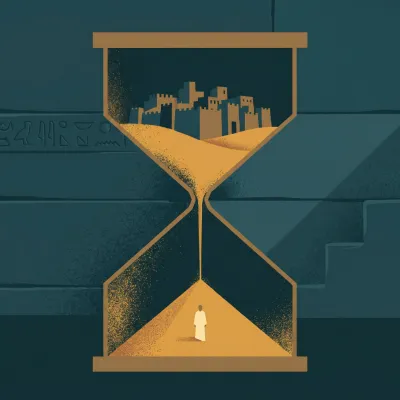
There is a prophecy in the ninth chapter of Daniel that measured out the years until the Messiah would come. It is not a poem or a symbol. It is a count. A command goes out to rebuild a ruined city, a set number of years is marked off, and at the end of those years the Anointed One arrives. Follow the count, and it lands in the very generation when Jesus of Nazareth walked the roads of Judea. But God did not hand this timeline to an old man in exile so we could be impressed by arithmetic. He gave it inside an answer to a prayer about sin. And the first thing the prophecy promises is not a date on a calendar. It is an end to guilt. In this episode, we explore Daniel chapter 9. We find Daniel, old and far from home, reading the scroll of Jeremiah and falling to his knees to confess, "We have sinned," on behalf of his whole people. We watch Gabriel arrive while he is still praying, calling him greatly beloved. We look at the six purposes of the seventy sevens, all circling the ending of sin, then walk through the count of four hundred and eighty three years from the command to rebuild Jerusalem, and why every careful reckoning lands in the early decades of the first century. And we hear the words that turn a tragedy into the gospel: the Anointed One would be cut off, but not for himself. The prophecy told the world when. The cross told the world how. And the empty tomb told the world it was finished. Bible verses included in this episode: “We have sinned, and have committed iniquity, and have done wickedly, and have rebelled.” (Daniel 9:5) “Seventy weeks are decreed about your people and your holy city, to finish the transgression, to put an end to sin, and to atone for iniquity, to bring in everlasting righteousness, to seal both vision and prophet, and to anoint a most holy place.” (Daniel 9:24) “The going out of the word to restore and build Jerusalem.” (Daniel 9:25) “Cut off, but not for himself.” (Daniel 9:26) “He was cut off out of the land of the living: for the transgression of my people was he stricken.” (Isaiah 53:8) This message is for anyone who feels their failures have gone on too long, anyone waiting on God for a promise that has not yet come, and anyone who feels old, tired, or alone in their faith. Daniel died without seeing the prophecy fulfilled, and still he believed, because he knew the character of the God who made it. Your forgiveness was not an emergency repair. It was an appointment on God's calendar, and He kept it. The God who declared the end from the beginning is calling you, as He called Daniel, greatly beloved.
 34 min
Bible Chapters Explained
The Seal of God: What Scripture Reveals About Those Who Belong to Him
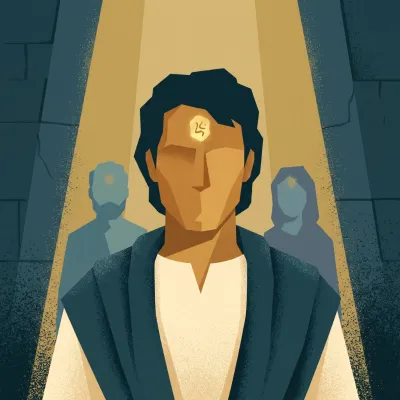
You can love the Bible for forty years and still lie awake at two in the morning, wondering whether you truly belong to God. Paul wrote to people in that exact condition. Near the end of his life, to a young pastor holding together a shaken church, he described the seal of God and even told us what is written on it. That seal has two lines. The first is about something God knows. The second is about something that shows. Together, they are how Scripture describes the people who belong to Him. In this episode, we explore what the Bible reveals about the seal of God. We trace the first line back to Moses on a day when no one could tell who belonged to the Lord. We see Abraham receive circumcision as a seal of a righteousness he already had by faith, and learn why the Holy Spirit is not a token but a first installment of our inheritance. We walk through Judah handing his seal to Tamar, the gold plate engraved "Holy to the Lord" on the high priest's forehead, the mark Ezekiel saw placed on those who grieved, the signet ring pulled off Jehoiachin and given again to Zerubbabel, and the Lamb who alone could open the sealed scroll. A seal is not an emotion. It is something pressed in from outside by someone else. You do not carry the name because you can feel it. You carry it because He pressed it. Bible verses included in this episode: “Nevertheless, God's solid foundation stands firm, sealed with this inscription: ‘The Lord knows those who are his,’ and, ‘Everyone who confesses the name of the Lord must turn away from wickedness.’” (2 Timothy 2:19) “And he received circumcision as a sign, a seal of the righteousness that he had by faith while he was still uncircumcised.” (Romans 4:11) “And you also were included in Christ when you heard the message of truth, the gospel of your salvation. When you believed, you were marked in him with a seal, the promised Holy Spirit.” (Ephesians 1:13) “And do not grieve the Holy Spirit of God, with whom you were sealed for the day of redemption.” (Ephesians 4:30) “Go throughout the city of Jerusalem and put a mark on the foreheads of those who grieve and lament over all the detestable things that are done in it.” (Ezekiel 9:4) “They will see his face, and his name will be on their foreheads.” (Revelation 22:4) “The Spirit himself testifies with our spirit that we are God's children.” (Romans 8:16) This message is for anyone in a quiet house, worn out, or haunted by something in the past that whispers God must have written you off. Nothing in these passages ties the seal of God to your feelings. If something in you keeps turning toward Him, that is the second line of the inscription, showing. He knows those who are His. He pressed His name into you a long time ago, He did not do it lightly, and He is not going to lose you now.
 32 min
Bible Chapters Explained
Where Was Jesus During Lucifer's Rebellion in Heaven?
The rebellion in heaven was aimed at Jesus. Lucifer wanted the highest seat there is, and that seat belonged to the Son of God. Every angel in heaven had been made by Him, including the one who turned against Him. So Lucifer reached for a throne that already had an owner. We often picture the Son somewhere in the background, watching a drama unfold between God and a rebellious angel. But Scripture shows us something far more personal. He was not in the background. He was the one being rebelled against. In this episode, we explore where Jesus was during Lucifer's rebellion. From Hebrews chapter 1 and Colossians chapter 1, we see that the adversary was never a rival to Jesus, but a creature of Jesus. We look at Isaiah and Ezekiel's portraits of a guardian cherub who was blameless until wickedness was found in him, Jesus' quiet words about the one who "does not stand in the truth," and the lightning fall in Luke 10, paired with the words almost everyone skips. We consider why the Son never drew a sword, why Michael said "The Lord rebuke you," how the accuser was answered in Zechariah's courtroom, and why there is no rescue mission for fallen angels, but there is one for us. The rebellion asked who deserves the throne. The answer turned out to be the One who was willing to leave it. Bible verses included in this episode: “Let all God's angels worship him.” (Hebrews 1:6) “I will make myself like the Most High.” (Isaiah 14:14) “For in him all things were created: things in heaven and on earth, visible and invisible, whether thrones or powers or rulers or authorities; all things have been created through him and for him.” (Colossians 1:16) “You were blameless in your ways from the day you were created till wickedness was found in you.” (Ezekiel 28:15) “I saw Satan fall like lightning from heaven.” (Luke 10:18) “Do not rejoice that the spirits submit to you, but rejoice that your names are written in heaven.” (Luke 10:20) “For surely it is not angels he helps, but Abraham's descendants.” (Hebrews 2:16) “They triumphed over him by the blood of the Lamb and by the word of their testimony.” (Revelation 12:11) Underneath this question there is often a more personal one: if God let the brightest one go, will He let me go too? The difference between the one who fell and the one who is held is not the size of the failure. Nobody came for the fallen angels, and Someone came for you. If you are tired, carrying an old shame, or feeling your faith grow thin, rejoice that your name is written in heaven. You are not the next one to fall. You are the reason He came down.
 37 min
Bible Chapters Explained
If You Understand Proverbs 1, You Understand the Entire Bible
Proverbs chapter 1 puts one young man in a noisy street with three voices calling his name. His father, from inside the house. A group of men, from the road. And the voice of God's own wisdom, calling out loud in the busy market where anyone can hear. Three invitations, one life, and everything that follows depends on which one he answers. Most books of the Bible drop you straight into the middle of something. Proverbs stops first and tells you exactly what it is for. It was written for the simple who are just starting out, and for the wise who have walked with God for fifty years. The wise one is not the person who has finished. The wise one is the person who is still listening. In this episode, we walk through Proverbs 1 and the sentence the whole book is built on: the fear of the Lord is the beginning of knowledge. We explore why this fear draws you nearer rather than pushing you away, and why "beginning" means foundation, not a stage you outgrow. We hear a father's instruction at the door, the recruiting pitch of sinful men who promise "one purse," the net spread in sight of the bird, and Wisdom crying aloud in the street with an offer to pour out her spirit on anyone who turns. We also face the hard warning honestly, and see how the pattern of two voices runs from Eden to Moses, Elijah, Jesus, and the last invitation of Revelation. Everything Proverbs 1 says about wisdom, the New Testament eventually says about a Person. Christ is the wisdom of God, and the fear of the Lord has a face, and the face is kind. Bible verses included in this episode: “The fear of the Lord is the beginning of knowledge; fools despise wisdom and instruction.” (Proverbs 1:7) “Hear, my son, your father's instruction, and forsake not your mother's teaching.” (Proverbs 1:8) “My son, if sinful men entice you, do not give in to them.” (Proverbs 1:10) “Wisdom cries aloud in the street, in the markets she raises her voice.” (Proverbs 1:20) “If you turn at my reproof, behold, I will pour out my spirit to you; I will make my words known to you.” (Proverbs 1:23) “Let anyone who is thirsty come to me and drink.” (John 7:37) “But whoever listens to me will dwell secure and will be at ease, without dread of disaster.” (Proverbs 1:33) The voices calling you today may be quieter: too old, too far gone, unnoticed, unheard. Every one of them presents itself as the truth. But Wisdom is still out in the street, calling to exactly the kind of person you are afraid you are. She is still calling, which means it is not too late. Turn, and she will pour herself out. Whoever listens will dwell secure.
 32 min
Bible Chapters Explained
If You Understand Matthew 24, You Understand the Entire Bible
Most of us come to Matthew 24 looking for a schedule, wanting to know whether the world is finally falling apart. Jesus spends most of the chapter doing the opposite of what we expect. He takes the signs away, tells His friends to stop being alarmed, and gives them a handful of clear commands, and not one of them is "figure out when." Jesus taught that this world is going somewhere, and that He Himself is the ending. He said He would come back in person, in the open, where no one could miss it. He said no one knows the day. And He named the very things people always point to as proof, war and hunger and earthquakes, and said plainly that they are not the signal. In this episode, we walk through Matthew 24 from the beginning. We sit with the disciples on the Mount of Olives as they point at the temple and ask the question the whole chapter answers. We explore why wars are only the beginning of birth pains, why Jesus warned that the love of many would grow cold, and how the abomination of desolation and the flight to the hills were fulfilled when Rome destroyed Jerusalem in the year 70. We look at how the prophets spoke of near and far events together, why His coming will be like lightning, what the fig tree and "this generation" mean, and why the chapter ends not in the sky but in a kitchen. The disciples asked when. Jesus asked who. They asked for a sign in the sky, and He answered with a hungry neighbor. Bible verses included in this episode: “Truly I tell you, not one stone here will be left on another; every one will be thrown down.” (Matthew 24:2) “See to it that you are not alarmed. Such things must happen, but the end is still to come.” (Matthew 24:6) “Because of the increase of wickedness, the love of most will grow cold.” (Matthew 24:12) “For as lightning that comes from the east is visible even in the west, so will be the coming of the Son of Man.” (Matthew 24:27) “But about that day or hour no one knows, not even the angels in heaven, nor the Son, but only the Father.” (Matthew 24:36) “Therefore keep watch, because you do not know on what day your Lord will come.” (Matthew 24:42) “Who then is the faithful and wise servant, whom the master has put in charge of the servants in his household to give them their food at the proper time?” (Matthew 24:45) This message is for anyone afraid of the news, tired of failed predictions, or quietly ashamed that their life feels too small to matter. The One who is coming is the same Jesus who paused in the middle of a prophecy to worry about mothers with babies and cold winter roads. He is coming, and you cannot know when. The best thing you can be doing when He arrives is the small, ordinary good you were already trusted with today. Heaven and earth will pass away, but His words will not.
 32 min
Bible Chapters Explained
If You Understand Genesis 3:15, You Understand the Entire Bible
Genesis 3:15 is the first promise God ever made to guilty people, and everything the Bible does after it is God keeping that promise. One sentence, spoken in the worst hour in human history, in a garden that had just stopped being safe. Once you see what it is doing, the sixty six books of the Bible stop feeling like a stack of separate books and start reading like one story with one ending. God questioned the man. God questioned the woman. But He asked the serpent nothing. He turned to it and began sentencing, and Adam and Eve, hiding behind the trees, overheard God announce a war He was starting on their behalf. In this episode, we explore the promise hidden in Genesis 3:15. We notice that only the serpent and the ground are cursed, never the man and the woman. We unpack the rare Hebrew word for enmity, the single verb used for both the crushing of the head and the striking of the heel, and why ancient translators heard a person in this verse long before Jesus was born. We watch Adam name his wife Life, God clothe them with His own hands, Eve hold on to the word "offspring" after losing two sons, and Lamech name Noah in hope. And we follow the line through Tamar, Rahab, Ruth, and Mary to the cross, the empty tomb, and the last page of Revelation. The heel wound and the head wound are the same event described from two sides. The wound was the weapon. Bible verses included in this episode: “And I will put enmity between you and the woman, and between your offspring and hers; he will crush your head, and you will strike his heel.” (Genesis 3:15) “Adam named his wife Eve, because she would become the mother of all the living.” (Genesis 3:20) “The Lord God made garments of skin for Adam and his wife and clothed them.” (Genesis 3:21) “God has granted me another child in place of Abel, since Cain killed him.” (Genesis 4:25) “But when the set time had fully come, God sent his Son, born of a woman, born under the law.” (Galatians 4:4) “The reason the Son of God appeared was to destroy the devil's work.” (1 John 3:8) “No longer will there be any curse.” (Revelation 22:3) This message is for anyone carrying something they have never said out loud, anyone worn down by a life that keeps producing thorns, and anyone who feels God's promises were written for people with a cleaner history. God's first move toward failing people is a promise, and His anger has an enemy, and the enemy is not you. You can overhear something and still be the one it is for. The garden closed. The city opens. And the curse that started it all will not be there.