
Tập podcast
 33 phút
Bible Chapters Explained
Ezekiel and the Valley of Dry Bones: When God Brings Back What You Thought Was Dead
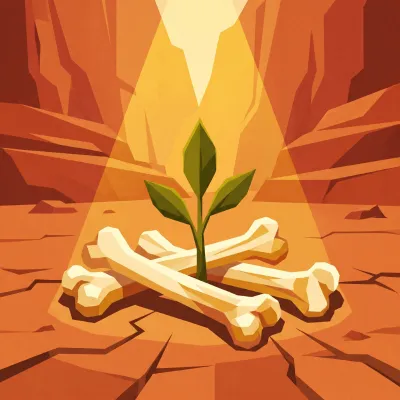
Our bones are dry. Our hope is lost. We are cut off. Those three sentences were spoken by God's own people in exile in Babylon. The temple was ash, the throne of David sat empty, and every visible evidence of God's promises had been destroyed. So they wrote the ending themselves: it is over. Heaven heard those three sentences. God's answer was to carry a prophet out in the Spirit and set him down in the middle of a valley full of bones, bones so old and so dry the sun had bleached them white. Then He made that prophet watch what He does with things everyone has agreed are finished. In this episode, we walk through Ezekiel chapter 37. We meet Ezekiel, a priest who never served a day in the temple, who lost his homeland, his calling, and his wife. We follow him as God walks him back and forth through the devastation, asks him, "Can these bones live?", and commands him to preach to the dead. We watch the bones rattle together, receive sinews, flesh, and skin, and still lie without breath, until God sends the ruach, the wind, breath, and Spirit, and they stand up an exceedingly great army. And we see how the vision reaches forward to the two sticks joined as one, to the promised shepherd from David's line, to the tomb of Lazarus, to the risen Jesus breathing on His disciples, and to the gospel itself. Salvation is not self improvement. It is resurrection. It always was. Bible verses included in this episode: “And He said to me, ‘Son of man, can these bones live?’ So I answered, ‘O Lord God, You know.’” (Ezekiel 37:3) “Thus says the Lord God to these bones: ‘Surely I will cause breath to enter into you, and you shall live.’” (Ezekiel 37:5) “And breath came into them, and they lived, and stood upon their feet, an exceedingly great army.” (Ezekiel 37:10) “I will put My Spirit in you, and you shall live, and I will place you in your own land.” (Ezekiel 37:14) “I am the resurrection and the life. He who believes in Me, though he may die, he shall live.” (John 11:25) “But God, who is rich in mercy, because of His great love with which He loved us, even when we were dead in trespasses, made us alive together with Christ.” (Ephesians 2:4-5) This message is for anyone with a valley of their own: a marriage that stopped sharing a heart, a child who walked away, a faith that has gone dry, or a calling buried long ago. God knows exactly how dead it is, He has heard your hopeless sentences, and He answers them without anger. So do not write the ending yourself. Keep the word of God moving over your valley, and ask Him for the breath. Can these bones live? He has already shown us His answer.
 34 phút
Bible Chapters Explained
The Seal of God: What Scripture Reveals About Those Who Belong to Him
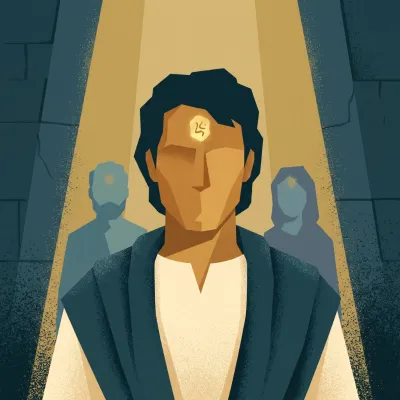
You can love the Bible for forty years and still lie awake at two in the morning, wondering whether you truly belong to God. Paul wrote to people in that exact condition. Near the end of his life, to a young pastor holding together a shaken church, he described the seal of God and even told us what is written on it. That seal has two lines. The first is about something God knows. The second is about something that shows. Together, they are how Scripture describes the people who belong to Him. In this episode, we explore what the Bible reveals about the seal of God. We trace the first line back to Moses on a day when no one could tell who belonged to the Lord. We see Abraham receive circumcision as a seal of a righteousness he already had by faith, and learn why the Holy Spirit is not a token but a first installment of our inheritance. We walk through Judah handing his seal to Tamar, the gold plate engraved "Holy to the Lord" on the high priest's forehead, the mark Ezekiel saw placed on those who grieved, the signet ring pulled off Jehoiachin and given again to Zerubbabel, and the Lamb who alone could open the sealed scroll. A seal is not an emotion. It is something pressed in from outside by someone else. You do not carry the name because you can feel it. You carry it because He pressed it. Bible verses included in this episode: “Nevertheless, God's solid foundation stands firm, sealed with this inscription: ‘The Lord knows those who are his,’ and, ‘Everyone who confesses the name of the Lord must turn away from wickedness.’” (2 Timothy 2:19) “And he received circumcision as a sign, a seal of the righteousness that he had by faith while he was still uncircumcised.” (Romans 4:11) “And you also were included in Christ when you heard the message of truth, the gospel of your salvation. When you believed, you were marked in him with a seal, the promised Holy Spirit.” (Ephesians 1:13) “And do not grieve the Holy Spirit of God, with whom you were sealed for the day of redemption.” (Ephesians 4:30) “Go throughout the city of Jerusalem and put a mark on the foreheads of those who grieve and lament over all the detestable things that are done in it.” (Ezekiel 9:4) “They will see his face, and his name will be on their foreheads.” (Revelation 22:4) “The Spirit himself testifies with our spirit that we are God's children.” (Romans 8:16) This message is for anyone in a quiet house, worn out, or haunted by something in the past that whispers God must have written you off. Nothing in these passages ties the seal of God to your feelings. If something in you keeps turning toward Him, that is the second line of the inscription, showing. He knows those who are His. He pressed His name into you a long time ago, He did not do it lightly, and He is not going to lose you now.
 32 phút
Bible Chapters Explained
Where Was Jesus During Lucifer's Rebellion in Heaven?
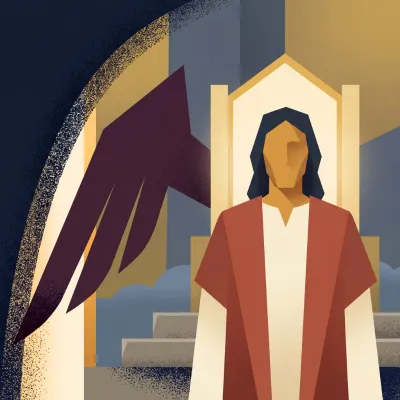
The rebellion in heaven was aimed at Jesus. Lucifer wanted the highest seat there is, and that seat belonged to the Son of God. Every angel in heaven had been made by Him, including the one who turned against Him. So Lucifer reached for a throne that already had an owner. We often picture the Son somewhere in the background, watching a drama unfold between God and a rebellious angel. But Scripture shows us something far more personal. He was not in the background. He was the one being rebelled against. In this episode, we explore where Jesus was during Lucifer's rebellion. From Hebrews chapter 1 and Colossians chapter 1, we see that the adversary was never a rival to Jesus, but a creature of Jesus. We look at Isaiah and Ezekiel's portraits of a guardian cherub who was blameless until wickedness was found in him, Jesus' quiet words about the one who "does not stand in the truth," and the lightning fall in Luke 10, paired with the words almost everyone skips. We consider why the Son never drew a sword, why Michael said "The Lord rebuke you," how the accuser was answered in Zechariah's courtroom, and why there is no rescue mission for fallen angels, but there is one for us. The rebellion asked who deserves the throne. The answer turned out to be the One who was willing to leave it. Bible verses included in this episode: “Let all God's angels worship him.” (Hebrews 1:6) “I will make myself like the Most High.” (Isaiah 14:14) “For in him all things were created: things in heaven and on earth, visible and invisible, whether thrones or powers or rulers or authorities; all things have been created through him and for him.” (Colossians 1:16) “You were blameless in your ways from the day you were created till wickedness was found in you.” (Ezekiel 28:15) “I saw Satan fall like lightning from heaven.” (Luke 10:18) “Do not rejoice that the spirits submit to you, but rejoice that your names are written in heaven.” (Luke 10:20) “For surely it is not angels he helps, but Abraham's descendants.” (Hebrews 2:16) “They triumphed over him by the blood of the Lamb and by the word of their testimony.” (Revelation 12:11) Underneath this question there is often a more personal one: if God let the brightest one go, will He let me go too? The difference between the one who fell and the one who is held is not the size of the failure. Nobody came for the fallen angels, and Someone came for you. If you are tired, carrying an old shame, or feeling your faith grow thin, rejoice that your name is written in heaven. You are not the next one to fall. You are the reason He came down.
 34 phút
Hard Bible Questions
Why Did God Create Satan Knowing He Would Rebel Against Him?
If God knew Satan would rebel, why create him at all? It is one of the hardest questions a believer can ask, because it tests what we believe about God's goodness, wisdom, and justice. God knows everything, and yet His creatures can choose. The Bible's answer begins with a boundary: evil is real, but evil is not original. God made all things good, including the high creature who later fell. Satan is not a rival god standing opposite the Lord. He is a creature, with a beginning, with limits, and with accountability. What God created was good because it made room for love. What God did not create was the crooked desire that set itself against Him. In this episode, we explore why real love requires a real will, and why a world of beings who could only follow but never choose would be a world without genuine worship or friendship with God. We look at the difference between God testing and a creature tempting, why foreknowledge is not the same as guilt, and how the cross shows God's plan and human responsibility standing side by side. We consider what Scripture reveals about Satan's fall and what it wisely leaves veiled, and why God chose a history in which His holiness, justice, mercy, and love would be displayed in their fullest range. Finally, we look at the end of the story, which is already certain. The deceiver's time is measured, and the devil's present activity runs on a leash. Bible verses included in this episode: “God saw all that he had made, and it was very good.” (Genesis 1:31) “You were blameless in your ways from the day you were created till wickedness was found in you.” (Ezekiel 28:15) “When tempted, no one should say, ‘God is tempting me.’ For God cannot be tempted by evil, nor does he tempt anyone.” (James 1:13) “This man was handed over to you by God’s deliberate plan and foreknowledge.” (Acts 2:23) “The secret things belong to the Lord our God, but the things revealed belong to us and to our children forever.” (Deuteronomy 29:29) “The reason the Son of God appeared was to destroy the devil’s work.” (1 John 3:8) “And the devil, who deceived them, was thrown into the lake of burning sulfur.” (Revelation 20:10) If this question has kept you up at night, you are not alone. The God who knew rebellion would come also chose to draw near, carried our shame, and promised a day when the shadows will be gone. The question begins with Satan, but the answer leads to Jesus. Evil is real, but not final.
 32 phút
Hard Bible Questions
What Really Destroyed Sodom and Gomorrah, and the Warning for Us Today
There was once a valley so green and well watered that the Bible compares it to the garden of the Lord. Then one morning it was gone. Abraham looked toward the cities of the plain and saw only smoke rising like the smoke of a furnace. Most of us think we know how Sodom died. We picture the fire and the burning sulfur and stop there. But the fire was the ending, not the answer. What had to happen in a city, over years and years, before God would let a morning like that come? In this episode, we explore what really destroyed Sodom and Gomorrah. We follow Lot's choice of the easy, beautiful land, the outcry that rose to heaven from the crushed and forgotten, and Abraham's bold plea as God agrees to spare the whole city for the sake of just ten righteous people. We walk through the terrible night at Lot's door, and then turn to the prophet Ezekiel, who names the quieter sin underneath it all: pride, excess of food, and prosperous ease, while the poor and needy were ignored. We also look at the warnings no one outgrows: the sons-in-law who thought Lot was joking, Lot himself lingering until mercy took him by the hand, and Lot's wife looking back. Jesus pointed to this very story to describe the day the Son of Man is revealed. Bible verses included in this episode: “Now the men of Sodom were wicked, great sinners against the Lord.” (Genesis 13:13) “Because the outcry against Sodom and Gomorrah is great and their sin is very grave, I will go down to see whether they have done altogether according to the outcry that has come to me.” (Genesis 18:20-21) “For the sake of ten I will not destroy it.” (Genesis 18:32) “Behold, this was the guilt of your sister Sodom: she and her daughters had pride, excess of food, and prosperous ease, but did not aid the poor and needy.” (Ezekiel 16:49) “Then the Lord rained on Sodom and Gomorrah sulfur and fire from the Lord out of heaven.” (Genesis 19:24) “They were eating and drinking, buying and selling, planting and building, but on the day when Lot went out from Sodom, fire and sulfur rained from heaven and destroyed them all.” (Luke 17:28-29) “Then the Lord knows how to rescue the godly from trials, and to keep the unrighteous under punishment until the day of judgment.” (2 Peter 2:9) The fire did not destroy Sodom. A long, slow forgetting did. But the God who heard the cry of the forgotten still hears yours, and on the cross the fire we deserved fell on Jesus instead. Do not look back, and do not mistake God's patience for permission. His hand is still open to you.
 32 phút
Hard Bible Questions
Why One Third of the Angels Chose to Follow Lucifer
A third of the angels followed Lucifer for a reason that is easy to say and hard to accept. He offered them a bigger version of themselves than the one God had given them, and they decided to trust his voice more than the voice of the God who made them. They were not dragged away against their will. And the same decision they made is one you are quietly making every day. Whose voice will you trust about who you are, what you are worth, and whether God is truly good to you? In this episode, we explore why one third of the angels chose to follow Lucifer. We begin before the world was made, when the morning stars sang together, and see why angels were created with wills free to love God or turn away. We look at the being Ezekiel describes as perfect from the day he was created, until pride grew from within, and hear the words Isaiah records from his heart: I will be like the Most High. Then we trace how rebellion spread. Comparison, discontent, and the pull of a crowd moved a third of heaven's host to shift their trust from God to Lucifer. We also look at the angels who kept not their first estate, the rescue God offered not to angels but to the seed of Abraham, and the two thirds who heard the same whisper and stayed. Bible verses included in this episode: “When the morning stars sang together, and all the sons of God shouted for joy.” (Job 38:7) “You were perfect in your ways from the day you were created, till iniquity was found in you.” (Ezekiel 28:15) “How you are fallen from heaven, O Lucifer, son of the morning!” (Isaiah 14:12) “His tail drew the third part of the stars of heaven, and did cast them to the earth.” (Revelation 12:4) “And the angels which kept not their first estate, but left their own habitation, he has reserved in everlasting chains under darkness unto the judgment of the great day.” (Jude 6) “For verily he took not on him the nature of angels; but he took on him the seed of Abraham.” (Hebrews 2:16) “Are they not all ministering spirits, sent forth to minister for them who shall be heirs of salvation?” (Hebrews 1:14) God is not holding out on you. He held nothing back and gave His own Son. Every throne the enemy offers is smaller than the place you already have as one He loves. Refuse the whisper. Treasure the Giver. The God who was always worth staying for is still holding the door open to you.
 32 phút
Stories of Bible Characters
Why Is There No Tribe Of Joseph In Israel? The Shocking Reason Explained
There is a name missing from the map of Israel, and it belongs to the one man who made the map possible. Joseph, the favorite son and the dreamer who saved his whole family from famine, has no territory named after him when Joshua divides the promised land among the tribes. It can look like an oversight, or even an insult. But Joseph's name is not missing because he received too little. It is missing because he received too much to fit inside a single border. In this episode, we explore the surprising reason there is no tribe of Joseph. We look at the birthright and double portion of the firstborn, how Reuben lost it, and how it passed to Joseph. We step into a dim room in Egypt where the dying Jacob adopts Joseph's two sons, Ephraim and Manasseh, as his own, and then crosses his arms to bless the younger above the older, redeeming the deception of his own youth. We see why the count of the tribes still stays at twelve because Levi's inheritance was the Lord Himself, and why two boys with an Egyptian mother became the model of blessing for generations. We also trace Joseph's name through the rest of Scripture, from Shiloh and the Psalms to Ezekiel's "two portions" and the tribe of Joseph in Revelation 7, and see how Joseph's story points to Jesus, the beloved Son whose reward is children adopted into God's family. Bible verses included in this episode: “He was the firstborn, but because he defiled his father’s bed, his birthright was given to the sons of Joseph.” (1 Chronicles 5:1) “And now your two sons, Ephraim and Manasseh, who were born to you in the land of Egypt before I came to you in Egypt, are mine; as Reuben and Simeon, they shall be mine.” (Genesis 48:5) “I know, my son, I know. He also shall become a people, and he also shall be great; but truly his younger brother shall be greater than he.” (Genesis 48:19) “By you Israel will bless, saying, ‘May God make you as Ephraim and as Manasseh!’” (Genesis 48:20) “The Lord is his inheritance.” (Deuteronomy 10:9) “Give ear, O Shepherd of Israel, You who lead Joseph like a flock.” (Psalm 80:1) “Joseph shall have two portions.” (Ezekiel 47:13) “But as many as received Him, to them He gave the right to become children of God.” (John 1:12) If you feel overlooked, left off the lists, or wonder whether your background disqualifies you, let Joseph's story stand as a witness. The people the world can no longer find on its lists are often the ones God has recorded most carefully. The God who never forgot Joseph has not forgotten you. The double portion always comes after the pit.
 32 phút
Stories of Bible Characters
The Fall of Lucifer: How the Most Beautiful Angel Became Satan
The most beautiful angel who ever existed did not become Satan because he was tricked, wounded, or forced. He fell because of what happened quietly inside his own heart. A creature who stood closer to God than almost anything ever made looked at his beauty, his wisdom, and his nearness to the throne, and decided it was not enough. He wanted to be like God instead of loving God. If you have ever felt far from God, unworthy, tired, or ashamed of your own heart, this story is for you. The one who fell was not far from God when he fell. He was near. And that tells us that nearness alone is not what keeps us safe. In this episode, we explore the fall of Lucifer, gathering the pieces Scripture gives us in Isaiah 14 and Ezekiel 28. We look at where the name Lucifer comes from, how high this anointed guardian once stood, and how pride grew in secret until it became rebellion. We follow him from heaven to the garden of Eden, where he offered the same lie that ruined him, and we see what he truly lost. Not a battle, which he could never win, but nearness to God. Then the story turns from warning to good news. Where Lucifer, a creature, reached up to seize God's place, Jesus, who truly is God, came down, humbled Himself, and went to the cross for us. The title the fallen angel lost, the morning star, now belongs to Christ. Bible verses included in this episode: “How you have fallen from heaven, morning star, son of the dawn!” (Isaiah 14:12) “Your heart became proud on account of your beauty, and you corrupted your wisdom because of your splendor.” (Ezekiel 28:17) “You said in your heart, ‘I will ascend to the heavens, I will raise my throne above the stars of God... I will make myself like the Most High.’” (Isaiah 14:13–14) “Become conceited and fall under the same judgment as the devil.” (1 Timothy 3:6) “I saw Satan fall like lightning from heaven.” (Luke 10:18) “The great dragon was thrown down, that ancient serpent, who is called the devil and Satan, the deceiver of the whole world.” (Revelation 12:9) “I am the bright Morning Star.” (Revelation 22:16) You are not shut out because you are weak. Weakness is not what brought down the morning star. Pride is. The nearness he threw away is offered back to you freely in Jesus Christ. Not earned. Not deserved. Given. The morning star fell reaching upward. You can be lifted up simply by kneeling down. Come low, come honest, come as you are.
 33 phút
Words of Jesus
What did Jesus mean when He said, “I came that they may have life, and have it abundantly”?
There is a line from Jesus that sounds like a door opening: “I came that they may have life, and have it abundantly.” Many have chased success and still felt empty. Many keep religious and moral rules, yet still feel far from God. Into that ache Jesus speaks a promise that is bold and tender: life in full measure. Jesus spoke these words just after healing a man born blind, a miracle that led the religious leaders to question the man, question his parents, and cast him out. Into that confusion Jesus stepped with the picture of a sheepfold, a gate, and a shepherd who calls his own by name and lays down his life for them. In this episode, we explore the contrast between the thief who comes to steal, kill, and destroy and the Good Shepherd who gives and multiplies rest. We trace the prophetic threads behind the promise, from Ezekiel’s rebuke of selfish shepherds and God’s pledge to shepherd His people Himself, to the comfort of the Twenty-Third Psalm, now embodied in a Person. We look at what abundant life truly is: not measured by wealth or ease, but by knowing God through His Son. It is restored fellowship, a reordered inner life, enlarged love, durable hope, clear purpose, and freedom within the boundaries that keep life whole. We also consider how this life reaches us through Jesus as the door, through the Holy Spirit, through His flock, and through ordinary obedience, and we clear away common confusions about wealth, suffering, and constant emotional highs. Bible verses included in this episode: “The thief comes only to steal and kill and destroy. I came that they may have life and have it abundantly.” (John 10:10) “I am the good shepherd. The good shepherd lays down his life for the sheep.” (John 10:11) “And I will set up over them one shepherd, my servant David, and he shall feed them.” (Ezekiel 34:23) “And this is eternal life, that they know you the only true God, and Jesus Christ whom you have sent.” (John 17:3) “I am the door. If anyone enters by me, he will be saved and will go in and out and find pasture.” (John 10:9) “I am the good shepherd. I know my own and my own know me, just as the Father knows me and I know the Father; and I lay down my life for the sheep.” (John 10:14–15) If you have grown tired of empty promises, hear the voice that calls your name with kindness. The door stands open, and the Shepherd waits with patience that does not run out. The thief takes and leaves silence. Jesus gives and leaves singing. Hold to His voice, walk through His door, and you will find the life your soul was made to receive.
 38 phút
Bible Books Explained
The Book of Ezekiel
For a believer there is nothing more terrifying than the silence of God. For a young priest named Ezekiel sitting in the mud of a Babylonian refugee camp God had been silent for a long time. This episode explores the story of a man who spent his life preparing for a temple he would never enter only to see the sky rip open in a storm of blinding fire. We journey through the vision of the four living creatures and the mysterious wheels within wheels that revealed a God who is not limited by geography or borders. We walk through the agonizing street theater of a prophet who became a living sign of judgment by lying in the dust for hundreds of days and eating the bread of starvation. We confront the secret sins hidden within the temple walls and the heartbreaking moment the Glory of God departed from His people. This journey takes us from the graphic allegory of the unfaithful bride to the hopeful promise of a spiritual heart transplant. Finally we witness the rattling of dry bones in a dead valley and the arrival of a river of life that heals the world. This is the story of how God proves He does not need a building to reach His people because His final name is simply The Lord Is There. Scripture References "And whether they listen or fail to listen—for they are a rebellious people—they will know that a prophet has been among them." (Ezekiel 2:5) "Live! I said to you while you were there in your blood. Live!" (Ezekiel 16:6) "I take no pleasure in the death of the wicked, but rather that they turn from their ways and live." (Ezekiel 33:11) "I will give you a new heart and put a new spirit in you; I will remove from you your heart of stone and give you a heart of flesh." (Ezekiel 36:26) "And I will put my Spirit in you and move you to follow my decrees." (Ezekiel 36:27) "Our bones are dried up and our hope is gone; we are cut off." (Ezekiel 37:11) "And the name of the city from that time on will be: The Lord Is There." (Ezekiel 48:35)
 37 phút
Hard Bible Questions
What does it really mean to be born again spiritually in God
Many people think being born again is just a religious phrase, a church label, or a moment of strong emotion. But Jesus meant something far deeper. Being born again is a real work of God inside a person. It is when God gives new life, cleanses the heart, opens spiritual eyes, and brings someone into His family. In this episode, we explore Jesus’ conversation with Nicodemus and why He said, “You must be born again.” Nicodemus was not careless or rebellious. He was respected, religious, and knowledgeable. Yet Jesus showed him that no amount of status, effort, or religious discipline can replace the new life that only God can give. We’ll look at what Jesus meant by being born of water and the Spirit, how this connects to God’s promise of a new heart in Ezekiel, and why new birth is not self improvement, moral behavior, or religious routine. It is God’s decisive work of inner renewal. He cleanses, gives His Spirit, unites us to Christ, adopts us into His family, and begins a new life that He Himself sustains. This message also points us to the cross. Jesus compared His own lifting up to the bronze serpent in the wilderness, showing that eternal life comes by looking to Him in faith. To be born again is not to climb a spiritual ladder. It is to receive life from the Son who was lifted up, crucified, and raised so sinners could become children of God. If your faith has felt dry, distant, or like duty without life, this episode is an invitation to hear the kindness in Jesus’ words. You cannot give birth to yourself, but God can make you new. Bible verses included in this episode: “You must be born again.” (John 3:3) “And I will give you a new heart, and a new spirit I will put within you… And I will put my Spirit within you.” (Ezekiel 36:26–27) “He saved us… by the washing of regeneration and renewal of the Holy Spirit.” (Titus 3:5) “But to all who did receive him, who believed in his name, he gave the right to become children of God… who were born… of God.” (John 1:12–13) “As Moses lifted up the serpent in the wilderness, so must the Son of Man be lifted up, that whoever believes in him may have eternal life… For God so loved the world, that he gave his only Son.” (John 3:14–16) Being born again is not about becoming a better version of the old self. It is about receiving new life from God. The Father gives a new heart, the Son gives eternal life, and the Spirit makes the heart alive from within. Look to Christ, receive His life, and walk as a new creation.
 37 phút
Hard Bible Questions
Who Is The Holy Spirit Really - This Powerful Truth Will Change Your Life
Who is the Holy Spirit really? Many people think of the Holy Spirit as a feeling, a glow, a force, or a spiritual influence. But Scripture reveals Someone far greater and far closer. The Holy Spirit is not an “it.” He is God. He is personal. He speaks, guides, comforts, convicts, teaches, seals, and brings the life of Christ into the believer from the inside out. In this episode, we explore the powerful truth of who the Holy Spirit is and why it changes everything. From Genesis to Pentecost, from creation to new birth, the Spirit is present in the work of God. He hovered over the waters, empowered prophets, rested upon Jesus, filled the early church, and now dwells in believers as the presence of God within them. We’ll also look at how the Holy Spirit reveals the beauty of the Trinity. The Father, Son, and Holy Spirit are not three gods, and they are not one Person wearing different masks. Scripture shows one God in three Persons, working together in perfect unity. The Father sends, the Son redeems, and the Spirit applies the work of salvation to our hearts. This is not just a doctrine to understand. It is a truth to live by. If the Holy Spirit dwells in you, then you are not alone, not abandoned, and not powerless. He is the Helper Jesus promised, the Spirit of truth who glorifies Christ, the seal of your redemption, and the witness in your heart that you belong to the Father. Bible verses included in this episode: “The Spirit of God was hovering over the face of the waters.” (Genesis 1:2) “Another Helper… to be with you forever.” (John 14:16) “He dwells with you and will be in you.” (John 14:17) “He will guide you into all the truth.” (John 16:13) “He will glorify me.” (John 16:14) “You have lied to the Holy Spirit… You have not lied to man but to God.” (Acts 5:3–4) “Baptizing them in the name of the Father and of the Son and of the Holy Spirit.” (Matthew 28:19) “The grace of the Lord Jesus Christ and the love of God and the fellowship of the Holy Spirit be with you all.” (2 Corinthians 13:14) “This is my beloved Son.” (Matthew 3:17) “I will pour out my Spirit on all flesh.” (Joel 2:28) “The Spirit of the Lord is upon me, because he has anointed me to proclaim good news to the poor.” (Luke 4:18) “And when Jesus was baptized, immediately he went up from the water, and behold, the heavens were opened to him, and he saw the Spirit of God descending like a dove and coming to rest on him; and behold, a voice from heaven said, ‘This is my beloved Son, with whom I am well pleased.’” (Matthew 3:16–17) “When the Spirit of truth comes, he will guide you into all the truth… He will glorify me.” (John 16:13–14) “All these are empowered by one and the same Spirit, who apportions to each one individually as he wills.” (1 Corinthians 12:11) “And do not grieve the Holy Spirit of God, by whom you were sealed for the day of redemption.” (Ephesians 4:30) “For through him we both have access in one Spirit to the Father.” (Ephesians 2:18) “For there is one God, and there is one mediator between God and men, the man Christ Jesus.” (1 Timothy 2:5) “Praying in the Holy Spirit… keep yourselves in the love of God… waiting for the mercy of our Lord Jesus Christ.” (Jude 20–21) “Do you not know that your body is a temple of the Holy Spirit within you… you are not your own?” (1 Corinthians 6:19) “I will give you a new heart, and a new spirit I will put within you… And I will put my Spirit within you, and cause you to walk in my statutes.” (Ezekiel 36:26–27) “If by the Spirit you put to death the deeds of the body, you will live.” (Romans 8:13) “We all… beholding the glory of the Lord, are being transformed into the same image… For this comes from the Lord who is the Spirit.” (2 Corinthians 3:18) “The Spirit himself bears witness with our spirit that we are children of God.” (Romans 8:16) “God has sent the Spirit of his Son into our hearts, crying, ‘Abba! Father!’” (Galatians 4:6) “You were sealed with the promised Holy Spirit, who is the guarantee of our inheritance.” (Ephesians 1:13–14) “The Spirit himself intercedes for us with groanings too deep for words.” (Romans 8:26) The Holy Spirit is not distant, vague, or impersonal. He is the living presence of God within His people. He leads us to Christ, brings us to the Father, gives power for new life, and reminds us that we are never alone.
 30 phút
Words of Jesus
I And My Father Are One
What did Jesus mean when He said, “I and the Father are one”? In this episode, we explore one of the boldest statements Jesus ever made, the violent reaction it provoked, and why this claim stands at the very center of the Christian faith. This message reveals that Jesus was not presenting Himself as merely a teacher or prophet, but as the One who shares the Father’s divine nature, authority, and power to give eternal life. Jesus said, “I and my Father are one.” (John 10:30) The people who heard Him understood the weight of that claim immediately, saying, “For a good work we stone thee not; but for blasphemy; and because that thou, being a man, makest thyself God.” (John 10:33) Jesus also said, “My sheep hear my voice, and I know them, and they follow me: And I give unto them eternal life; and they shall never perish, neither shall any man pluck them out of my hand.” (John 10:27 to 28) Then He connected His hand with the Father’s hand, saying, “My Father, which gave them me, is greater than all; and no man is able to pluck them out of my Father’s hand.” (John 10:29) Later, Jesus made the meaning even clearer when He said, “He that hath seen me hath seen the Father.” (John 14:9) This truth does not contradict the oneness of God revealed in Scripture, for it is written, “Hear, O Israel: The Lord our God is one Lord.” (Deuteronomy 6:4) And Jesus fulfills the promise of God as Shepherd, for the Lord said, “For thus saith the Lord God; Behold, I, even I, will both search my sheep, and seek them out.” (Ezekiel 34:11) That is why Jesus could say, “I am the good shepherd: the good shepherd giveth his life for the sheep.” (John 10:11) The Gospel of John opens with this foundation, “In the beginning was the Word, and the Word was with God, and the Word was God.” (John 1:1) This episode is a call to see Jesus clearly, to understand why neutrality about Him is impossible, and to rest in the security that comes from the One whose hand is the very hand of God.