
Mga Video

Mga episode ng podcast
 29 min
Bible Chapters Explained
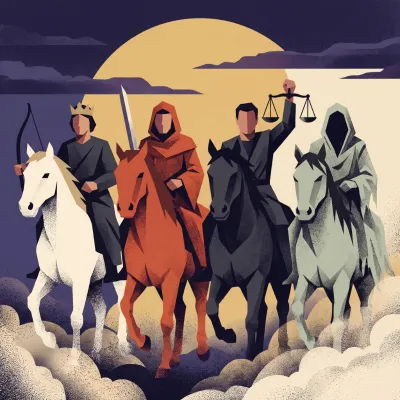
The Four Horsemen of the Apocalypse: The Book of Revelation
The book of Revelation was not written to frighten God's people. It was written to comfort them. Its first readers were ordinary believers in a hard and hostile world, afraid of what tomorrow would bring. And the vision John sends them does not begin with the horses. It begins in a throne room, with God seated at the center of everything, worshiped without pause. The word apocalypse does not mean disaster. It means an unveiling, the pulling back of a curtain so you can finally see what was there all along. Conquest, war, hunger, and death have ridden through every century. Revelation lets you see them clearly, and see the one thing you could never see with your own eyes: whose hand breaks the seals and sets the limits. In this episode, we walk through the four horsemen of Revelation chapter 6. We begin with the sealed scroll that no one was worthy to open, and the Lion of Judah who turns out to be a Lamb that was slain. We look at the living creatures who call each rider forward, the white horse of conquest, the red horse of war, the black horse of famine with its scales and its day's wage for a quart of wheat, and the pale horse named Death with Hades following behind. We trace how the prophets Jeremiah and Ezekiel spoke of the same sword, famine, plague, and wild beasts, and why the martyrs under the altar cry out, "How long?" Every rider is given, permitted, and limited. Evil in this vision is real, but it is never sovereign. Bible verses included in this episode: “Worthy is the Lamb who was slain.” (Revelation 5:12) “And I looked, and behold, a white horse! And its rider had a bow, and a crown was given to him, and he came out conquering, and to conquer.” (Revelation 6:2) “Its rider was permitted to take peace from the earth, so that people should slay one another, and he was given a great sword.” (Revelation 6:4) “A quart of wheat for a denarius, and three quarts of barley for a denarius, and do not harm the oil and wine!” (Revelation 6:6) “And its rider's name was Death, and Hades followed him. And they were given authority over a fourth of the earth, to kill with sword and with famine and with pestilence and by wild beasts of the earth.” (Revelation 6:8) This message is for anyone who watches the news and feels that everything is coming apart, or who feels the pale rider waiting at the end of the hall. The Bible does not tell you the riders are not real. It tells you they are not in charge. The riders are real, but they are held. The seals are broken, but only by wounded and loving hands. They answer to a Lamb, and the Lamb is for you.
 34 min
Bible Chapters Explained
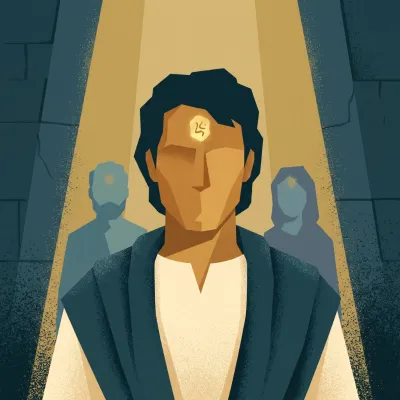
The Seal of God: What Scripture Reveals About Those Who Belong to Him
You can love the Bible for forty years and still lie awake at two in the morning, wondering whether you truly belong to God. Paul wrote to people in that exact condition. Near the end of his life, to a young pastor holding together a shaken church, he described the seal of God and even told us what is written on it. That seal has two lines. The first is about something God knows. The second is about something that shows. Together, they are how Scripture describes the people who belong to Him. In this episode, we explore what the Bible reveals about the seal of God. We trace the first line back to Moses on a day when no one could tell who belonged to the Lord. We see Abraham receive circumcision as a seal of a righteousness he already had by faith, and learn why the Holy Spirit is not a token but a first installment of our inheritance. We walk through Judah handing his seal to Tamar, the gold plate engraved "Holy to the Lord" on the high priest's forehead, the mark Ezekiel saw placed on those who grieved, the signet ring pulled off Jehoiachin and given again to Zerubbabel, and the Lamb who alone could open the sealed scroll. A seal is not an emotion. It is something pressed in from outside by someone else. You do not carry the name because you can feel it. You carry it because He pressed it. Bible verses included in this episode: “Nevertheless, God's solid foundation stands firm, sealed with this inscription: ‘The Lord knows those who are his,’ and, ‘Everyone who confesses the name of the Lord must turn away from wickedness.’” (2 Timothy 2:19) “And he received circumcision as a sign, a seal of the righteousness that he had by faith while he was still uncircumcised.” (Romans 4:11) “And you also were included in Christ when you heard the message of truth, the gospel of your salvation. When you believed, you were marked in him with a seal, the promised Holy Spirit.” (Ephesians 1:13) “And do not grieve the Holy Spirit of God, with whom you were sealed for the day of redemption.” (Ephesians 4:30) “Go throughout the city of Jerusalem and put a mark on the foreheads of those who grieve and lament over all the detestable things that are done in it.” (Ezekiel 9:4) “They will see his face, and his name will be on their foreheads.” (Revelation 22:4) “The Spirit himself testifies with our spirit that we are God's children.” (Romans 8:16) This message is for anyone in a quiet house, worn out, or haunted by something in the past that whispers God must have written you off. Nothing in these passages ties the seal of God to your feelings. If something in you keeps turning toward Him, that is the second line of the inscription, showing. He knows those who are His. He pressed His name into you a long time ago, He did not do it lightly, and He is not going to lose you now.
 32 min
Bible Chapters Explained
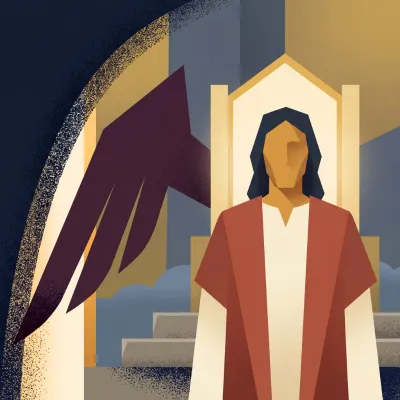
Where Was Jesus During Lucifer's Rebellion in Heaven?
The rebellion in heaven was aimed at Jesus. Lucifer wanted the highest seat there is, and that seat belonged to the Son of God. Every angel in heaven had been made by Him, including the one who turned against Him. So Lucifer reached for a throne that already had an owner. We often picture the Son somewhere in the background, watching a drama unfold between God and a rebellious angel. But Scripture shows us something far more personal. He was not in the background. He was the one being rebelled against. In this episode, we explore where Jesus was during Lucifer's rebellion. From Hebrews chapter 1 and Colossians chapter 1, we see that the adversary was never a rival to Jesus, but a creature of Jesus. We look at Isaiah and Ezekiel's portraits of a guardian cherub who was blameless until wickedness was found in him, Jesus' quiet words about the one who "does not stand in the truth," and the lightning fall in Luke 10, paired with the words almost everyone skips. We consider why the Son never drew a sword, why Michael said "The Lord rebuke you," how the accuser was answered in Zechariah's courtroom, and why there is no rescue mission for fallen angels, but there is one for us. The rebellion asked who deserves the throne. The answer turned out to be the One who was willing to leave it. Bible verses included in this episode: “Let all God's angels worship him.” (Hebrews 1:6) “I will make myself like the Most High.” (Isaiah 14:14) “For in him all things were created: things in heaven and on earth, visible and invisible, whether thrones or powers or rulers or authorities; all things have been created through him and for him.” (Colossians 1:16) “You were blameless in your ways from the day you were created till wickedness was found in you.” (Ezekiel 28:15) “I saw Satan fall like lightning from heaven.” (Luke 10:18) “Do not rejoice that the spirits submit to you, but rejoice that your names are written in heaven.” (Luke 10:20) “For surely it is not angels he helps, but Abraham's descendants.” (Hebrews 2:16) “They triumphed over him by the blood of the Lamb and by the word of their testimony.” (Revelation 12:11) Underneath this question there is often a more personal one: if God let the brightest one go, will He let me go too? The difference between the one who fell and the one who is held is not the size of the failure. Nobody came for the fallen angels, and Someone came for you. If you are tired, carrying an old shame, or feeling your faith grow thin, rejoice that your name is written in heaven. You are not the next one to fall. You are the reason He came down.
 32 min
Bible Chapters Explained
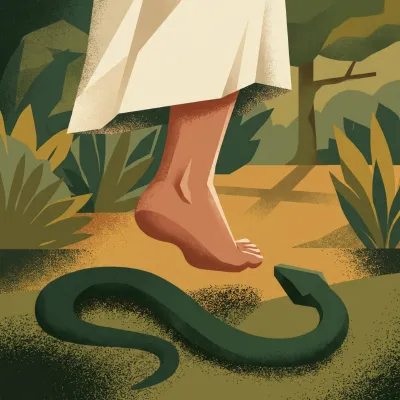
If You Understand Genesis 3:15, You Understand the Entire Bible
Genesis 3:15 is the first promise God ever made to guilty people, and everything the Bible does after it is God keeping that promise. One sentence, spoken in the worst hour in human history, in a garden that had just stopped being safe. Once you see what it is doing, the sixty six books of the Bible stop feeling like a stack of separate books and start reading like one story with one ending. God questioned the man. God questioned the woman. But He asked the serpent nothing. He turned to it and began sentencing, and Adam and Eve, hiding behind the trees, overheard God announce a war He was starting on their behalf. In this episode, we explore the promise hidden in Genesis 3:15. We notice that only the serpent and the ground are cursed, never the man and the woman. We unpack the rare Hebrew word for enmity, the single verb used for both the crushing of the head and the striking of the heel, and why ancient translators heard a person in this verse long before Jesus was born. We watch Adam name his wife Life, God clothe them with His own hands, Eve hold on to the word "offspring" after losing two sons, and Lamech name Noah in hope. And we follow the line through Tamar, Rahab, Ruth, and Mary to the cross, the empty tomb, and the last page of Revelation. The heel wound and the head wound are the same event described from two sides. The wound was the weapon. Bible verses included in this episode: “And I will put enmity between you and the woman, and between your offspring and hers; he will crush your head, and you will strike his heel.” (Genesis 3:15) “Adam named his wife Eve, because she would become the mother of all the living.” (Genesis 3:20) “The Lord God made garments of skin for Adam and his wife and clothed them.” (Genesis 3:21) “God has granted me another child in place of Abel, since Cain killed him.” (Genesis 4:25) “But when the set time had fully come, God sent his Son, born of a woman, born under the law.” (Galatians 4:4) “The reason the Son of God appeared was to destroy the devil's work.” (1 John 3:8) “No longer will there be any curse.” (Revelation 22:3) This message is for anyone carrying something they have never said out loud, anyone worn down by a life that keeps producing thorns, and anyone who feels God's promises were written for people with a cleaner history. God's first move toward failing people is a promise, and His anger has an enemy, and the enemy is not you. You can overhear something and still be the one it is for. The garden closed. The city opens. And the curse that started it all will not be there.
 34 min
Hard Bible Questions
Why Did God Create Satan Knowing He Would Rebel Against Him?
If God knew Satan would rebel, why create him at all? It is one of the hardest questions a believer can ask, because it tests what we believe about God's goodness, wisdom, and justice. God knows everything, and yet His creatures can choose. The Bible's answer begins with a boundary: evil is real, but evil is not original. God made all things good, including the high creature who later fell. Satan is not a rival god standing opposite the Lord. He is a creature, with a beginning, with limits, and with accountability. What God created was good because it made room for love. What God did not create was the crooked desire that set itself against Him. In this episode, we explore why real love requires a real will, and why a world of beings who could only follow but never choose would be a world without genuine worship or friendship with God. We look at the difference between God testing and a creature tempting, why foreknowledge is not the same as guilt, and how the cross shows God's plan and human responsibility standing side by side. We consider what Scripture reveals about Satan's fall and what it wisely leaves veiled, and why God chose a history in which His holiness, justice, mercy, and love would be displayed in their fullest range. Finally, we look at the end of the story, which is already certain. The deceiver's time is measured, and the devil's present activity runs on a leash. Bible verses included in this episode: “God saw all that he had made, and it was very good.” (Genesis 1:31) “You were blameless in your ways from the day you were created till wickedness was found in you.” (Ezekiel 28:15) “When tempted, no one should say, ‘God is tempting me.’ For God cannot be tempted by evil, nor does he tempt anyone.” (James 1:13) “This man was handed over to you by God’s deliberate plan and foreknowledge.” (Acts 2:23) “The secret things belong to the Lord our God, but the things revealed belong to us and to our children forever.” (Deuteronomy 29:29) “The reason the Son of God appeared was to destroy the devil’s work.” (1 John 3:8) “And the devil, who deceived them, was thrown into the lake of burning sulfur.” (Revelation 20:10) If this question has kept you up at night, you are not alone. The God who knew rebellion would come also chose to draw near, carried our shame, and promised a day when the shadows will be gone. The question begins with Satan, but the answer leads to Jesus. Evil is real, but not final.
 32 min
Hard Bible Questions
Why One Third of the Angels Chose to Follow Lucifer
A third of the angels followed Lucifer for a reason that is easy to say and hard to accept. He offered them a bigger version of themselves than the one God had given them, and they decided to trust his voice more than the voice of the God who made them. They were not dragged away against their will. And the same decision they made is one you are quietly making every day. Whose voice will you trust about who you are, what you are worth, and whether God is truly good to you? In this episode, we explore why one third of the angels chose to follow Lucifer. We begin before the world was made, when the morning stars sang together, and see why angels were created with wills free to love God or turn away. We look at the being Ezekiel describes as perfect from the day he was created, until pride grew from within, and hear the words Isaiah records from his heart: I will be like the Most High. Then we trace how rebellion spread. Comparison, discontent, and the pull of a crowd moved a third of heaven's host to shift their trust from God to Lucifer. We also look at the angels who kept not their first estate, the rescue God offered not to angels but to the seed of Abraham, and the two thirds who heard the same whisper and stayed. Bible verses included in this episode: “When the morning stars sang together, and all the sons of God shouted for joy.” (Job 38:7) “You were perfect in your ways from the day you were created, till iniquity was found in you.” (Ezekiel 28:15) “How you are fallen from heaven, O Lucifer, son of the morning!” (Isaiah 14:12) “His tail drew the third part of the stars of heaven, and did cast them to the earth.” (Revelation 12:4) “And the angels which kept not their first estate, but left their own habitation, he has reserved in everlasting chains under darkness unto the judgment of the great day.” (Jude 6) “For verily he took not on him the nature of angels; but he took on him the seed of Abraham.” (Hebrews 2:16) “Are they not all ministering spirits, sent forth to minister for them who shall be heirs of salvation?” (Hebrews 1:14) God is not holding out on you. He held nothing back and gave His own Son. Every throne the enemy offers is smaller than the place you already have as one He loves. Refuse the whisper. Treasure the Giver. The God who was always worth staying for is still holding the door open to you.
 31 min
Hard Bible Questions
Who Are the Seven Spirits of God in Revelation?
The seven spirits of God are not seven different spirits, and they are not seven angels standing in a row. They are one Spirit, the Holy Spirit Himself, shown in the fullness of everything He is. If you have ever felt that God gave you only a small piece of Himself, that others received His strong, whole presence while you were handed something thin and far away, then this vision was written for you. In this episode, we explore who the seven spirits of God in Revelation really are. We begin with the apostle John, old and alone as a prisoner on the island of Patmos, and his greeting to seven struggling churches. We step with him into the throne room of heaven, where seven lamps blaze before the throne, echoing the seven-branched lampstand that never went dark in the temple. We see why seven is the Bible's number of completeness, and how John drew on Isaiah's promise of the Spirit of wisdom, understanding, counsel, might, knowledge, and the fear of the Lord. Then we see the Lamb who was slain, with seven eyes that are the seven spirits of God sent out into all the earth. We also clear away common misunderstandings: the Spirit is not seven beings, not an impersonal force, and not a division in the oneness of God. Bible verses included in this episode: “Grace and peace to you from him who is, and who was, and who is to come, and from the seven spirits before his throne.” (Revelation 1:4) “In front of the throne, seven lamps were blazing. These are the seven spirits of God.” (Revelation 4:5) “The Spirit of the Lord will rest on him, the Spirit of wisdom and of understanding, the Spirit of counsel and of might, the Spirit of the knowledge and fear of the Lord.” (Isaiah 11:2) “Then I saw a Lamb, looking as if it had been slain, standing at the center of the throne. The Lamb had seven horns and seven eyes, which are the seven spirits of God sent out into all the earth.” (Revelation 5:6) God does not give His Spirit in pieces. Through Jesus, the full Spirit that rested on the Son is given to ordinary, tired people who come with empty hands, and once He comes, He stays. The Spirit before the throne is the Spirit sent into all the earth, and all the earth includes the very ground beneath your feet.
 32 min
Hard Bible Questions
Why God Is Obsessed With the Number 7 (It's Not What You Think)
If you have read the Bible for any length of time, you have noticed that the number seven is everywhere. Seven days of creation. Seven times around a city. Seven dips in a river. Seven churches, seven lamps, seven seals. But seven is not a lucky number, and it is not a secret code. Seven is the number God attaches to rest. It is the mark He leaves when a work is finished, when a burden is lifted, and when He draws near to stay. It is the shape of a God who does not leave things half done, and who does not intend to leave you half done either. In this episode, we explore why God keeps returning to the number seven. We begin with the seventh day of creation, the only day with no evening and no morning, and follow the thread through the Sabbath given to freed slaves, Noah's patient waiting in sevens, Joseph's seven years of plenty and famine, Israel's appointed feasts, the Sabbath year, and the Year of Jubilee. We look at the golden lampstand with its seven flames, the walls of Jericho falling on the seventh day, Naaman healed on the seventh dip in the Jordan, and Jesus' call to forgive seventy times seven. All of these threads find their center in Jesus: His seven signs in John's Gospel, His cry "It is finished," His rest in the tomb on the Sabbath, and the rest that still remains for the people of God. Bible verses included in this episode: “And on the seventh day God finished his work that he had done, and he rested on the seventh day from all his work that he had done.” (Genesis 2:2) “So God blessed the seventh day and made it holy.” (Genesis 2:3) “It is finished.” (John 19:30) “So then, there remains a Sabbath rest for the people of God.” (Hebrews 4:9) “Come to me, all who labor and are heavy laden, and I will give you rest.” (Matthew 11:28) “Behold, the dwelling place of God is with man. He will dwell with them, and they will be his people.” (Revelation 21:3) If you feel stuck on the sixth day, in the middle of the work and the waiting, this message is for you. The God who finishes what He begins has not forgotten your unfinished places. Your seventh is coming. Come to Him, lay down what you have been carrying, and rest.
 33 min
Hard Bible Questions
Will We Recognize Our Family in Heaven?
Will we recognize our family in heaven? Scripture's answer is yes. You will know them. The people who belong to God do not dissolve when they die. They keep their identity, their history, and their name. And your identity was never stored inside your own fading memory. It is held in the mind of God, who knows every person He has made by name and does not stop knowing them when they die. In this episode, we explore what the Bible reveals about recognizing our loved ones on the other side of death. We hear Job, sitting in the ashes after losing all ten of his children, insist that he himself will see God, "I, and not another." We listen to Jacob and David speak of going to children they had lost. We look at God's promise to call His people by name and engrave them on His hands, Moses and Elijah talking with Jesus on the mountain, the risen Christ keeping His scars, and Mary Magdalene recognizing Him the moment He spoke her name. We also face the hard questions honestly: what Jesus meant when He said there is no marriage in the resurrection, what it means that God is "the God of the living," how Hebrews says believers have already come to "the spirits of the righteous made perfect," what happens to the regrets and broken relationships we carry, and where Scripture stops when we grieve someone we are unsure about. Bible verses included in this episode: “I know that my Redeemer lives, and that in the end he will stand on the earth. And after my skin has been destroyed, yet in my flesh I will see God; I myself will see him with my own eyes, I, and not another. How my heart yearns within me!” (Job 19:25-27) “Do not fear, for I have redeemed you; I have called you by name; you are mine.” (Isaiah 43:1) “Though she may forget, I will not forget you! See, I have engraved you on the palms of my hands.” (Isaiah 49:15-16) “Jesus said to her, ‘Mary.’” (John 20:16) “He is not the God of the dead but of the living.” (Matthew 22:32) “For now we see only a reflection as in a mirror; then we shall see face to face. Now I know in part; then I shall know fully, even as I am fully known.” (1 Corinthians 13:12) “He will wipe every tear from their eyes. There will be no more death or mourning or crying or pain, for the old order of things has passed away.” (Revelation 21:4) “And so we will be with the Lord forever. Therefore encourage one another with these words.” (1 Thessalonians 4:17-18) If you are grieving in a house that feels far too quiet, you are not unnamed and you are not unnoticed. The people you miss are not gone. They are ahead of you, awake, whole, and gathered around the same Savior. The separation is real, but it is the shortest part of the story. Morning is coming, and nobody in that family goes unrecognized.
 32 min
Hard Bible Questions
Why John Called Jesus "The Word": The Hidden Meaning Behind John 1:1
Matthew begins his Gospel with a family tree. Luke begins with an old priest and a young woman in Nazareth. Mark begins with a man shouting by a river. John begins before the calendar exists: "In the beginning was the Word." Why did John call Jesus the Word? Because a word is the only thing in human experience that comes out of a person and still carries that person completely. And because everything God ever did in the history of His people, He did by speaking. When John needed a title for Jesus, he chose the one that gathered it all into a single life. The God who has been speaking since the first page of the Bible has now said the clearest thing He has to say, and what He said was a person. In this episode, we explore the hidden meaning behind John 1:1. We walk through John's three careful statements about the Word, the world spoken into being in Genesis, and the Hebrew idea that a word from God is an event. We follow "the word of the Lord" as it came to Abram, Samuel, Jeremiah, Ezekiel, and Elijah, and feel the ache of a people who heard God's voice but never saw His face, when even Moses was told, "You cannot see my face." Then we come to the Word made flesh, the Greek word logos, the storm stilled by His voice, the common mistake of reading this verse as a verse about a book, and the one kind of power that can be turned down. Bible verses included in this episode: “In the beginning was the Word, and the Word was with God, and the Word was God.” (John 1:1) “By the word of the Lord the heavens were made, their starry host by the breath of his mouth.” (Psalm 33:6) “The Lord continued to appear at Shiloh, and there he revealed himself to Samuel through his word.” (1 Samuel 3:21) “The Word became flesh and made his dwelling among us. We have seen his glory, the glory of the one and only Son, who came from the Father, full of grace and truth.” (John 1:14) “No one has ever seen God, but the one and only Son, who is himself God and is in closest relationship with the Father, has made him known.” (John 1:18) “Yet to all who did receive him, to those who believed in his name, he gave the right to become children of God.” (John 1:12) “In the past God spoke to our ancestors through the prophets at many times and in various ways, but in these last days he has spoken to us by his Son.” (Hebrews 1:1-2) “He is dressed in a robe dipped in blood, and his name is the Word of God.” (Revelation 19:13) If you are tired, alone, getting older, or carrying shame, the only thing the Word of God requires of you is a listener. God is not silent about you. He has spoken most clearly of all in His Son.
 32 min
Stories of Bible Characters
Why Is There No Tribe Of Joseph In Israel? The Shocking Reason Explained
There is a name missing from the map of Israel, and it belongs to the one man who made the map possible. Joseph, the favorite son and the dreamer who saved his whole family from famine, has no territory named after him when Joshua divides the promised land among the tribes. It can look like an oversight, or even an insult. But Joseph's name is not missing because he received too little. It is missing because he received too much to fit inside a single border. In this episode, we explore the surprising reason there is no tribe of Joseph. We look at the birthright and double portion of the firstborn, how Reuben lost it, and how it passed to Joseph. We step into a dim room in Egypt where the dying Jacob adopts Joseph's two sons, Ephraim and Manasseh, as his own, and then crosses his arms to bless the younger above the older, redeeming the deception of his own youth. We see why the count of the tribes still stays at twelve because Levi's inheritance was the Lord Himself, and why two boys with an Egyptian mother became the model of blessing for generations. We also trace Joseph's name through the rest of Scripture, from Shiloh and the Psalms to Ezekiel's "two portions" and the tribe of Joseph in Revelation 7, and see how Joseph's story points to Jesus, the beloved Son whose reward is children adopted into God's family. Bible verses included in this episode: “He was the firstborn, but because he defiled his father’s bed, his birthright was given to the sons of Joseph.” (1 Chronicles 5:1) “And now your two sons, Ephraim and Manasseh, who were born to you in the land of Egypt before I came to you in Egypt, are mine; as Reuben and Simeon, they shall be mine.” (Genesis 48:5) “I know, my son, I know. He also shall become a people, and he also shall be great; but truly his younger brother shall be greater than he.” (Genesis 48:19) “By you Israel will bless, saying, ‘May God make you as Ephraim and as Manasseh!’” (Genesis 48:20) “The Lord is his inheritance.” (Deuteronomy 10:9) “Give ear, O Shepherd of Israel, You who lead Joseph like a flock.” (Psalm 80:1) “Joseph shall have two portions.” (Ezekiel 47:13) “But as many as received Him, to them He gave the right to become children of God.” (John 1:12) If you feel overlooked, left off the lists, or wonder whether your background disqualifies you, let Joseph's story stand as a witness. The people the world can no longer find on its lists are often the ones God has recorded most carefully. The God who never forgot Joseph has not forgotten you. The double portion always comes after the pit.
 32 min
Stories of Bible Characters
The Fall of Lucifer: How the Most Beautiful Angel Became Satan
The most beautiful angel who ever existed did not become Satan because he was tricked, wounded, or forced. He fell because of what happened quietly inside his own heart. A creature who stood closer to God than almost anything ever made looked at his beauty, his wisdom, and his nearness to the throne, and decided it was not enough. He wanted to be like God instead of loving God. If you have ever felt far from God, unworthy, tired, or ashamed of your own heart, this story is for you. The one who fell was not far from God when he fell. He was near. And that tells us that nearness alone is not what keeps us safe. In this episode, we explore the fall of Lucifer, gathering the pieces Scripture gives us in Isaiah 14 and Ezekiel 28. We look at where the name Lucifer comes from, how high this anointed guardian once stood, and how pride grew in secret until it became rebellion. We follow him from heaven to the garden of Eden, where he offered the same lie that ruined him, and we see what he truly lost. Not a battle, which he could never win, but nearness to God. Then the story turns from warning to good news. Where Lucifer, a creature, reached up to seize God's place, Jesus, who truly is God, came down, humbled Himself, and went to the cross for us. The title the fallen angel lost, the morning star, now belongs to Christ. Bible verses included in this episode: “How you have fallen from heaven, morning star, son of the dawn!” (Isaiah 14:12) “Your heart became proud on account of your beauty, and you corrupted your wisdom because of your splendor.” (Ezekiel 28:17) “You said in your heart, ‘I will ascend to the heavens, I will raise my throne above the stars of God... I will make myself like the Most High.’” (Isaiah 14:13–14) “Become conceited and fall under the same judgment as the devil.” (1 Timothy 3:6) “I saw Satan fall like lightning from heaven.” (Luke 10:18) “The great dragon was thrown down, that ancient serpent, who is called the devil and Satan, the deceiver of the whole world.” (Revelation 12:9) “I am the bright Morning Star.” (Revelation 22:16) You are not shut out because you are weak. Weakness is not what brought down the morning star. Pride is. The nearness he threw away is offered back to you freely in Jesus Christ. Not earned. Not deserved. Given. The morning star fell reaching upward. You can be lifted up simply by kneeling down. Come low, come honest, come as you are.
 39 min
Stories of Bible Characters
Absalom - The Most Beautiful Traitor in the Bible
Absalom became a traitor because admiration was the only thing anyone ever gave him. Israel praised his face. Strangers turned in the street to watch him pass. But in all those years of being looked at, no one ever answered the one question he actually asked. He had killed a brother, and he wanted his father to rule on it. What he got was silence from his father, then a kiss, and nothing in between. The Bible almost never describes what its people looked like. Then it comes to Absalom and stops to stare. Here was a prince with royal blood on both sides, wealth, charm, and a face the nation talked about. Everyone assumed they were looking at Israel's future. In this episode, we explore the complete story of Absalom, David's third son. We follow the crime against his sister Tamar that went unanswered, the feast at Baal Hazor where Amnon was struck down, three years of exile in Geshur, and two more years living in Jerusalem without ever seeing the king's face. We watch him stand at the city gate, handing strangers the very hearing his father denied him, until he stole the hearts of Israel. We walk with David as he flees barefoot up the Mount of Olives, see Ahithophel's counsel overturned by the hand of God, and stand in the forest of Ephraim where Absalom's life ended hanging in an oak tree. Finally, we hear the cry of a father who loved his son all along, and we see how God does everything David could not do. He devises ways so that a banished person does not remain banished from Him. Bible verses included in this episode: “In all Israel there was not a man so highly praised for his handsome appearance as Absalom. From the top of his head to the sole of his foot there was no blemish in him.” (2 Samuel 14:25) “Like water spilled on the ground, which cannot be recovered, so we must die. But that is not what God desires; rather, he devises ways so that a banished person does not remain banished from him.” (2 Samuel 14:14) “Absalom behaved in this way toward all the Israelites who came to the king asking for justice, and so he stole the hearts of the people of Israel.” (2 Samuel 15:6) “I lie down and sleep; I wake again, because the Lord sustains me.” (Psalm 3:5) “For the Lord had determined to frustrate the good advice of Ahithophel in order to bring disaster on Absalom.” (2 Samuel 17:14) “O my son Absalom! My son, my son Absalom! If only I had died instead of you, O Absalom, my son, my son!” (2 Samuel 18:33) “They will see his face, and his name will be on their foreheads.” (Revelation 22:4) If you are living with a long silence of your own, it can start to sound like an answer, as if you have been set aside. That reading is wrong. God has already spoken, in a manger, at a cross, and at an empty tomb. Absalom died reaching for a face. You will see one, and it will be turned toward you.
 31 min
Words of Jesus
What did Jesus mean when He said, “Many are called, but few are chosen”?
Imagine standing before the kingdom of God, your name called and the gates open, only to hear that you were called but not chosen. These words are not meant to scare you. They are meant to wake you. The invitation is real and open to many, but entry is not on our terms. The King gladly welcomes, and the King carefully examines. So what marks the difference between hearing the invitation and belonging to the King? Jesus answers with a wedding feast, a wide invitation sent out into the streets, and one guest found inside without a wedding garment. In this episode, we explore what Jesus meant by “many are called, but few are chosen.” We look at the royal summons of the call, generous, timely, and sincere, reaching people who never imagined themselves inside a king’s hall. We then consider what it means to be chosen: to be clothed in the robe the King Himself provides, the garment of salvation that covers what we could never fix on our own. We see why some refuse the robe, whether from pride, control, or shame, and why Jesus warns so clearly against empty confidence that mistakes nearness for belonging. We also trace how Israel’s history and the promises of the prophets meet in this parable, and how the narrowing Jesus describes comes not from the King’s stinginess but from the human heart’s reluctance. The feast is big. Our pride is small and stubborn. Bible verses included in this episode: “For many are called, but few are chosen.” (Matthew 22:14) “Friend, how did you get in here without a wedding garment?” (Matthew 22:12) “He has clothed me with the garments of salvation; he has covered me with the robe of righteousness.” (Isaiah 61:10) “It was granted her to clothe herself with fine linen, bright and pure.” (Revelation 19:8) “Not everyone who says to me, ‘Lord, Lord,’ will enter the kingdom of heaven, but the one who does the will of my Father.” (Matthew 7:21) A King has prepared a table and spoken your name. You are not being asked to decorate yourself to earn a place. You are being offered a covering you could never weave. There is room for you, and there is a robe for you. The door is open now. Come as one who needs to be clothed, and be among those who are not only invited, but also known, covered, and kept.
 30 min
Bible Books Explained
The Greatest Revelation in The BOOK of ISAIAH
What is the greatest revelation of the end times in the book of Isaiah? Many people think the end times are mainly about fear, disasters, signs, and dates. But long before the book of Revelation, the prophet Isaiah saw a vision that reached far beyond his own generation. He saw the fall of nations, the judgment of empty religion, the coming of the Messiah, the suffering of the Servant, and the final hope of new heavens and a new earth. In this episode, we walk through the powerful message of Isaiah and discover why his book is one of the greatest keys to understanding the whole Bible. Isaiah lived in a nation that looked religious on the outside but was spiritually rotten on the inside. The people worshiped in the temple, but their hearts were full of pride, injustice, greed, and sin. Through Isaiah, God exposed their false worship and called them back to true repentance. But Isaiah’s message was not only judgment. It was also filled with hope. He saw the Lord seated on the throne. He heard the promise of Immanuel, God with us. He spoke of the child who would carry the government of God. He saw the Branch from the stump of Jesse, the Servant who would suffer for our sins, and the King who would one day reign in perfect peace. This episode shows that the end times are not built around a calendar. They are built around a Person. The child who is born, the Son who is given, the suffering Servant, the Branch of Jesse, the King of peace, and Immanuel all point to Jesus Christ. Isaiah reminds us that judgment is real, but grace is offered before judgment falls. God sees the evil in the world, but He also sees the secrets of the human heart. And through the suffering Servant, He opens the way for sinners to be forgiven, restored, and made ready for the day when He creates new heavens and a new earth. Bible verses included in this episode: “Listen, you heavens, and hear, you earth. The Lord has spoken, I raised children and brought them up, but they turned against me.” (Isaiah 1:2) “When you lift up your hands in prayer, I will turn my eyes away from you. Even if you pray many times, I will not listen, because your hands are covered with blood.” (Isaiah 1:15) “Wash yourselves and make yourselves clean. Stop doing the evil things I see you do. Learn to do what is right. Seek justice. Help those who are treated badly. Defend the orphan and stand up for the widow.” (Isaiah 1:16–17) “In the year that King Uzziah died, I saw the Lord. He was sitting on a high and exalted throne, and the train of his robe filled the temple.” (Isaiah 6:1) “And they called to each other, ‘Holy, holy, holy is the Lord of hosts, the whole earth is full of his glory.’” (Isaiah 6:3) “Then I said, Woe to me! I am ruined! For I am a man with unclean lips, and I live among a people with unclean lips, and my eyes have seen the King, the Lord of hosts.” (Isaiah 6:5) “He touched my mouth with it and said, Look, this has touched your lips. Your guilt is taken away, and your sin is forgiven.” (Isaiah 6:7) “Then I heard the voice of the Lord saying, Whom shall I send, and who will go for us? And I said, ‘Here am I, send me.’” (Isaiah 6:8) “Ask the Lord your God for a sign, whether from the depths below or from the heights above.” (Isaiah 7:11) “Therefore the Lord himself will give you a sign, The virgin will become pregnant and will give birth to a son, and she will call his name Immanuel.” (Isaiah 7:14) “The people walking in darkness have seen a great light. Those living in the land of the shadow of death, on them a light has shined.” (Isaiah 9:2) “For to us a child is born, to us a son is given, and the government will rest on his shoulders. His name will be called Wonderful Counselor, Mighty God, Everlasting Father, Prince of Peace.” (Isaiah 9:6) “A shoot will come up from the stump of Jesse, and from his roots a Branch will bear fruit.” (Isaiah 11:1) “The wolf will live with the lamb, the leopard will lie down with the young goat, the calf, the young lion, and the fattened calf together, and a little child will lead them.” (Isaiah 11:6) “They will not hurt or destroy in all my holy mountain, for the earth will be full of the knowledge of the Lord as the waters cover the sea.” (Isaiah 11:9) “Comfort, comfort my people, says your God.” (Isaiah 40:1) “A voice of one calling, In the wilderness prepare the way of the Lord, make straight in the desert a highway for our God.” (Isaiah 40:3) “See, the Lord God comes with power, and his arm rules for him. See, his reward is with him, and his recompense is before him.” (Isaiah 40:10) “Here is my servant, whom I uphold, my chosen one in whom my soul delights. I have put my Spirit on him, and he will bring justice to the nations.” (Isaiah 42:1) “He was despised and rejected by men, a man of sorrows and familiar with suffering. Like one from whom people hide their faces, he was despised, and we did not value him.” (Isaiah 53:3) “I gave my back to those who beat me, and my cheeks to those who pulled out my beard. I did not hide my face from shame and from spitting.” (Isaiah 50:6) “Surely he took up our pain and carried our sorrows, yet we considered him punished by God, struck down by him and afflicted.” (Isaiah 53:4) “But he was pierced for our transgressions, he was crushed for our iniquities, the punishment that brought us peace was on him, and by his wounds we are healed.” (Isaiah 53:5) “He was oppressed and he was afflicted, yet he did not open his mouth. Like a lamb led to the slaughter, and like a sheep that is silent before its shearers, so he did not open his mouth. He was taken away by oppression and judgment. And who of his generation considered that he was cut off from the land of the living for the transgression of my people, to whom the blow was due? He was assigned a grave with the wicked, and with a rich man in his death, though he had done no violence, and no deceit was in his mouth.” (Isaiah 53:7–9) “After the suffering of his soul, he will see the result and be satisfied. By his knowledge my righteous servant will make many righteous, for he will bear their iniquities.” (Isaiah 53:11) “Come, everyone who is thirsty, come to the waters. And you who have no money, come, buy and eat! Come, buy wine and milk without money and without cost.” (Isaiah 55:1) “Seek the Lord while he may be found, call on him while he is near. Let the wicked leave their way and the unrighteous their thoughts. Let them return to the Lord, and he will have mercy on them, and to our God, for he will freely pardon.” (Isaiah 55:6–7) “For as the heavens are higher than the earth, so my ways are higher than your ways, and my thoughts than your thoughts.” (Isaiah 55:9) “For my house will be called a house of prayer for all peoples.” (Isaiah 56:7) “Is not this the kind of fast I have chosen, to loose the chains of wickedness, to undo the straps of the yoke, to set the oppressed free and break every yoke? Is it not to share your bread with the hungry and to bring the poor wanderer into your house, when you see the naked, to clothe them, and not to hide yourself from your own flesh?” (Isaiah 58:6–7) “Then your light will break forth like the dawn, and your healing will quickly appear. Your righteousness will go before you, and the glory of the Lord will be your rear guard.” (Isaiah 58:8) “For see, I create new heavens and a new earth, and the former things will not be remembered, nor will they come to mind.” (Isaiah 65:17) “The wolf and the lamb will feed together, and the lion will eat straw like the ox, and dust will be the serpent’s food. They will not hurt or destroy in all my holy mountain, says the Lord.” (Isaiah 65:25) “For as the new heavens and the new earth that I make will remain before me, says the Lord, so your offspring and your name will remain.” (Isaiah 66:22) “Then I saw a new heaven and a new earth, for the first heaven and the first earth had passed away, and the sea was no more.” (Revelation 21:1) “Seek the Lord while he may be found, call on him while he is near.” (Isaiah 55:6) The book of Isaiah reveals that the future is not controlled by fear, chance, evil, or human power. It is held in the hands of the Servant King. The One who was pierced for our sins will reign forever, and the One who calls us to return today will one day make all things new.
 32 min
Hard Bible Questions
The Truth About Daily Life in Heaven Most Christians Miss
What will daily life in heaven really be like according to the Bible? Many people imagine heaven as a distant place in the clouds, where souls float forever in a vague spiritual world. But the Bible gives us a much richer and more powerful picture. Heaven is not less real than this world. It is more real. It is the renewed creation, the new heaven and new earth, where God dwells with His people and everything broken by sin is finally made whole. In this episode, we explore what Scripture reveals about daily life in heaven. We begin in Eden, where humanity was made to walk with God without fear, shame, or death. Then we follow the story all the way to Revelation, where the garden returns, the tree of life stands within reach again, and the river of life flows from the throne of God. We’ll look at what our resurrected bodies will be like, what will be gone forever, what we will actually do, why heaven will never be boring, and why seeing the face of God is the heart of eternal life. Heaven is not an endless emptiness. It is meaningful work, deep rest, perfect fellowship, unbroken joy, and the fullness of life with God. This is not just a future hope. It is a truth meant to strengthen you right now. If you are tired, grieving, lonely, aging, or carrying pain no one else sees, the Bible’s promise of heaven reminds you that none of this is the final word. The gate that was closed in Eden has been opened by Jesus, and the home He prepared will be more beautiful, more solid, and more alive than anything we have ever known. Bible verses included in this episode: “Then I saw a new heaven and a new earth, for the first heaven and the first earth had passed away.” (Revelation 21:1) “It is sown a natural body, it is raised a spiritual body.” (1 Corinthians 15:44) “He will transform our lowly bodies so that they will be like his glorious body.” (Philippians 3:21) “He will wipe every tear from their eyes. There will be no more death or mourning or crying or pain, for the old order of things has passed away.” (Revelation 21:4) “The city does not need the sun or the moon to shine on it, for the glory of God gives it light, and the Lamb is its lamp.” (Revelation 21:23) “At the resurrection people will neither marry nor be given in marriage; they will be like the angels in heaven.” (Matthew 22:30) “His servants will serve him.” (Revelation 22:3) “They will see his face, and his name will be on their foreheads.” (Revelation 22:4) “For now we see only a reflection as in a mirror; then we shall see face to face. Now I know in part; then I shall know fully, even as I am fully known.” (1 Corinthians 13:12) “Blessed are those who are invited to the wedding supper of the Lamb.” (Revelation 19:9) “My Father's house has many rooms; if that were not so, would I have told you that I am going there to prepare a place for you?” (John 14:2) The story begins with a closed gate, but it ends with an open one. The garden that was lost will return greater than before. The river of life will flow again. The tree of life will stand within reach. And the God who once walked with His people in the cool of the day will dwell with them forever. Daily life in heaven will be the fullest, freest, most alive existence any human being has ever known. A real world. A whole body. Meaningful work. Deep rest. Faces you love. And above all, the face of God Himself.
 32 min
Hard Bible Questions
Why Does God Allow So Much Suffering and Evil?
This is one of the hardest questions people bring to faith. For some, it is the reason they walked away from God. For others, it is the question they still carry quietly while they pray, worship, and try to believe. The pain is not abstract. It is the accident that took someone too soon, the betrayal that broke a family, the illness that will not leave, the wound from years ago that still aches. In this episode, we walk through what the Bible says about suffering, evil, and the goodness of God. Scripture does not give cheap answers or ask us to pretend pain is small. Instead, it tells the story of a good creation damaged by sin, a world groaning under brokenness, and a Savior who entered our suffering through the cross. We’ll explore where suffering comes from, including human sin, the brokenness of creation, and spiritual evil. We’ll also look at why God does not erase evil immediately, how His patience gives room for repentance, and why the cross changes everything about how we see pain. This message is not only about finding answers. It is about learning to trust God’s heart when life hurts. The Bible shows us that evil is real, but it is not final. Pain is heavy, but it is not forever. God has promised a day when Christ will return, every wrong will be judged, creation will be made new, and every tear will be wiped away. Bible verses included in this episode: “God saw all that he had made, and it was very good.” (Genesis 1:31) “We know that the whole creation has been groaning as in the pains of childbirth right up to the present time.” (Romans 8:22) “for all have sinned and fall short of the glory of God.” (Romans 3:23) “He is patient with you, not wanting anyone to perish, but everyone to come to repentance.” (2 Peter 3:9) “He was despised and rejected by mankind, a man of suffering, and familiar with pain.” (Isaiah 53:3) “But God demonstrates his own love for us in this: While we were still sinners, Christ died for us.” (Romans 5:8) “And we know that in all things God works for the good of those who love him, who have been called according to his purpose.” (Romans 8:28) “He will wipe every tear from their eyes. There will be no more death or mourning or crying or pain.” (Revelation 21:4)
 46 min
Stories of Bible Characters
Mary - The Mother of Jesus
Who was Mary, the mother of Jesus, really? Mary is the most famous woman in history, yet the Bible presents her with surprising quietness. She speaks only a few times, but her life stands at the center of God’s plan of salvation. In this episode, we explore the complete story of Mary like you’ve never seen it before, from her hidden early life and ancient traditions, to the angel Gabriel’s announcement, the birth of Jesus, the sword that pierced her soul, the cross, the resurrection, and her final appearance in the Upper Room. We’ll look at Mary not as a distant figure in stained glass, but as a real woman of courage, faith, suffering, and surrender. She was a young girl who risked her reputation and her life when she said yes to God. She was a mother who fled with her child into Egypt. She was a widow who watched her son leave home to begin His ministry. She was a disciple who had to learn that Jesus belonged not only to her, but to the whole world. This episode also explores ancient Christian traditions about Mary’s childhood, her betrothal to Joseph, the sorrow she endured, and the mystery of her final years. From Bethlehem to Calvary, from the manger to the cross, Mary’s story is a masterpiece of grace. She teaches us how to trust when we do not understand, how to suffer without giving up, how to treasure God’s word, and how to say with complete faith, “Let it be done to me according to your word.” Bible verses included in this episode: “The next day, Moses entered the tent of the testimony and saw that Aaron’s staff, which represented the tribe of Levi, had not only sprouted but had budded, blossomed and produced almonds.” (Numbers 17:8) “Greetings, you who are highly favored! The Lord is with you.” (Luke 1:28) “Do not be afraid, Mary; you have found favor with God. You will conceive and give birth to a son, and you are to call him Jesus. He will be great and will be called the Son of the Most High. The Lord God will give him the throne of his father David.” (Luke 1:30–32) “How will this be,” Mary asked the angel, “since I am a virgin?” (Luke 1:34) “I am the Lord’s servant,” Mary answered. “May your word to me be fulfilled.” (Luke 1:38) “Blessed are you among women, and blessed is the child you will bear! But why am I so favored, that the mother of my Lord should come to me?” (Luke 1:42–43) “Joseph son of David, do not be afraid to take Mary home as your wife, because what is conceived in her is from the Holy Spirit. She will give birth to a son, and you are to give him the name Jesus, because he will save his people from their sins.” (Matthew 1:20–21) “But the angel said to them, ‘Do not be afraid. I bring you good news that will cause great joy for all the people. Today, in the town of David, a Savior has been born to you; he is the Messiah, the Lord.’” (Luke 2:10–11) “But Mary treasured up all these things and pondered them in her heart.” (Luke 2:19) “This child is destined to cause the falling and rising of many in Israel, and to be a sign that will be spoken against, so that the thoughts of many hearts will be revealed. And a sword will pierce your own soul too.” (Luke 2:34–35) “Son, why have you treated us like this? Your father and I have been anxiously searching for you.” (Luke 2:48) “Why were you searching for me?” he asked. “Didn’t you know I had to be in my Father’s house?” (Luke 2:49) “They have no more wine.” (John 2:3) “Woman, why do you involve me?” Jesus replied. “My hour has not yet come.” (John 2:4) “Do whatever he tells you.” (John 2:5) “When his family heard about this, they went to take charge of him, for they said, ‘He is out of his mind.’” (Mark 3:21) “Who are my mother and my brothers?” he asked. Then he looked at those seated in a circle around him and said, “Here are my mother and my brothers! For whoever does the will of God is my brother and sister and mother.” (Mark 3:33–35) “When Jesus saw his mother there, and the disciple whom he loved standing nearby, he said to her, ‘Woman, here is your son,’ and to the disciple, ‘Here is your mother.’ From that time on, this disciple took her into his home.” (John 19:26–27) “It is finished.” (John 19:30) “They all joined together constantly in prayer, along with the women and Mary the mother of Jesus, and with his brothers.” (Acts 1:14) “You will not let your holy one see decay.” (Psalm 16:10) “A great sign appeared in heaven: a woman clothed with the sun, with the moon under her feet and a crown of twelve stars on her head. She was pregnant and cried out in pain as she was about to give birth.” (Revelation 12:1–2) Mary’s story is not only a story of honor. It is a story of surrender. She believed God when the path was dangerous, followed Jesus when the cost was painful, stood at the cross when others fled, and prayed with the church as the Holy Spirit came. Her life invites us to treasure the words of God, ponder them in our hearts, and trust Him completely, even when we do not yet understand the road ahead.
 39 min
Bible Books Explained
The Book of Revelation
Imagine an old man trapped on a rocky island, listening to the waves crash against the shore and wondering if the mission is over. In this episode, we journey to Patmos to witness the vision that shattered the silence for the Apostle John. We look past the scary monsters and disasters to find the complete story of Revelation as you have never seen it before. We walk through seven ancient cities where spiritual mirrors reveal the cold hearts, the dangerous compromises, and the lukewarm spirits of humanity. We enter the throne room of the universe to see a scroll that no one was worthy to open until a Lion appeared as a slain Lamb. From the breaking of the seven seals to the fall of the seductive system called Babylon, we explore how the story of the world ends not with a whimper but with the glorious return of the King. We uncover the mystery of the two witnesses, the war in heaven, and the final invitation to a city where the light never fades. This episode shows that Revelation is not just a book of warnings but a breathtaking love story about a God who refuses to let evil win and is making everything new. Scripture References "Do not be afraid. I am the First and the Last. I am the Living One; I was dead, and now look, I am alive for ever and ever! And I hold the keys of death and Hades." (Revelation 1:17 to 18) "I know your deeds; you have a reputation of being alive, but you are dead. Wake up! Strengthen what remains and is about to die." (Revelation 3:1 to 2) "I know that you have little strength, yet you have kept my word and have not denied my name." (Revelation 3:8) "You say, ‘I am rich; I have acquired wealth and do not need a thing.’ But you do not realize that you are wretched, pitiful, poor, blind and naked." (Revelation 3:17) "Because you are lukewarm—neither hot nor cold—I am about to spit you out of my mouth." (Revelation 3:16) "Come up here, and I will show you what must take place after this." (Revelation 4:1) "Do not weep! See, the Lion of the tribe of Judah, the Root of David, has triumphed. He is able to open the scroll and its seven seals." (Revelation 5:5) "How long, Sovereign Lord, holy and true, until you judge the inhabitants of the earth and avenge our blood?" (Revelation 6:10) "The great dragon was hurled down—that ancient serpent called the devil, or Satan, who leads the whole world astray." (Revelation 12:9) "Go, pour out the seven bowls of God’s wrath on the earth." (Revelation 16:1) "Babylon the Great, the Mother of Prostitutes and of the Abominations of the Earth." (Revelation 17:5) "Fallen! Fallen is Babylon the Great!" (Revelation 18:2) "Woe! Woe to you, great city, you mighty city of Babylon! In one hour your doom has come!" (Revelation 18:10) "And human beings sold as slaves." (Revelation 18:13) "The music of harpists and musicians, pipers and trumpeters, will never be heard in you again. No worker of any trade will ever be found in you again. The sound of a millstone will never be heard in you again. The light of a lamp will never shine in you again. The voice of bridegroom and bride will never be heard in you again." (Revelation 18:22 to 23) "Look! God’s dwelling place is now among the people, and he will dwell with them. They will be his people, and God himself will be with them and be their God." (Revelation 21:3) "He will wipe every tear from their eyes. There will be no more death or mourning or crying or pain, for the old order of things has passed away." (Revelation 21:4) "Look, I am coming soon! My reward is with me, and I will give to each person according to what they have done. I am the Alpha and the Omega, the First and the Last, the Beginning and the End." (Revelation 22:12 to 13)
 30 min
Hard Bible Questions
Jesus is the Word of God
What does it really mean for Jesus to be called the “Word of God”? This title sounds simple, but it carries one of the deepest truths in all of Scripture. Jesus is not merely a messenger from God. He is God’s final and fullest speech to the world. In Him, God does not simply send information. God comes near in a person. In this episode, we explore why John calls Jesus the Word, how this connects to creation, prophecy, Scripture, salvation, and the entire story of the Bible. The same Word through whom all things were made stepped into human flesh, dwelt among us, revealed the Father, carried our sin, rose from the dead, and will return in glory. We’ll see how Jesus is both with God and is God, why His words carry creative power, and why listening to Him is not just hearing good teaching, but hearing the voice of God Himself. From Genesis to the Gospels, from the prophets to Revelation, the title “Word of God” shows us that God has spoken clearly, personally, and finally in His Son. This is not just a doctrine to understand. It is a truth to trust. When the world is loud, when fear rises, and when your own thoughts feel crowded, the Word of God still speaks. His voice brings light, life, truth, forgiveness, and hope that death cannot silence. Bible verses included in this episode: “In the beginning was the Word, and the Word was with God, and the Word was God” and “All things were made by him; and without him was not any thing made that was made” (John 1:1 to 3) “The Word was made flesh, and dwelt among us” (John 1:14) “Anyone who has seen me has seen the Father” (John 14:9) “In the past God spoke to our ancestors through the prophets at many times and in various ways, but in these last days he has spoken to us by his Son… The Son is the radiance of God’s glory and the exact representation of his being” (Hebrews 1:1 to 3) “He was clothed with a vesture dipped in blood: and his name is called The Word of God” (Revelation 19:13) God has spoken, and His Word has a name. Hold fast to Jesus. Let His voice define truth, settle fear, and shape your steps, from the first light of morning to the quiet of night.
 29 min
Hard Bible Questions
What It Means for Jesus to Be the Word of God
What does it mean when the Bible calls Jesus the Word of God? In this episode, we explore one of the deepest and most beautiful names of Jesus. This title does not mean mere words on a page. It means that God has spoken to us fully in a person. Jesus is the eternal Word who was with God, who is God, and who came into the world to reveal the Father, bring new creation, fulfill prophecy, and give life to all who believe in Him. John writes, “In the beginning was the Word, and the Word was with God, and the Word was God.” (John 1:1) He continues, “All things were made by him; and without him was not any thing made that was made.” (John 1:3) Then comes the great mystery of the Gospel, “And the Word was made flesh, and dwelt among us.” (John 1:14) Jesus revealed the Father so fully that He could say, “Anyone who has seen me has seen the Father.” (John 14:9) Hebrews declares, “In the past God spoke to our ancestors through the prophets at many times and in various ways, but in these last days he has spoken to us by his Son… The Son is the radiance of God’s glory and the exact representation of his being.” (Hebrews 1:1 to 3) And at the end of Scripture, Jesus appears again in glory, “He was clothed with a vesture dipped in blood: and his name is called The Word of God.” (Revelation 19:13) This episode shows how the whole Bible points to Christ. He is the Word in creation, the Word in prophecy, the Word made flesh, and the Word who brings salvation. To know Jesus is to hear God’s voice, see God’s heart, and receive the life only He can give.
 32 min
Hard Bible Questions
Why are both Jesus and Satan referred to as the Morning Star
Two names. One title. A question that unsettles many: why does the Bible refer to both Jesus Christ and the ancient enemy as the Morning Star? In this episode, we unpack why this shared image is not a mistake, but a precise tool used by the Holy Spirit to teach the difference between borrowed light and the true Light that ends the night. We explore the taunt of Isaiah 14, where a brilliant boast collapses into a sudden fall, and contrast it with the promise of Revelation 22, where the risen Lord declares Himself the bright sign that God’s new day is certain. This journey clarifies how Scripture uses a common object from the natural world to expose the fragility of human pride while anchoring our souls in the unshakable glory of Christ. This episode is a guide to reading the Bible with calm confidence, helping you discern between the lights that dazzle and fade and the only light that promises to shine forever. Scripture References "How you are fallen from heaven, O Day Star, son of Dawn!" (Isaiah 14:12) "I will ascend. I will raise my throne. I will make myself like the Most High." (Isaiah 14:13 to 14) "I am the root and the descendant of David, the bright morning star." (Revelation 22:16) "I will give him the morning star." (Revelation 2:28) "Until the day dawns and the morning star rises in your hearts." (2 Peter 1:19) "I saw Satan fall like lightning from heaven." (Luke 10:18) This episode shows that the shared wording does not blur the distinction between Jesus and the enemy. Instead, it serves as a stark contrast: one is a false light that seeks a throne and falls, while the Other is the true light that receives a throne and reigns.
 40 min
Hard Bible Questions
Why Jesus Had to Go To HELL the 3 Days after his Death
Why did Jesus descend into hell after His death, and what did those three days really mean? In this episode, we explore the mystery of Jesus’ descent into the realm of the dead, the depth of His suffering, the fulfillment of prophecy, and His victory over sin, death, and hell. This message shows that Jesus did not only die for our sins, but entered the darkest domain of death itself to proclaim victory and secure freedom for all who believe. On the cross, Jesus cried out, “My God, My God, why have You forsaken Me?” (Matthew 27:46) John the Baptist declared of Jesus, “Behold! The Lamb of God who takes away the sin of the world!” (John 1:29) Scripture says, “Christ also suffered once for sins, the righteous for the unrighteous, to bring you to God. He was put to death in the body but made alive in the Spirit. After being made alive, He went and made proclamation to the imprisoned spirits.” (1 Peter 3:18 to 19) David prophesied, “For You will not leave my soul in Sheol, Nor will You allow Your Holy One to see corruption.” (Psalm 16:10) Jesus declares in Revelation, “I am He who lives, and was dead, and behold, I am alive forevermore. Amen. And I have the keys of Hades and of Death.” (Revelation 1:18) The prophet Isaiah wrote, “He is despised and rejected by men, A Man of sorrows and acquainted with grief. And we hid, as it were, our faces from Him. He was despised, and we did not esteem Him.” (Isaiah 53:3) And again, “But He was wounded for our transgressions, He was bruised for our iniquities. The chastisement for our peace was upon Him, And by His stripes we are healed.” (Isaiah 53:5) Scripture also says, “And He Himself is the propitiation for our sins, and not for ours only but also for the whole world.” (1 John 2:2) Paul writes, “For if we have been united together in the likeness of His death, certainly we also shall be in the likeness of His resurrection.” (Romans 6:5) And because of Christ’s victory, we can say with confidence, “Yet in all these things we are more than conquerors through Him who loved us.” (Romans 8:37) This episode is a powerful reminder that Jesus did not only go to the cross for you. He entered the deepest darkness and came out victorious, proving that death does not have the final word. Because He lives, all who trust in Him can live in hope, freedom, and victory.
 33 min
Stories of Bible Characters
Archangel Michael - Heaven_s Strongest Angel
Before the first human drew a breath, God created mighty spiritual beings to serve him. Among them, one warrior stands alone as the commander of angelic armies and the defender of the people of God. In this episode, we uncover the real story of Archangel Michael. We move beyond the popular myths to see what Scripture actually reveals about this chief prince who stands in the middle of spiritual war. We explore the profound meaning of his name, which poses a question that echoes through eternity: Who is like God? We follow Michael from the ancient visions of Daniel to the final cosmic battles in Revelation. We see him resisting the prince of Persia, contending with the devil over the body of Moses, and leading the armies of heaven to cast down the dragon. This journey reveals that even the strongest angel is a humble servant whose authority is borrowed from the Creator. This episode is a call to understand the reality of spiritual warfare and to find comfort in the fact that no power of darkness can overturn the will of the Lord. Scripture References "I will ascend. I will raise my throne. I will make myself like the Most High." (Isaiah 14:13 to 14) "Michael and his angels fought against the dragon, and the dragon and his angels fought back. But he was not strong enough." (Revelation 12:7 to 9) "At that time Michael, the great prince who protects your people, will arise." (Daniel 12:1) "Multitudes who sleep in the dust of the earth will awake: some to everlasting life, others to shame and everlasting contempt." (Daniel 12:2) "But even the archangel Michael, when he was disputing with the devil about the body of Moses, did not dare to bring a slanderous accusation against him but said, 'The Lord rebuke you.'" (Jude 1:9) "For our struggle is not against flesh and blood, but against the rulers, against the authorities, against the powers of this dark world." (Ephesians 6:12 to 18) "For the Lord himself will come down from heaven, with a loud command, with the voice of the archangel and with the trumpet call of God." (1 Thessalonians 4:16) "Do not do it. I am a fellow servant with you and with your brothers and sisters who hold to the testimony of Jesus. Worship God." (Revelation 19:10) This episode shows that Michael’s story is not meant to draw our attention away from the Creator. Instead, it serves as a powerful reminder that there is no one like God. Not Satan, not any angel, and not any power on earth.
 40 min
Stories of Bible Characters
Judah - The True Story of Jacob’s Son and Ancestor of Jesus
Who was Judah in the Bible, and why did God choose his line for the coming of Jesus Christ? In this episode, we walk through the true story of Judah, the son of Jacob and Leah, a man marked by jealousy, failure, compromise, and deep moral weakness, yet also transformed by repentance and sacrificial love. From the sale of Joseph, to the turning point with Tamar, to Judah’s powerful intercession for Benjamin, this story reveals how God can redeem a broken life and use it for His greater purpose. When Judah was born, his mother Leah said, “Now will I praise the Lord.” (Genesis 29:35) Later, when Joseph’s brothers wanted to destroy him, Judah said, “What will we gain if we kill our brother and cover up his blood? Come, let’s sell him to the Ishmaelites and not lay our hands on him; after all, he is our brother, our own flesh and blood.” (Genesis 37:26 to 27) In the dark turning point of Judah’s life, after his sin and hypocrisy were exposed, he finally confessed, “She is more righteous than I, since I wouldn't give her to my son Shelah.” (Genesis 38:26) Years later, when Benjamin’s life was at stake, Judah stood before the ruler of Egypt and said, “Now then, please let your servant remain here as my lord’s slave in place of the boy, and let the boy return with his brothers.” (Genesis 44:33) He also pleaded, “How can I go back to my father if the boy is not with me? No! Do not let me see the misery that would come on my father.” (Genesis 44:34) Before his death, Jacob blessed Judah and declared, “Judah, your brothers will praise you; your hand will be on the neck of your enemies; your father’s sons will bow down to you.” (Genesis 49:8) He then gave the prophecy, “Judah is a lion’s cub.” (Genesis 49:9) And he said, “The scepter will not depart from Judah, nor the ruler’s staff from between his feet, until he to whom it belongs shall come and the obedience of the nations shall be his.” (Genesis 49:10) The New Testament confirms, “For it is clear that our Lord descended from Judah.” (Hebrews 7:14) And in Revelation we hear, “Do not weep! See, the Lion of the tribe of Judah, the Root of David, has triumphed.” (Revelation 5:5) This episode is a powerful reminder that God does not choose people because they are flawless. He transforms the guilty, humbles the proud, and turns broken stories into part of His plan of salvation. Judah’s life points beyond itself to Jesus Christ, the true Lion of the Tribe of Judah.