
Podcast episodes
 33 min
Bible Chapters Explained
Ezekiel and the Valley of Dry Bones: When God Brings Back What You Thought Was Dead
Our bones are dry. Our hope is lost. We are cut off. Those three sentences were spoken by God's own people in exile in Babylon. The temple was ash, the throne of David sat empty, and every visible evidence of God's promises had been destroyed. So they wrote the ending themselves: it is over. Heaven heard those three sentences. God's answer was to carry a prophet out in the Spirit and set him down in the middle of a valley full of bones, bones so old and so dry the sun had bleached them white. Then He made that prophet watch what He does with things everyone has agreed are finished. In this episode, we walk through Ezekiel chapter 37. We meet Ezekiel, a priest who never served a day in the temple, who lost his homeland, his calling, and his wife. We follow him as God walks him back and forth through the devastation, asks him, "Can these bones live?", and commands him to preach to the dead. We watch the bones rattle together, receive sinews, flesh, and skin, and still lie without breath, until God sends the ruach, the wind, breath, and Spirit, and they stand up an exceedingly great army. And we see how the vision reaches forward to the two sticks joined as one, to the promised shepherd from David's line, to the tomb of Lazarus, to the risen Jesus breathing on His disciples, and to the gospel itself. Salvation is not self improvement. It is resurrection. It always was. Bible verses included in this episode: “And He said to me, ‘Son of man, can these bones live?’ So I answered, ‘O Lord God, You know.’” (Ezekiel 37:3) “Thus says the Lord God to these bones: ‘Surely I will cause breath to enter into you, and you shall live.’” (Ezekiel 37:5) “And breath came into them, and they lived, and stood upon their feet, an exceedingly great army.” (Ezekiel 37:10) “I will put My Spirit in you, and you shall live, and I will place you in your own land.” (Ezekiel 37:14) “I am the resurrection and the life. He who believes in Me, though he may die, he shall live.” (John 11:25) “But God, who is rich in mercy, because of His great love with which He loved us, even when we were dead in trespasses, made us alive together with Christ.” (Ephesians 2:4-5) This message is for anyone with a valley of their own: a marriage that stopped sharing a heart, a child who walked away, a faith that has gone dry, or a calling buried long ago. God knows exactly how dead it is, He has heard your hopeless sentences, and He answers them without anger. So do not write the ending yourself. Keep the word of God moving over your valley, and ask Him for the breath. Can these bones live? He has already shown us His answer.
 33 min
Bible Chapters Explained
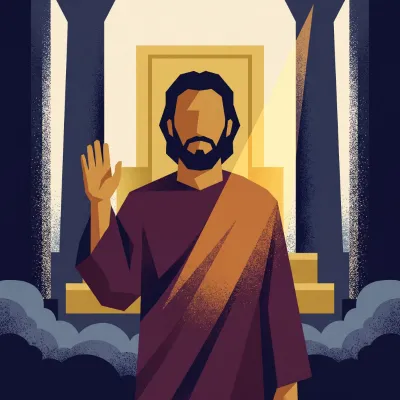
Isaiah Saw the Throne Room of God, and It Changed Him Forever
The most famous vision of God in the entire Old Testament is dated by a funeral. King Uzziah had ruled Judah for about fifty two years, and he died a leper, shut out of the temple of the Lord. Assyria was rising on the horizon. If you had asked anyone in Jerusalem what they saw that year, they would have said an empty throne. Isaiah looked at the same year and saw the throne that has never been empty for one second in all of eternity. What he saw rebuilt him from the inside out, and it answers the question that lives quietly in almost every believer's heart: what is God really like? In this episode, we walk through Isaiah chapter 6. We look at the Lord seated high and lifted up, the train of His robe filling the temple, and the seraphim, the burning ones, covering their faces as they cry holy, holy, holy. We hear Isaiah's cry, "Woe is me, for I am undone," and see why the conviction landed on his lips. We watch a live coal carried from the altar to cleanse him, contrast his humility with Uzziah's pride, and hear God ask, "Whom shall I send?" We also face the hard assignment Isaiah was given, the holy seed in the stump, and John's revelation of whose glory Isaiah actually saw. The terrifying holiness and the tender mercy of God are not two Gods, or two moods of God. They are one Person. Bible verses included in this episode: “In the year that King Uzziah died, I saw the Lord sitting on a throne, high and lifted up, and the train of His robe filled the temple.” (Isaiah 6:1) “Holy, holy, holy is the Lord of hosts; the whole earth is full of His glory!” (Isaiah 6:3) “Woe is me, for I am undone! Because I am a man of unclean lips, and I dwell in the midst of a people of unclean lips; for my eyes have seen the King, the Lord of hosts.” (Isaiah 6:5) “Behold, this has touched your lips; your iniquity is taken away, and your sin purged.” (Isaiah 6:7) “Also I heard the voice of the Lord, saying: ‘Whom shall I send, and who will go for Us?’ Then I said, ‘Here am I! Send me.’” (Isaiah 6:8) “These things Isaiah said when he saw His glory and spoke of Him.” (John 12:41) “There shall come forth a Rod from the stem of Jesse, and a Branch shall grow out of his roots.” (Isaiah 11:1) Everyone has an Uzziah, some pillar that makes the world feel steady, and for every one of us the year comes when it falls. If you are in that year right now, this vision was preserved for you. The King you cannot see is still seated, and His mercy still moves toward the broken before they can move toward Him. Whatever this year has taken from you, the throne room of God has lost nothing. He still reigns, still cleanses, and still calls. Here am I. Send me.
 37 min
Bible Chapters Explained
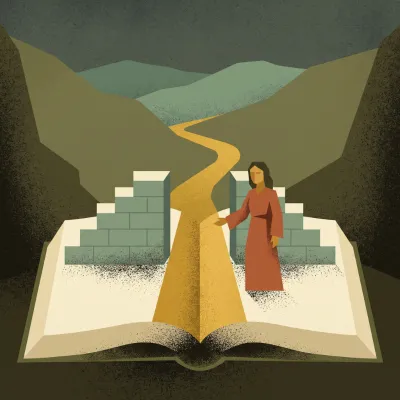
If You Understand Proverbs 1, You Understand the Entire Bible
Proverbs chapter 1 puts one young man in a noisy street with three voices calling his name. His father, from inside the house. A group of men, from the road. And the voice of God's own wisdom, calling out loud in the busy market where anyone can hear. Three invitations, one life, and everything that follows depends on which one he answers. Most books of the Bible drop you straight into the middle of something. Proverbs stops first and tells you exactly what it is for. It was written for the simple who are just starting out, and for the wise who have walked with God for fifty years. The wise one is not the person who has finished. The wise one is the person who is still listening. In this episode, we walk through Proverbs 1 and the sentence the whole book is built on: the fear of the Lord is the beginning of knowledge. We explore why this fear draws you nearer rather than pushing you away, and why "beginning" means foundation, not a stage you outgrow. We hear a father's instruction at the door, the recruiting pitch of sinful men who promise "one purse," the net spread in sight of the bird, and Wisdom crying aloud in the street with an offer to pour out her spirit on anyone who turns. We also face the hard warning honestly, and see how the pattern of two voices runs from Eden to Moses, Elijah, Jesus, and the last invitation of Revelation. Everything Proverbs 1 says about wisdom, the New Testament eventually says about a Person. Christ is the wisdom of God, and the fear of the Lord has a face, and the face is kind. Bible verses included in this episode: “The fear of the Lord is the beginning of knowledge; fools despise wisdom and instruction.” (Proverbs 1:7) “Hear, my son, your father's instruction, and forsake not your mother's teaching.” (Proverbs 1:8) “My son, if sinful men entice you, do not give in to them.” (Proverbs 1:10) “Wisdom cries aloud in the street, in the markets she raises her voice.” (Proverbs 1:20) “If you turn at my reproof, behold, I will pour out my spirit to you; I will make my words known to you.” (Proverbs 1:23) “Let anyone who is thirsty come to me and drink.” (John 7:37) “But whoever listens to me will dwell secure and will be at ease, without dread of disaster.” (Proverbs 1:33) The voices calling you today may be quieter: too old, too far gone, unnoticed, unheard. Every one of them presents itself as the truth. But Wisdom is still out in the street, calling to exactly the kind of person you are afraid you are. She is still calling, which means it is not too late. Turn, and she will pour herself out. Whoever listens will dwell secure.
 30 min
Hard Bible Questions
What Does It Mean That Jesus Is the Son of God?
The name Son of God sounds simple, yet it carries the weight of heaven. It names a relationship, a mission, and an authority that reaches into every page of Scripture. In the world of Jesus, it was not a sentimental phrase. It was a claim about identity and rule, tied to the promises God made to the house of David, and it forced every listener to a decision. So what did Jesus mean when He owned this name? And why did His enemies call it blasphemy? In this episode, we explore what it means that Jesus is the Son of God. We look at the angel's announcement to Mary, the royal promise of Psalm 2, and the moments when the religious leaders understood exactly what He was claiming. We reflect on Jesus as the radiance of God's glory and the exact representation of His being, the One who forgives sins, stills storms, receives worship, and carries the Father's authority to judge. This message also shows why the title matters for everyday faith. Because the Son reveals the Father, prayer becomes relationship instead of performance, obedience becomes an invitation into freedom, and hope rests on the One who has been given all authority in heaven and on earth. Bible verses included in this episode: “The Holy Spirit will come upon you, and the power of the Most High will overshadow you. So the holy one to be born will be called the Son of God.” (Luke 1:35) “You are my Son; today I have become your Father.” (Psalm 2:7) “For this reason they tried all the more to kill him; not only was he breaking the Sabbath, but he was even calling God his own Father, making himself equal with God.” (John 5:18) “From now on you will see the Son of Man sitting at the right hand of the Mighty One and coming on the clouds of heaven.” (Matthew 26:64) “The Son is the radiance of God’s glory and the exact representation of his being.” (Hebrews 1:3) “The Father judges no one, but has entrusted all judgment to the Son.” (John 5:22) “The Father loves the Son and has placed everything in his hands.” (John 3:35) If Jesus is the Son of God, then the face of God is not hidden. The Father is not far away or hard to read. Look at the Son, hear His words, and see His cross. Where your strength runs thin, His life holds steady. Where guilt speaks loudly, His grace speaks louder. The Son does not fail those who come to Him.
 31 min
Hard Bible Questions
Did You Know God Can Speak to You Through Your Mind? Stop Ignoring Him!
Some of the most important moments of your life may have started with a simple thought. A name that came to mind. A nudge to call someone, to pray, to forgive. There was no angel at the foot of your bed, just a thought that felt different from your usual thinking. And later you wondered, was that God? Many believers are waiting for a voice in the sky while the Lord is already whispering inside. They expect a dramatic scene and miss the quiet doorway of the mind. In this episode, we explore how God still speaks to ordinary people and how He often does it through the mind. We look at the quiet inner sentence that carries more weight than usual thoughts, the verse that rises at just the right moment, conviction that cuts through excuses, and peace that interrupts cycles of fear. We also learn how to discern which voice you are hearing, whether it comes from God, from the enemy, or from your own heart, by testing its content, its tone, and its fruit. Through the stories of young Samuel, the apostle Paul, and the early church in Antioch, this message shows how God speaks into the inner life, and what can block His voice: cherished sin, doubt, fear, busyness, and unforgiveness. Bible verses included in this episode: “Jesus Christ is the same yesterday and today and forever.” (Hebrews 13:8) “My sheep hear my voice, and I know them, and they follow me.” (John 10:27) “Do not be conformed to this world, but be transformed by the renewing of your mind.” (Romans 12:2) “Beloved, do not believe every spirit, but test the spirits, whether they are of God.” (1 John 4:1) “There is therefore now no condemnation to those who are in Christ Jesus.” (Romans 8:1) “Speak, Lord, for Your servant hears.” (1 Samuel 3:9) “Call to Me, and I will answer you, and show you great and mighty things, which you do not know.” (Jeremiah 33:3) God can speak to you through your mind. He has done it more often than you realize, and He will keep doing it as you walk with Him. The question is whether you will treat His voice as a passing thought or honor it as the word of your Shepherd. Right where you are, you can say, Lord, I want to listen. Teach me to know Your voice in my thoughts.
 33 min
Hard Bible Questions
7 Signs You Are Under Spiritual Attack, and How God Tells You to Fight Back
There are seasons when nothing on the surface has changed, and yet everything inside you feels heavier. You are irritable with people you love, anxious for reasons you cannot name, and tired in a way sleep does not fix. You wonder if you are losing your faith or simply failing as a Christian. But what if some of what you feel is not weakness at all? What if it is resistance from an enemy who does not want you to draw closer to God? In this episode, we explore seven signs Scripture gives of spiritual attack: a sudden pull toward sin, a heaviness you cannot explain, accusation that never lets up, confusion about what is true, fear that will not release, division in your relationships, and a slow drift away from God Himself. We also keep a careful balance, because not every hard day is an attack, and fear of the enemy can become its own trap. Then we turn to how God tells you to fight back. The enemy is already defeated at the cross. You are called not to win a victory still in doubt, but to stand in the victory Jesus secured, clothed in the full armor of God, taking every thought captive, praying at all times, and standing shoulder to shoulder with other believers. Bible verses included in this episode: “For our struggle is not against flesh and blood, but against the rulers, against the authorities, against the powers of this dark world and against the spiritual forces of evil in the heavenly realms.” (Ephesians 6:12) “Be alert and of sober mind. Your enemy the devil prowls around like a roaring lion looking for someone to devour.” (1 Peter 5:8) “The thief comes only to steal and kill and destroy; I have come that they may have life, and have it to the full.” (John 10:10) “Having disarmed the powers and authorities, he made a public spectacle of them, triumphing over them by the cross.” (Colossians 2:15) “Submit yourselves, then, to God. Resist the devil, and he will flee from you.” (James 4:7) “The one who is in you is greater than the one who is in the world.” (1 John 4:4) “Simon, Simon, Satan has asked to sift all of you as wheat. But I have prayed for you, Simon, that your faith may not fail.” (Luke 22:31-32) You are not crazy, you are not failing, and you are not alone. The lion roars, but a roar is not a bite. The accuser speaks day and night, but his voice is not the verdict of heaven. Put on the armor, draw near to the God who is already near to you, and stand. The One who lives inside you is greater.
 31 min
Hard Bible Questions
The Kingdom of God Is Not What Most Christians Think
Most Christians think the kingdom of God is heaven, a reward waiting on the far side of death. That idea leaves many good, tired people feeling that the closeness with God they long for is always out of reach. But it is not what Jesus said. The kingdom of God is not mainly a place you go. It is God Himself reigning, and it is near enough for you to reach, no matter how far away you feel. In this episode, we explore what Jesus actually meant by the kingdom of God. We stand in the sandals of ordinary people in Roman-occupied Israel, waiting for a warrior king, and see why so many missed the kingdom when it came. We look at Israel's first King, the Lord Himself, and the sorrow of the day the people asked Samuel for a king they could see. We hear Jesus tell Nicodemus that no one can even see the kingdom without being born again, and tell a short story about treasure hidden in a field. We also reflect on how the kingdom is already here and still coming, how its King took His throne through a crown of thorns and a cross, and what it looks like when God truly reigns in a life: righteousness, peace, and joy in the Holy Spirit. Bible verses included in this episode: “The kingdom of God does not come with observation; nor will they say, ‘See here!’ or ‘See there!’ For indeed, the kingdom of God is within you.” (Luke 17:20-21) “They have not rejected you, but they have rejected Me, that I should not reign over them.” (1 Samuel 8:7) “Most assuredly, I say to you, unless one is born again, he cannot see the kingdom of God.” (John 3:3) “The time is fulfilled, and the kingdom of God is at hand. Repent, and believe in the gospel.” (Mark 1:15) “My kingdom is not of this world.” (John 18:36) “The kingdom of God is not eating and drinking, but righteousness and peace and joy in the Holy Spirit.” (Romans 14:17) “But seek first the kingdom of God and His righteousness, and all these things shall be added to you.” (Matthew 6:33) The door to the kingdom is low, and it was made low on purpose, so that the weak and the weary could stoop down and walk right in. You do not have to fix yourself first. The kingdom of God is as near as a whispered yes. Come with empty hands and a trusting heart, and say, Lord, be my King.
 32 min
Hard Bible Questions
Who Was the Angel of the Lord Who Appeared Before Jesus Was Born?
There was a figure who kept appearing to ordinary people, and no one who met him was ever the same. He came to a runaway slave in the desert, to a shepherd at a burning bush, to a frightened man by a river at night, and to a soldier outside a walled city. The text would call him a messenger, and then, a few words later, it would call him God. Who was the Angel of the Lord? And why does this mysterious figure stop appearing after the Old Testament closes? In this episode, we follow the Angel of the Lord through the pages of Scripture. We meet Hagar, who named Him the God who sees. We watch Jacob wrestle a stranger until dawn, Moses hide his face at the burning bush, Manoah hear a name too wonderful to be spoken, Gideon find peace in a winepress, and Joshua take off his sandals before the commander of the Lord's army. Again and again this messenger speaks as God, receives worship, carries God's name, and holds authority to forgive. Then we turn to the New Testament, where Jesus declares, "Before Abraham was, I am," and John writes that the Son has made the invisible God known. The trail of these appearances leads to Bethlehem. Bible verses included in this episode: “For I have seen God face to face, and yet my life has been delivered.” (Genesis 32:30) “I am the God of your father, the God of Abraham, the God of Isaac, and the God of Jacob.” (Exodus 3:6) “For my name is in him.” (Exodus 23:21) “Why do you ask my name, seeing it is wonderful?” (Judges 13:18) “Before Abraham was, I am.” (John 8:58) “The only Son, who is at the Father’s side, he has made him known.” (John 1:18) He stopped appearing in temporary forms because He had come in a permanent one. The One whose name was too wonderful to tell Manoah let Mary name Him Jesus. He found Hagar by a spring and an old shepherd in the wilderness. He still comes down to the tired and forgotten, and He is closer to you right now than you have ever known.
 32 min
Hard Bible Questions
What the Glory of God Actually Is
Most people have heard about the glory of God their whole lives and were never once told what it actually means. And the way you picture God's glory shapes how you believe He feels about you. If you imagine only power, distance, and blinding light, you may keep your head down and your distance too. But when God once described His own glory in His own words, He did not lead with power. He led with mercy. In this episode, we explore what the glory of God really is: the weight of who He is, His worth made visible. We climb Mount Sinai with Moses as he asks, "Please show me your glory," and hear God proclaim Himself merciful, gracious, slow to anger, and abounding in steadfast love. We see how creation declares that glory, why Isaiah felt undone in God's presence and was cleansed, and what it means that all have sinned and fall short of the glory of God. We follow God's glory from the tabernacle and the temple to the Word made flesh, and to the place Jesus called the hour of His glory, the cross. This message also shows how ordinary, tired believers are being transformed from one degree of glory to another. Bible verses included in this episode: “Please show me your glory.” (Exodus 33:18) “The Lord, the Lord, a God merciful and gracious, slow to anger, and abounding in steadfast love and faithfulness.” (Exodus 34:6) “The heavens declare the glory of God, and the sky above proclaims his handiwork.” (Psalm 19:1) “For all have sinned and fall short of the glory of God.” (Romans 3:23) “And the Word became flesh and dwelt among us, and we have seen his glory, glory as of the only Son from the Father, full of grace and truth.” (John 1:14) “He is the radiance of the glory of God and the exact imprint of his nature.” (Hebrews 1:3) “We all, with unveiled face, beholding the glory of the Lord, are being transformed into the same image from one degree of glory to another.” (2 Corinthians 3:18) The glory Moses could not look upon came down and turned its face toward the very people who had failed it. In Jesus, you can look into the face of God and live, and what looks back is mercy that draws you in. You are seen by a God whose greatness is His goodness, and you are being carried, slowly and surely, home to Him.
 29 min
Hard Bible Questions
Who Jesus Was Before the World Was Ever Created
Before the earth had a shape, Jesus was there with God, sharing a life and a love that had no beginning. When the apostle John wrote about Jesus, he did not start with the manger. He reached back before creation itself and called Him the Word. So who was Jesus before Bethlehem? And what does it mean for your life that the One who came to save you was there before the first morning? In this episode, we explore who Jesus was before the world was ever created. We look at the Word who was with God and was God, and at the prayer Jesus prayed on the last night of His life, asking to return to the glory He had with the Father before the world began. We see why Jesus is not the greatest thing God made, but the One through whom all things were created and in whom all things hold together, and what Paul meant by calling Him the firstborn over all creation. We also travel from the burning bush, where God revealed His name I AM, to a temple courtyard where Jesus said, "Before Abraham was born, I am." And we reflect on the long journey of love that brought the eternal Son down into a manger and all the way to the cross. Bible verses included in this episode: “In the beginning was the Word, and the Word was with God, and the Word was God.” (John 1:1) “And now, Father, glorify me in your presence with the glory I had with you before the world began.” (John 17:5) “For in him all things were created: things in heaven and on earth, visible and invisible; all things have been created through him and for him.” (Colossians 1:16) “He is before all things, and in him all things hold together.” (Colossians 1:17) “Very truly I tell you, before Abraham was born, I am!” (John 8:58) “Who, being in very nature God, did not consider equality with God something to be used to his own advantage; rather, he made himself nothing by taking the very nature of a servant, being made in human likeness.” (Philippians 2:6-7) “He was chosen before the creation of the world, but was revealed in these last times for your sake.” (1 Peter 1:20) You were loved before the world began, and you are held right now by the same hands that made the stars. The rescue was not a last-minute plan. It was settled in the heart of God before you drew your first breath. You do not have to fix yourself first. Come just as you are to the One who has been waiting for you since before there was a world to wait in.
 30 min
Hard Bible Questions
Where Did God Come From? Who He Was Before Anything Existed
Every child asks it eventually, and every honest adult still wonders it in the quiet. If God made everything, then who made God? The answer is that God did not come from anywhere. He was not born and He was not built. Before there was a somewhere for anything to come from, there was only Him. And if there truly is a Being who never began, then existence is not an accident, and neither are you. In this episode, we explore where God came from and who He was before anything existed. We look at the first words of Scripture, which speak of the beginning of the heavens and the earth, not the beginning of God. We reflect on the name God gave Moses, I AM WHO I AM, and on a God who does not live inside time but holds the whole story in His hands at once. We see why the God who has life in Himself needs nothing from the world, and why the God who needs nothing does not change. Then we turn to the most beautiful answer of all. Before the world began, God was not a lonely figure in an endless dark. There was already a Father loving a Son in the joy of the Spirit. Love is older than the story, and the world came pouring out of that fullness. Bible verses included in this episode: “In the beginning God created the heavens and the earth.” (Genesis 1:1) “I am who I am.” (Exodus 3:14) “Before the mountains were brought forth, or ever you had formed the earth and the world, from everlasting to everlasting you are God.” (Psalm 90:2) “The God who made the world and everything in it is not served by human hands, as though he needed anything, since he himself gives to everyone life and breath and everything else.” (Acts 17:24-25) “For I the Lord do not change.” (Malachi 3:6) “In the beginning was the Word, and the Word was with God, and the Word was God.” (John 1:1) “He is before all things, and in him all things hold together.” (Colossians 1:17) The God who needed nothing still made you. You were not a tool He required, but a gift He wanted. His love has no first day you could arrive too late for, and no last day when it will run dry. He simply is. He always was. He always will be. And He knows your name.
 32 min
Hard Bible Questions
What Did Jesus Do Between 12 and 30? The "Lost Years"
For most of His life on earth, the Son of God lived so quietly that the Bible barely mentions it. The Gospels show Him at twelve, sitting among the teachers in the temple, and then the record goes quiet until He steps into the Jordan River around the age of thirty. Between those two moments lie about eighteen years. People have always tried to fill that silence with legends of secret journeys and hidden teachers in distant lands. But the real answer is quieter, and far more beautiful. Jesus went home. He obeyed. He grew. He worked. He worshiped. And He carried the weight of a family in a village the world had written off. In this episode, we explore what Scripture actually tells us about the so-called "lost years" of Jesus. We walk through Luke's few careful words about His childhood, the scene in the temple when the boy already knew He belonged in His Father's house, and the small, forgotten town of Nazareth where God chose to raise His Son. We look at what it meant for Jesus to be known as "the carpenter," how He grew in wisdom through the Sabbath, the synagogue, and the festivals in Jerusalem, and why the Gospels hint that Joseph likely died, leaving the firstborn son to help provide for His mother and siblings. This message also shows why the hidden years were never wasted. God spent about thirty years preparing for about three. Throughout Scripture, He does His deepest work in hidden places, forming the root in the dark before He shows the fruit in the light. Bible verses included in this episode: “Then he went down to Nazareth with them and was obedient to them. But his mother treasured all these things in her heart.” (Luke 2:51) “And Jesus grew in wisdom and stature, and in favor with God and man.” (Luke 2:52) “Why were you searching for me? Didn’t you know I had to be in my Father’s house?” (Luke 2:49) “Can anything good come from Nazareth?” (John 1:46) “He grew up before him like a tender shoot, and like a root out of dry ground.” (Isaiah 53:2) “Isn’t this the carpenter? Isn’t this Mary’s son and the brother of James, Joseph, Judas and Simon? Aren’t his sisters here with us?” (Mark 6:3) “Son though he was, he learned obedience from what he suffered.” (Hebrews 5:8) “Well done, good and faithful servant.” (Matthew 25:21) If you feel invisible, worn out, or stuck in a season where nothing seems to be happening, this episode is for you. The Savior you pray to knows what an ordinary, unnoticed life feels like, because He lived one for years. Your hidden years are not wasted. Stay faithful in the small things. The quiet life no one seems to notice is seen, loved, and used by the God who once lived it Himself.
 32 min
Hard Bible Questions
400 Years of Silence: What Happened Between the Old and New Testaments?
For four hundred years, heaven said nothing new. No prophet rose with a fresh word from God. No vision came in the night. To the people living through it, it felt as if God had closed His mouth and turned away. And yet those four centuries were not empty. In the long quiet between the last page of the Old Testament and the first page of the New, God was building the exact world His Son would be born into. In this episode, we explore what happened during the 400 years of silence. We begin with Malachi and a weary, cynical people, then follow the rise of the scribes and the first synagogues, the scattered Jewish communities across the empire, and the conquests of Alexander the Great that made Greek the common language of the world. We look at the translation of the Hebrew Scriptures into Greek, the terrible persecution under Antiochus Epiphanes, the courage of Mattathias and Judah Maccabeus, the rededication of the temple remembered in Hanukkah, and the century of Hasmonean rule that slowly turned sour. We also see how the Pharisees, Sadducees, and Essenes took shape, how Rome and King Herod set the final stage, and how the silence finally broke with Zechariah, John the Baptist, and the birth of Jesus. Every piece was falling into place: one language, Roman roads, synagogues in city after city, the Scriptures in Greek, and a people aching for the promised King. Bible verses included in this episode: “Behold, I will send you Elijah the prophet before the coming of the great and dreadful day of the Lord: And he shall turn the heart of the fathers to the children, and the heart of the children to their fathers, lest I come and smite the earth with a curse.” (Malachi 4:5-6) “Behold, I will send my messenger, and he shall prepare the way before me.” (Malachi 3:1) “But when the fulness of the time was come, God sent forth his Son, made of a woman, made under the law.” (Galatians 4:4) “For unto you is born this day in the city of David a Saviour, which is Christ the Lord.” (Luke 2:11) “Behold the Lamb of God, which taketh away the sin of the world.” (John 1:29) If you are living through a silence of your own, a prayer unanswered or a season of waiting that seems to have no end, this message is for you. The silence of God is not the absence of God. The same God who moved kingdoms to make a manger ready is at work in your uncertain days. Keep looking. Keep trusting. For those who wait on the Lord, the silence is only the part of the story where the way is being made ready.
 32 min
Hard Bible Questions
Why God Is Obsessed With the Number 7 (It's Not What You Think)
If you have read the Bible for any length of time, you have noticed that the number seven is everywhere. Seven days of creation. Seven times around a city. Seven dips in a river. Seven churches, seven lamps, seven seals. But seven is not a lucky number, and it is not a secret code. Seven is the number God attaches to rest. It is the mark He leaves when a work is finished, when a burden is lifted, and when He draws near to stay. It is the shape of a God who does not leave things half done, and who does not intend to leave you half done either. In this episode, we explore why God keeps returning to the number seven. We begin with the seventh day of creation, the only day with no evening and no morning, and follow the thread through the Sabbath given to freed slaves, Noah's patient waiting in sevens, Joseph's seven years of plenty and famine, Israel's appointed feasts, the Sabbath year, and the Year of Jubilee. We look at the golden lampstand with its seven flames, the walls of Jericho falling on the seventh day, Naaman healed on the seventh dip in the Jordan, and Jesus' call to forgive seventy times seven. All of these threads find their center in Jesus: His seven signs in John's Gospel, His cry "It is finished," His rest in the tomb on the Sabbath, and the rest that still remains for the people of God. Bible verses included in this episode: “And on the seventh day God finished his work that he had done, and he rested on the seventh day from all his work that he had done.” (Genesis 2:2) “So God blessed the seventh day and made it holy.” (Genesis 2:3) “It is finished.” (John 19:30) “So then, there remains a Sabbath rest for the people of God.” (Hebrews 4:9) “Come to me, all who labor and are heavy laden, and I will give you rest.” (Matthew 11:28) “Behold, the dwelling place of God is with man. He will dwell with them, and they will be his people.” (Revelation 21:3) If you feel stuck on the sixth day, in the middle of the work and the waiting, this message is for you. The God who finishes what He begins has not forgotten your unfinished places. Your seventh is coming. Come to Him, lay down what you have been carrying, and rest.
 33 min
Hard Bible Questions
Will We Recognize Our Family in Heaven?
Will we recognize our family in heaven? Scripture's answer is yes. You will know them. The people who belong to God do not dissolve when they die. They keep their identity, their history, and their name. And your identity was never stored inside your own fading memory. It is held in the mind of God, who knows every person He has made by name and does not stop knowing them when they die. In this episode, we explore what the Bible reveals about recognizing our loved ones on the other side of death. We hear Job, sitting in the ashes after losing all ten of his children, insist that he himself will see God, "I, and not another." We listen to Jacob and David speak of going to children they had lost. We look at God's promise to call His people by name and engrave them on His hands, Moses and Elijah talking with Jesus on the mountain, the risen Christ keeping His scars, and Mary Magdalene recognizing Him the moment He spoke her name. We also face the hard questions honestly: what Jesus meant when He said there is no marriage in the resurrection, what it means that God is "the God of the living," how Hebrews says believers have already come to "the spirits of the righteous made perfect," what happens to the regrets and broken relationships we carry, and where Scripture stops when we grieve someone we are unsure about. Bible verses included in this episode: “I know that my Redeemer lives, and that in the end he will stand on the earth. And after my skin has been destroyed, yet in my flesh I will see God; I myself will see him with my own eyes, I, and not another. How my heart yearns within me!” (Job 19:25-27) “Do not fear, for I have redeemed you; I have called you by name; you are mine.” (Isaiah 43:1) “Though she may forget, I will not forget you! See, I have engraved you on the palms of my hands.” (Isaiah 49:15-16) “Jesus said to her, ‘Mary.’” (John 20:16) “He is not the God of the dead but of the living.” (Matthew 22:32) “For now we see only a reflection as in a mirror; then we shall see face to face. Now I know in part; then I shall know fully, even as I am fully known.” (1 Corinthians 13:12) “He will wipe every tear from their eyes. There will be no more death or mourning or crying or pain, for the old order of things has passed away.” (Revelation 21:4) “And so we will be with the Lord forever. Therefore encourage one another with these words.” (1 Thessalonians 4:17-18) If you are grieving in a house that feels far too quiet, you are not unnamed and you are not unnoticed. The people you miss are not gone. They are ahead of you, awake, whole, and gathered around the same Savior. The separation is real, but it is the shortest part of the story. Morning is coming, and nobody in that family goes unrecognized.
 32 min
Hard Bible Questions
Where Your Soul Was Before Birth - What the Bible Reveals
Where was your soul before you were born? Many people would rather hear that they have always existed somewhere, waiting in a heavenly room or carrying memories from an earlier life. But Scripture gives a different answer, and a better one. Your soul was not in a place. It was in a Person's knowing. Before God formed you, there was no you at all. What existed was God, God's thought of you, and God's love set on you before you had a face to love. In this episode, we explore what the Bible actually reveals about the beginning of a human being. We notice what Scripture never says, and how it keeps turning the question from "where" to "whose." We look at Levi, who was "still in the loins" of Abraham, and what it means that you were carried in your ancestors. We return to Genesis, where God formed the man from dust and breathed life into him, and to Paul's order of "natural first, then spiritual." We walk through David's words about being knitted together in the womb, his hope for the child he lost, and God's words to Jeremiah, "Before I formed you in the womb I knew you." We also consider why the idea of an "old soul" feels so true, why Scripture says we live one life, the love of the Father for the Son before the foundation of the world, and the second birth Jesus offered Nicodemus. Bible verses included in this episode: “And the dust returns to the earth as it was, and the spirit returns to God who gave it.” (Ecclesiastes 12:7) “Then the Lord God formed the man of dust from the ground and breathed into his nostrils the breath of life, and the man became a living creature.” (Genesis 2:7) “For you formed my inward parts; you knitted me together in my mother’s womb.” (Psalm 139:13) “Your eyes saw my unformed substance; in your book were written, every one of them, the days that were formed for me, when as yet there was none of them.” (Psalm 139:16) “Before I formed you in the womb I knew you, and before you were born I consecrated you.” (Jeremiah 1:5) “That which is born of the flesh is flesh, and that which is born of the Spirit is spirit.” (John 3:6) “Even to your old age I am he, and to gray hairs I will carry you. I have made, and I will bear; I will carry and will save.” (Isaiah 46:4) Your beginning was not an accident of biology, and your years are not a rehearsal. You came from God's hand, and there was never a moment when you were unknown. The One who wanted you before there was anything of you to want has carried you from the womb, and He will carry you to gray hairs.
 32 min
Hard Bible Questions
Why John Called Jesus "The Word": The Hidden Meaning Behind John 1:1
Matthew begins his Gospel with a family tree. Luke begins with an old priest and a young woman in Nazareth. Mark begins with a man shouting by a river. John begins before the calendar exists: "In the beginning was the Word." Why did John call Jesus the Word? Because a word is the only thing in human experience that comes out of a person and still carries that person completely. And because everything God ever did in the history of His people, He did by speaking. When John needed a title for Jesus, he chose the one that gathered it all into a single life. The God who has been speaking since the first page of the Bible has now said the clearest thing He has to say, and what He said was a person. In this episode, we explore the hidden meaning behind John 1:1. We walk through John's three careful statements about the Word, the world spoken into being in Genesis, and the Hebrew idea that a word from God is an event. We follow "the word of the Lord" as it came to Abram, Samuel, Jeremiah, Ezekiel, and Elijah, and feel the ache of a people who heard God's voice but never saw His face, when even Moses was told, "You cannot see my face." Then we come to the Word made flesh, the Greek word logos, the storm stilled by His voice, the common mistake of reading this verse as a verse about a book, and the one kind of power that can be turned down. Bible verses included in this episode: “In the beginning was the Word, and the Word was with God, and the Word was God.” (John 1:1) “By the word of the Lord the heavens were made, their starry host by the breath of his mouth.” (Psalm 33:6) “The Lord continued to appear at Shiloh, and there he revealed himself to Samuel through his word.” (1 Samuel 3:21) “The Word became flesh and made his dwelling among us. We have seen his glory, the glory of the one and only Son, who came from the Father, full of grace and truth.” (John 1:14) “No one has ever seen God, but the one and only Son, who is himself God and is in closest relationship with the Father, has made him known.” (John 1:18) “Yet to all who did receive him, to those who believed in his name, he gave the right to become children of God.” (John 1:12) “In the past God spoke to our ancestors through the prophets at many times and in various ways, but in these last days he has spoken to us by his Son.” (Hebrews 1:1-2) “He is dressed in a robe dipped in blood, and his name is the Word of God.” (Revelation 19:13) If you are tired, alone, getting older, or carrying shame, the only thing the Word of God requires of you is a listener. God is not silent about you. He has spoken most clearly of all in His Son.
 33 min
Hard Bible Questions
The Five-Fold Ministry Gifts Explained - How to Know Which One You Carry
Many believers quietly decided years ago that whatever God was handing out got handed out somewhere else, among better people. Nobody ever came and told them what they were for, and after enough silence, the conclusion formed on its own. But you can know which gift you carry, and you find it by looking outward instead of inward. A gift is easier to see in other people than in yourself. Something happens to people when you are around, and it has been happening for years. There is no test to pass and no ceremony that turns an ordinary believer into someone useful. In this episode, we explore the five gifts Paul names in Ephesians 4: the apostle, the prophet, the evangelist, the pastor, and the teacher. We see why Christ gives people as gifts, how these gifts were handed out like spoils after His victory, and what the body actually receives when each one is present. Through Paul's ambition to preach where Christ was not known, the prophets Judas and Silas strengthening the church, Philip the evangelist, Paul's charge to the Ephesian elders, and the Levites who explained the law in Jerusalem, we look at each gift along with the natural trait that can imitate it for years. We also walk through how to read your own life backward: what keeps repeating, what people come to you for, what grief you carry for the church, and what your gift has cost you. And we see why the people around you often name the gift first, and how all five were first found in Jesus Himself. Bible verses included in this episode: “So Christ himself gave the apostles, the prophets, the evangelists, the pastors and teachers.” (Ephesians 4:11) “When he ascended on high, he took many captives and gave gifts to his people.” (Ephesians 4:8) “It has always been my ambition to preach the gospel where Christ was not known, so that I would not be building on someone else’s foundation.” (Romans 15:20) “Judas and Silas, who themselves were prophets, said much to encourage and strengthen the believers.” (Acts 15:32) “Be shepherds of the church of God, which he bought with his own blood.” (Acts 20:28) “They read from the Book of the Law of God, making it clear and giving the meaning so that the people understood what was being read.” (Nehemiah 8:8) “You call me ‘Teacher’ and ‘Lord,’ and rightly so, for that is what I am.” (John 13:13) “From him the whole body, joined and held together by every supporting ligament, grows and builds itself up in love, as each part does its work.” (Ephesians 4:16) Your gift may have no title and no audience, but that does not touch whether it is real. Christ came out of the grave with His hands full, and the giving has not stopped for anyone still breathing. A body is being built, and it is still missing what you were given to bring.
 32 min
Stories of Bible Characters
Why Is There No Tribe Of Joseph In Israel? The Shocking Reason Explained
There is a name missing from the map of Israel, and it belongs to the one man who made the map possible. Joseph, the favorite son and the dreamer who saved his whole family from famine, has no territory named after him when Joshua divides the promised land among the tribes. It can look like an oversight, or even an insult. But Joseph's name is not missing because he received too little. It is missing because he received too much to fit inside a single border. In this episode, we explore the surprising reason there is no tribe of Joseph. We look at the birthright and double portion of the firstborn, how Reuben lost it, and how it passed to Joseph. We step into a dim room in Egypt where the dying Jacob adopts Joseph's two sons, Ephraim and Manasseh, as his own, and then crosses his arms to bless the younger above the older, redeeming the deception of his own youth. We see why the count of the tribes still stays at twelve because Levi's inheritance was the Lord Himself, and why two boys with an Egyptian mother became the model of blessing for generations. We also trace Joseph's name through the rest of Scripture, from Shiloh and the Psalms to Ezekiel's "two portions" and the tribe of Joseph in Revelation 7, and see how Joseph's story points to Jesus, the beloved Son whose reward is children adopted into God's family. Bible verses included in this episode: “He was the firstborn, but because he defiled his father’s bed, his birthright was given to the sons of Joseph.” (1 Chronicles 5:1) “And now your two sons, Ephraim and Manasseh, who were born to you in the land of Egypt before I came to you in Egypt, are mine; as Reuben and Simeon, they shall be mine.” (Genesis 48:5) “I know, my son, I know. He also shall become a people, and he also shall be great; but truly his younger brother shall be greater than he.” (Genesis 48:19) “By you Israel will bless, saying, ‘May God make you as Ephraim and as Manasseh!’” (Genesis 48:20) “The Lord is his inheritance.” (Deuteronomy 10:9) “Give ear, O Shepherd of Israel, You who lead Joseph like a flock.” (Psalm 80:1) “Joseph shall have two portions.” (Ezekiel 47:13) “But as many as received Him, to them He gave the right to become children of God.” (John 1:12) If you feel overlooked, left off the lists, or wonder whether your background disqualifies you, let Joseph's story stand as a witness. The people the world can no longer find on its lists are often the ones God has recorded most carefully. The God who never forgot Joseph has not forgotten you. The double portion always comes after the pit.
 36 min
Words of Jesus
What did Jesus mean when He said, “These things I command you, that you love one another”?
“These things I command you, that you love one another.” The words are simple, yet they open a new way to live. Jesus sets the pattern for His people: love that starts with Him, moves toward each other, and reshapes how we face conflict, disappointment, and ordinary days. Jesus defines love so that no one can shrink it into sentiment or stretch it into something vague. He gives the measure Himself: as I have loved you. Love, in His mouth, is not a reward we give when people deserve it. It is a steady, self-giving movement toward the good of another, even when it costs. In this episode, we explore what Jesus meant by “love one another” and why He made it the mark that tells the world who we belong to. We look at how this command connects to loving our neighbor as ourselves, and how the story of the Good Samaritan refuses to let love shrink into an in-group project. We consider unity without sameness in a diverse body of believers, where love welcomes, speaks truth gently, guards dignity in conflict, and holds the center of the faith firmly. We then climb to the highest peak of this teaching, Jesus’ call to love our enemies and pray for those who persecute us, and see that He never asks us to do what He Himself avoided. Finally, we look at the pattern and the power of His love. Like a branch that bears fruit by staying connected to the vine, our love grows not by willpower alone but by abiding in Him. Bible verses included in this episode: “These things I command you, that you love one another.” (John 15:17) “This is my commandment, that you love one another as I have loved you.” (John 15:12) “Greater love has no one than this, that someone lay down his life for his friends.” (John 15:13) “A new commandment I give to you, that you love one another. Just as I have loved you, you also are to love one another… By this all people will know that you are my disciples, if you have love for one another.” (John 13:34–35) “You shall love your neighbor as yourself.” (Matthew 22:39) “Love your enemies and pray for those who persecute you.” (Matthew 5:44) Most of us know how hard love can be. We remember a sharp word, a painful silence, a broken promise. Into those places, Jesus’ command does not scold. It invites. You are not asked to pour from an empty cup. You are loved first. The sign of belonging to Jesus is not a label we wear but a love we live. Let His word shape your next conversation, your next choice, and your next act of mercy.
 33 min
Words of Jesus
What did Jesus mean when He said, “Ask and you shall receive”?
“Ask and you shall receive.” Most of us have heard these words, but what did Jesus really mean? Is it a door anyone can open, or a promise with a path most people miss? If this line is more than a comfort phrase, it could reset how you pray, what you hope for, and how you recognize God’s answer when it arrives. In the kingdom, asking is not the language of bargaining. It is the language of belonging. A child does not submit a contract to a father. He speaks out of relationship, bold because love invites boldness and humble because love bows to wisdom. In this episode, we explore the kind of asking Jesus had in mind. We look at the boundaries He gave, not as walls to keep us out but as rails to keep us safe: asking in His name, asking according to the Father’s will, bringing our motives into the light, trusting God’s character, persevering in prayer, and receiving the Father’s definition of what is good. We consider the purpose behind the promise, that our joy may be full, and trace how it fulfills the prophets’ hope of a God who hears before we call. We also walk through how to approach God as Father, with simplicity, confession, trust, Scripture, community, and gratitude, and we clear up common misunderstandings about intensity, sovereignty, “mustard seed” faith, and what to do when prayer ends in disappointment. Bible verses included in this episode: “If you then, who are evil, know how to give good gifts to your children, how much more will your Father who is in heaven give good things to those who ask him.” (Matthew 7:11) “Whatever you ask in my name, this I will do, that the Father may be glorified in the Son.” (John 14:13) “If we ask anything according to his will he hears us.” (1 John 5:14) “You ask and do not receive, because you ask wrongly, to spend it on your passions.” (James 4:3) “Whatever you ask in prayer, believe that you have received it, and it will be yours.” (Mark 11:24) “Ask, and you will receive, that your joy may be full.” (John 16:24) “Before they call I will answer; while they are yet speaking I will hear.” (Isaiah 65:24) If you have grown tired of praying, you are not shouting into the wind. You are speaking to a Father who sees you, knows you, and invites you near. Bring what is heavy, what is hidden, and what seems too small. “Ask and you shall receive” is not the language of control. It is the language of children who know their Father. Keep asking. Keep seeking. Keep knocking.
 33 min
Words of Jesus
What did Jesus mean when He said, “I came that they may have life, and have it abundantly”?
There is a line from Jesus that sounds like a door opening: “I came that they may have life, and have it abundantly.” Many have chased success and still felt empty. Many keep religious and moral rules, yet still feel far from God. Into that ache Jesus speaks a promise that is bold and tender: life in full measure. Jesus spoke these words just after healing a man born blind, a miracle that led the religious leaders to question the man, question his parents, and cast him out. Into that confusion Jesus stepped with the picture of a sheepfold, a gate, and a shepherd who calls his own by name and lays down his life for them. In this episode, we explore the contrast between the thief who comes to steal, kill, and destroy and the Good Shepherd who gives and multiplies rest. We trace the prophetic threads behind the promise, from Ezekiel’s rebuke of selfish shepherds and God’s pledge to shepherd His people Himself, to the comfort of the Twenty-Third Psalm, now embodied in a Person. We look at what abundant life truly is: not measured by wealth or ease, but by knowing God through His Son. It is restored fellowship, a reordered inner life, enlarged love, durable hope, clear purpose, and freedom within the boundaries that keep life whole. We also consider how this life reaches us through Jesus as the door, through the Holy Spirit, through His flock, and through ordinary obedience, and we clear away common confusions about wealth, suffering, and constant emotional highs. Bible verses included in this episode: “The thief comes only to steal and kill and destroy. I came that they may have life and have it abundantly.” (John 10:10) “I am the good shepherd. The good shepherd lays down his life for the sheep.” (John 10:11) “And I will set up over them one shepherd, my servant David, and he shall feed them.” (Ezekiel 34:23) “And this is eternal life, that they know you the only true God, and Jesus Christ whom you have sent.” (John 17:3) “I am the door. If anyone enters by me, he will be saved and will go in and out and find pasture.” (John 10:9) “I am the good shepherd. I know my own and my own know me, just as the Father knows me and I know the Father; and I lay down my life for the sheep.” (John 10:14–15) If you have grown tired of empty promises, hear the voice that calls your name with kindness. The door stands open, and the Shepherd waits with patience that does not run out. The thief takes and leaves silence. Jesus gives and leaves singing. Hold to His voice, walk through His door, and you will find the life your soul was made to receive.
 30 min
Words of Jesus
These Teachings of Jesus Will Change How You Live
The teachings of Jesus that change how a person lives are not the ones we quote most. They are the ones He repeated most. Read the four Gospels side by side and you will see Him coming back to the same six things, in different towns and different years, over and over. Nobody in His audience owned a book. There were only ears and memory, so He said what mattered again and again. In this episode, we explore the six teachings Jesus repeated most. “Do not be afraid,” the command He spoke more than any other, always into moments when fear was reasonable, and always with something solid attached. The call to lose your life in order to save it, the one sentence that survived in every Gospel. The lesson on greatness through service, taught three times to disciples who kept arguing about rank, until He finally took a towel and a basin and washed their feet. We also look at the one line of His prayer He went back to explain, forgiveness, and what it truly is and is not. We hear His repeated invitation to ask, spoken six times in one evening to men who were about to fail Him. And we stand in the garden where He asked His closest friends to watch, found them sleeping, and named their weakness without condemning it. Not one of these six is a task you complete. Each is a direction, and each becomes possible only when a person is being held. Jesus never asked for anything He had not already done. Bible verses included in this episode: “Do not be afraid, little flock, for it is your Father's good pleasure to give you the kingdom.” (Luke 12:32) “For whoever wants to save his life will lose it, and whoever will lose his life for my sake and the sake of the good news will save it.” (Mark 8:35) “But I am among you as one who serves.” (Luke 22:27) “If I, the Lord and the teacher, have washed your feet, you also ought to wash one another's feet.” (John 13:14) “I do not say to you seven times, but seventy times seven.” (Matthew 18:22) “Ask, and you will receive, that your joy may be made full.” (John 16:24) “Watch and pray, that you may not enter into temptation. The spirit indeed is willing, but the flesh is weak.” (Mark 14:38) “Come to me, all you who labor and are heavily burdened, and I will give you rest.” (Matthew 11:28) If you are tired tonight, carrying fear, weariness, loneliness, or a name you cannot forgive, these teachings were spoken to people in exactly that condition. Not to the accomplished, but to the frightened and the failing. So take one. Not all six. Take the one that found you tonight, and lean that direction tomorrow. He will say it again if you need to hear it again. He always has.
 31 min
Hard Bible Questions
Peter Denied Jesus Three Times. So Why Did Jesus Still Choose Him?
On the coldest night of Peter’s life, he stood by a fire in the courtyard of the high priest and did the thing he swore he would never do. He denied knowing Jesus. Not once. Not twice. Three times. The man who had promised to die for Jesus became the man who swore he did not know Him. But Peter’s failure was not the end of his story. In this episode, we walk through the night Peter fell, the silence after his failure, and the morning Jesus restored him by the sea. We’ll see how Jesus warned Peter before the fall, prayed for him before he sinned, looked at him in the middle of his failure, and came looking for him after the resurrection. This is not just Peter’s story. It is a message for anyone who has failed God, failed someone they loved, or failed themselves. Peter’s restoration shows us that Jesus does not measure His people by their worst night. He comes toward the broken, asks the question of love, and gives them a future they thought they had lost. Jesus still chose Peter because His grace was stronger than Peter’s failure. And that same grace is still reaching for every person who thinks they have fallen too far to come back. Bible verses included in this episode: “But I have prayed for you, Simon, that your faith may not fail. And when you have turned back, strengthen your brothers.” (Luke 22:32) “Then he began to call down curses, and he swore to them, ‘I do not know the man!’” (Matthew 26:74) “And he went outside and wept bitterly.” (Luke 22:62) “Lord, you know all things. You know that I love you.” (John 21:17) Peter’s story is in the Bible so that no one who has failed would believe the lie that failure is final. The same Jesus who restored a broken fisherman is still calling people back today. The fire is already lit. The meal is already made. And the question is still waiting, asked not with anger, but with love: Do you love me?
 28 min
Hard Bible Questions
The 7 Levels of Intimacy With God & Why Few Christians Ever Reach the Last One
Do I really know God, or do I only know things about Him? Many people know Christian words, sing Christian songs, and hear Christian messages, yet their hearts still feel far from God. They know about prayer, Scripture, worship, and faith, but intimacy with God feels distant, dry, or only meant for a few special people. In this episode, we walk through the seven levels of intimacy with God and ask one honest question at each level: Where am I really with Him? From the curious observer to the honest seeker, from becoming a child of God to learning to walk with Him daily, from friendship with God to loving Him with your whole life, and finally to the rare place of union of will, this message reveals how God draws His people deeper step by step. This is not a ladder for spiritual pride. It is a mirror for the heart. God created us for closeness, not distance. He walked with Adam and Eve in the garden, spoke with Moses as a man speaks with a friend, came near in Jesus Christ, and still invites His people into deeper fellowship today. Few reach the final level because it asks for everything. It is the place where a person stops holding back, lays down control, and learns to say yes to God again and again. It does not mean perfection. It means surrender. It means your will becomes more and more aligned with His. Wherever you are right now, this message is not meant to crush you. It is meant to wake you, draw you, and remind you that God is more willing to draw near than we are to be drawn. Bible verses included in this episode: “God did this so that they would seek him and perhaps reach out for him and find him, though he is not far from any one of us.” (Acts 17:27) “You will seek me and find me when you seek me with all your heart.” (Jeremiah 29:13) “Yet to all who did receive him, to those who believed in his name, he gave the right to become children of God.” (John 1:12) “If you declare with your mouth, Jesus is Lord, and believe in your heart that God raised him from the dead, you will be saved.” (Romans 10:9) “He has shown you, O mortal, what is good. And what does the Lord require of you? To act justly and to love mercy and to walk humbly with your God.” (Micah 6:8) “I no longer call you servants, because a servant does not know his master’s business. Instead, I have called you friends, for everything that I learned from my Father I have made known to you.” (John 15:15) “One thing I ask from the Lord; this only do I seek: that I may dwell in the house of the Lord all the days of my life, to gaze on the beauty of the Lord and to seek him in his temple.” (Psalm 27:4) “I have been crucified with Christ and I no longer live, but Christ lives in me. The life I now live in the body, I live by faith in the Son of God, who loved me and gave himself for me.” (Galatians 2:20)
 32 min
Hard Bible Questions
The Truth About Daily Life in Heaven Most Christians Miss
What will daily life in heaven really be like according to the Bible? Many people imagine heaven as a distant place in the clouds, where souls float forever in a vague spiritual world. But the Bible gives us a much richer and more powerful picture. Heaven is not less real than this world. It is more real. It is the renewed creation, the new heaven and new earth, where God dwells with His people and everything broken by sin is finally made whole. In this episode, we explore what Scripture reveals about daily life in heaven. We begin in Eden, where humanity was made to walk with God without fear, shame, or death. Then we follow the story all the way to Revelation, where the garden returns, the tree of life stands within reach again, and the river of life flows from the throne of God. We’ll look at what our resurrected bodies will be like, what will be gone forever, what we will actually do, why heaven will never be boring, and why seeing the face of God is the heart of eternal life. Heaven is not an endless emptiness. It is meaningful work, deep rest, perfect fellowship, unbroken joy, and the fullness of life with God. This is not just a future hope. It is a truth meant to strengthen you right now. If you are tired, grieving, lonely, aging, or carrying pain no one else sees, the Bible’s promise of heaven reminds you that none of this is the final word. The gate that was closed in Eden has been opened by Jesus, and the home He prepared will be more beautiful, more solid, and more alive than anything we have ever known. Bible verses included in this episode: “Then I saw a new heaven and a new earth, for the first heaven and the first earth had passed away.” (Revelation 21:1) “It is sown a natural body, it is raised a spiritual body.” (1 Corinthians 15:44) “He will transform our lowly bodies so that they will be like his glorious body.” (Philippians 3:21) “He will wipe every tear from their eyes. There will be no more death or mourning or crying or pain, for the old order of things has passed away.” (Revelation 21:4) “The city does not need the sun or the moon to shine on it, for the glory of God gives it light, and the Lamb is its lamp.” (Revelation 21:23) “At the resurrection people will neither marry nor be given in marriage; they will be like the angels in heaven.” (Matthew 22:30) “His servants will serve him.” (Revelation 22:3) “They will see his face, and his name will be on their foreheads.” (Revelation 22:4) “For now we see only a reflection as in a mirror; then we shall see face to face. Now I know in part; then I shall know fully, even as I am fully known.” (1 Corinthians 13:12) “Blessed are those who are invited to the wedding supper of the Lamb.” (Revelation 19:9) “My Father's house has many rooms; if that were not so, would I have told you that I am going there to prepare a place for you?” (John 14:2) The story begins with a closed gate, but it ends with an open one. The garden that was lost will return greater than before. The river of life will flow again. The tree of life will stand within reach. And the God who once walked with His people in the cool of the day will dwell with them forever. Daily life in heaven will be the fullest, freest, most alive existence any human being has ever known. A real world. A whole body. Meaningful work. Deep rest. Faces you love. And above all, the face of God Himself.
 31 min
Hard Bible Questions
What to Do When God Goes Silent (According to the Bible)
You pray again and again, but nothing seems to change. No answer comes. No sign appears. No clear sense of His presence breaks through the quiet. And slowly, the silence begins to raise painful questions. Has God forgotten me? Is He angry with me? Is He even listening? In this episode, we walk honestly through what the Bible teaches about the silence of God. Scripture does not hide this struggle. Some of the strongest people in the Bible cried out from the same place of confusion, waiting, and pain. David asked how long God would hide His face. Job begged for answers in the ashes. Elijah listened for God in the wilderness. Mary and Martha waited while Lazarus died. Even Jesus cried out from the cross, entering the deepest silence of all. But the Bible also shows us that silence is not the same as absence. God may seem quiet, but that does not mean He has stopped working. The silence before Samuel’s calling, the four hundred quiet years before Christ, the two day delay before Lazarus was raised, and the silent Saturday before resurrection all remind us that God’s quiet is never the end of the story. We’ll explore what to do when heaven feels silent: tell God the truth, return to what He has already spoken, wait actively, listen for His quieter voice, resist the urge to force His hand, and trust His character when you cannot understand His timing. This message is for anyone who feels tired, forgotten, or unheard. The silence you are in is not proof that God has abandoned you. The God who seemed silent on Saturday was already preparing the resurrection. And the God who promised never to leave you is still nearer than the silence makes you feel. Bible verses included in this episode: “The word of the Lord was rare; there were not many visions.” (1 Samuel 3:1) “Now Jesus loved Martha and her sister and Lazarus. So when he heard that Lazarus was sick, he stayed where he was for two more days.” (John 11:5–6) “How long, Lord? Will you forget me forever? How long will you hide your face from me?” (Psalm 13:1) “Never will I leave you; never will I forsake you.” (Hebrews 13:5) “Though it linger, wait for it; it will certainly come and will not delay.” (Habakkuk 2:3) “The Lord is good to those whose hope is in him, to the one who seeks him; it is good to wait quietly for the salvation of the Lord.” (Lamentations 3:25–26) “For my thoughts are not your thoughts, neither are your ways my ways.” (Isaiah 55:8) “My God, my God, why have you forsaken me?” (Matthew 27:46) When God goes silent, keep praying. Keep waiting. Keep remembering what He has already said. The quiet is not the last chapter. The morning is coming, and when it comes, you may find that He was nearer all along than the silence ever let you believe.
 31 min
Hard Bible Questions
Why God Breaks The Man He Wants To Use
For many people, brokenness feels like failure. It feels like loss, confusion, rejection, waiting, and pain. You may have believed God had a purpose for your life, but now it feels like He is tearing things down instead of building them up. You may wonder if you did something wrong, if God is angry with you, or if your story is over. But what if the breaking is not proof that God has left you? What if it is the place where He is preparing you for something deeper? In this episode, we explore why God allows seasons of brokenness in the lives of those He wants to use. From Abraham, Moses, Jacob, Joseph, David, Peter, and Paul, Scripture shows a clear pattern. Before God entrusts a person with greater purpose, He often walks them through pressure, wilderness, pruning, weakness, and surrender. God does not break people because He enjoys pain. He breaks what cannot stay. He removes pride, reshapes character, awakens the heart, deepens dependence, and prepares a life to carry His compassion, wisdom, and power. This message is for anyone who feels bruised, confused, emptied, or forgotten. Your brokenness is not the end of your story. In God’s hands, it can become the place where your faith grows deeper, your heart becomes softer, and your life becomes bread for others. Bible verses included in this episode: “The Lord is close to the brokenhearted and saves those who are crushed in spirit.” (Psalm 34:18) “Very truly I tell you, unless a kernel of wheat falls to the ground and dies, it remains only a single seed. But if it dies, it produces many seeds.” (John 12:24) “Every branch that does bear fruit he prunes so that it will be even more fruitful.” (John 15:2) “My sacrifice, O God, is a broken spirit; a broken and contrite heart you, God, will not despise.” (Psalm 51:17) “For this is what the high and exalted One says, he who lives forever, whose name is holy: ‘I live in a high and holy place, but also with the one who is contrite and lowly in spirit, to revive the spirit of the lowly and to revive the heart of the contrite.’” (Isaiah 57:15) “But he said to me, ‘My grace is sufficient for you, for my power is made perfect in weakness.’” (2 Corinthians 12:9) “Then the man said, ‘Your name will no longer be Jacob, but Israel, because you have struggled with God and with humans and have overcome.’” (Genesis 32:28) “The Lord is close to the brokenhearted and saves those who are crushed in spirit.” (Psalm 34:18) “God comforts us in all our troubles, so that we can comfort those in any trouble with the comfort we ourselves receive from God.” (2 Corinthians 1:4) God breaks the man He wants to use, not to destroy him, but to form him. Not to shame him, but to prepare him. Not because the story is over, but because something deeper is being born. Your breaking may be painful, but it is not wasted. Stay in His hands. Trust the Potter. One day, you may look back and realize that the season that almost crushed you was the very place where God made you.
 46 min
Stories of Bible Characters
Mary - The Mother of Jesus
Who was Mary, the mother of Jesus, really? Mary is the most famous woman in history, yet the Bible presents her with surprising quietness. She speaks only a few times, but her life stands at the center of God’s plan of salvation. In this episode, we explore the complete story of Mary like you’ve never seen it before, from her hidden early life and ancient traditions, to the angel Gabriel’s announcement, the birth of Jesus, the sword that pierced her soul, the cross, the resurrection, and her final appearance in the Upper Room. We’ll look at Mary not as a distant figure in stained glass, but as a real woman of courage, faith, suffering, and surrender. She was a young girl who risked her reputation and her life when she said yes to God. She was a mother who fled with her child into Egypt. She was a widow who watched her son leave home to begin His ministry. She was a disciple who had to learn that Jesus belonged not only to her, but to the whole world. This episode also explores ancient Christian traditions about Mary’s childhood, her betrothal to Joseph, the sorrow she endured, and the mystery of her final years. From Bethlehem to Calvary, from the manger to the cross, Mary’s story is a masterpiece of grace. She teaches us how to trust when we do not understand, how to suffer without giving up, how to treasure God’s word, and how to say with complete faith, “Let it be done to me according to your word.” Bible verses included in this episode: “The next day, Moses entered the tent of the testimony and saw that Aaron’s staff, which represented the tribe of Levi, had not only sprouted but had budded, blossomed and produced almonds.” (Numbers 17:8) “Greetings, you who are highly favored! The Lord is with you.” (Luke 1:28) “Do not be afraid, Mary; you have found favor with God. You will conceive and give birth to a son, and you are to call him Jesus. He will be great and will be called the Son of the Most High. The Lord God will give him the throne of his father David.” (Luke 1:30–32) “How will this be,” Mary asked the angel, “since I am a virgin?” (Luke 1:34) “I am the Lord’s servant,” Mary answered. “May your word to me be fulfilled.” (Luke 1:38) “Blessed are you among women, and blessed is the child you will bear! But why am I so favored, that the mother of my Lord should come to me?” (Luke 1:42–43) “Joseph son of David, do not be afraid to take Mary home as your wife, because what is conceived in her is from the Holy Spirit. She will give birth to a son, and you are to give him the name Jesus, because he will save his people from their sins.” (Matthew 1:20–21) “But the angel said to them, ‘Do not be afraid. I bring you good news that will cause great joy for all the people. Today, in the town of David, a Savior has been born to you; he is the Messiah, the Lord.’” (Luke 2:10–11) “But Mary treasured up all these things and pondered them in her heart.” (Luke 2:19) “This child is destined to cause the falling and rising of many in Israel, and to be a sign that will be spoken against, so that the thoughts of many hearts will be revealed. And a sword will pierce your own soul too.” (Luke 2:34–35) “Son, why have you treated us like this? Your father and I have been anxiously searching for you.” (Luke 2:48) “Why were you searching for me?” he asked. “Didn’t you know I had to be in my Father’s house?” (Luke 2:49) “They have no more wine.” (John 2:3) “Woman, why do you involve me?” Jesus replied. “My hour has not yet come.” (John 2:4) “Do whatever he tells you.” (John 2:5) “When his family heard about this, they went to take charge of him, for they said, ‘He is out of his mind.’” (Mark 3:21) “Who are my mother and my brothers?” he asked. Then he looked at those seated in a circle around him and said, “Here are my mother and my brothers! For whoever does the will of God is my brother and sister and mother.” (Mark 3:33–35) “When Jesus saw his mother there, and the disciple whom he loved standing nearby, he said to her, ‘Woman, here is your son,’ and to the disciple, ‘Here is your mother.’ From that time on, this disciple took her into his home.” (John 19:26–27) “It is finished.” (John 19:30) “They all joined together constantly in prayer, along with the women and Mary the mother of Jesus, and with his brothers.” (Acts 1:14) “You will not let your holy one see decay.” (Psalm 16:10) “A great sign appeared in heaven: a woman clothed with the sun, with the moon under her feet and a crown of twelve stars on her head. She was pregnant and cried out in pain as she was about to give birth.” (Revelation 12:1–2) Mary’s story is not only a story of honor. It is a story of surrender. She believed God when the path was dangerous, followed Jesus when the cost was painful, stood at the cross when others fled, and prayed with the church as the Holy Spirit came. Her life invites us to treasure the words of God, ponder them in our hearts, and trust Him completely, even when we do not yet understand the road ahead.
 32 min
Words of Jesus
What Jesus REALLY Said About Hell
Many people avoid this topic because it feels frightening, heavy, or misunderstood. But Jesus spoke about hell more than anyone else in Scripture, and He did not speak about it with cruelty. He spoke with love. The same Jesus who healed the sick, welcomed sinners, blessed children, and said, “Come to me,” also warned about final separation from God because warning is what love does when the danger is real. In this episode, we take a careful and honest look at what Jesus Himself taught about hell. Not what fear has whispered. Not what harsh religion has shouted. But what came from the lips of Christ Himself. Jesus said hell is real. He described it as destruction, Gehenna, fire, darkness, weeping, regret, and separation from God. But at the center of everything He taught is one heartbreaking phrase: “Depart from me.” Hell is the loss of God, the source of every good thing. We’ll explore the wide road and the narrow gate, the meaning of Gehenna, the story of the rich man and Lazarus, why Jesus warned religious people so strongly, and why His warnings are inseparable from His invitation. Jesus did not come to condemn the world. He came to save it. At the cross, He was forsaken so that we could be welcomed. He took the separation we deserved so that the word spoken over us could be “Come,” not “Depart.” This is not a message meant to crush you with fear. It is a message meant to wake you to the mercy of Christ. The door is still open. The wings are still spread. And while it is still today, Jesus is still calling the weary, the broken, the wandering, and the lost to come home. Bible verses included in this episode: “Enter by the narrow gate. For the gate is wide and the way is easy that leads to destruction, and those who enter by it are many.” (Matthew 7:13) “Where their worm does not die and the fire is not quenched.” (Mark 9:48) “Depart from me, you cursed, into the eternal fire prepared for the devil and his angels.” (Matthew 25:41) “Come to me, all who labor and are heavy laden, and I will give you rest.” (Matthew 11:28) “O Jerusalem, Jerusalem, the city that kills the prophets and stones those who are sent to it! How often would I have gathered your children together as a hen gathers her brood under her wings, and you were not willing!” (Matthew 23:37) “For God did not send his Son into the world to condemn the world, but in order that the world might be saved through him.” (John 3:17) “My God, my God, why have you forsaken me?” (Matthew 27:46) Jesus’ words about hell are not threats from a hard heart. They are warnings from the kindest heart that ever beat. He warns because He loves. He calls because He wants to gather. And He went to the cross so that everyone who comes to Him would never be turned away.
 30 min
Bible Books Explained
The Book of Ecclesiastes
What if the secret to a meaningful life is actually letting go of everything you think matters? In this episode, we step into the private diary of a king who possessed unlimited resources yet discovered a terrifying emptiness at the center of his success. We explore the Book of Ecclesiastes, a work often misunderstood as a document of despair, and reveal it as a brilliant and highly realistic guide for the modern soul. We unpack the ancient Hebrew concept of hebel, the idea that our lives are like a fleeting breath or a castle made of smoke. By examining life under the sun, we see why careers, wealth, and pleasure can never carry the weight of our eternal expectations. This journey takes us from the frustration of chasing the wind to the sacred joy found in ordinary days. We learn why God placed eternity in our hearts and how this ancient wisdom perfectly prepares us for the only one who can step out of eternity to rescue us from the vapor. Scripture References "Vanity of vanities! All is vanity." (Ecclesiastes 1:2) "He has made everything beautiful in its time. Also, he has put eternity into man's heart, yet so that he cannot find out what God has done from the beginning to the end." (Ecclesiastes 3:11) "The end of the matter; all has been heard. Fear God and keep his commandments, for this is the whole duty of man. For God will bring every deed into judgment, with every secret thing, whether good or evil." (Ecclesiastes 12:13 to 14) "I am the good shepherd. The good shepherd lays down his life for the sheep." (John 10:11) This episode shows that Ecclesiastes is not a message of hopelessness but a life changing gift. It invites you to stop striving for the wind and start finding your lasting peace in the eternal hands of the Good Shepherd who conquered the grave once and for all.
 46 min
Bible Books Explained
The Book of John
If you want to know the history of Jesus, you read Matthew, Mark, or Luke. But if you want to know the mind of God, you must read John. In this episode, we bypass the angels and the manger to plunge straight into the infinite depths of eternity. We explore the mystery of a Creator who stepped down into His own creation and the voice in the wilderness that identified Him as the final sacrifice. We witness the first sign at a wedding in Cana, the secret conversation at night with a religious leader, and the radical encounter with a woman at a well. This journey takes us from the feeding of five thousand to a dark tomb in Bethany where a Savior weeps before shouting into the jaws of death. We look at the seven bold declarations of identity and the intimate moments in the upper room where the Creator of the universe knelt to wash the feet of His followers. Whether you are searching for the truth about the afterlife or the meaning of love in a broken world, the words of John reveal a God who is full of grace and truth. Scripture References "In the beginning was the Word, and the Word was with God, and the Word was God." (John 1:1) "Through him all things were made; without him nothing was made that has been made." (John 1:3) "The Word became flesh and made his dwelling among us. We have seen his glory, the glory of the one and only Son, who came from the Father, full of grace and truth." (John 1:14) "Very truly I tell you, no one can see the kingdom of God unless they are born again." (John 3:3) "For God so loved the world that he gave his one and only Son, that whoever believes in him shall not perish but have eternal life." (John 3:16) "I, the one speaking to you—I am he." (John 4:26) "I am the bread of life. Whoever comes to me will never go hungry, and whoever believes in me will never be thirsty." (John 6:35) "I am the light of the world. Whoever follows me will never walk in darkness, but will have the light of life." (John 8:12) "Very truly I tell you, before Abraham was born, I am!" (John 8:58) "I have come that they may have life, and have it to the full." (John 10:10) "I am the gate for the sheep." (John 10:7) "I am the good shepherd. The good shepherd lays down his life for the sheep." (John 10:11) "This sickness will not end in death. No, it is for God’s glory so that God’s Son may be glorified through it." (John 11:4) "I am the resurrection and the life. The one who believes in me will live, even though they die; and whoever lives by believing in me will never die." (John 11:25) "A new command I give you: Love one another. As I have loved you, so you must love one another." (John 13:34) "Do not let your hearts be troubled. You believe in God; believe also in me." (John 14:1) "I am the way and the truth and the life. No one comes to the Father except through me." (John 14:6) "Anyone who has seen me has seen the Father." (John 14:9) "I am the true vine, and my Father is the gardener." (John 15:1) "I am the vine; you are the branches. If you remain in me and I in you, you will bear much fruit; apart from me you can do nothing." (John 15:5) "Greater love has no one than this: to lay down one’s life for one’s friends." (John 15:13) "Father, the hour has come. Glorify your Son, that your Son may glorify you." (John 17:1) "Sanctify them by the truth; your word is truth." (John 17:17) "My prayer is not for them alone. I pray also for those who will believe in me through their message, that all of them may be one." (John 17:20)
 32 min
Bible Books Explained
The Book of Jude
What happens when a man who once doubted Jesus becomes one of the fiercest defenders of the faith? In this episode, we walk through the complete story of the Book of Jude, one of the shortest but most urgent letters in the entire Bible. Written by a man who grew up in the same house as Jesus, this letter is a powerful warning about false teachers, corruption from within, and the judgment that comes on those who twist the grace of God. But it is also a letter of hope, calling believers to stand firm, rescue the wavering, and trust the God who is able to keep them from falling. The Gospels identify Jude as one of Jesus’ brothers: “Is not this the carpenter, the son of Mary, the brother of James, and Joses, and of Judas, and Simon?” (Mark 6:3) Yet during Jesus’ ministry, “For even his own brothers did not believe in him” (John 7:5) After the resurrection, that changed completely. “They all joined together constantly in prayer, along with the women and Mary the mother of Jesus, and with his brothers” (Acts 1:14) And when Jude finally wrote his letter, he introduced himself this way: “Jude, a servant of Jesus Christ and a brother of James” (Jude 1:1) He explains why he wrote with such urgency: “Dear friends, although I was very eager to write to you about the salvation we share, I felt compelled to write and urge you to contend for the faith that was once for all entrusted to God's holy people” (Jude 1:3) Because danger had already entered the church: “For certain individuals whose condemnation was written about long ago have secretly slipped in among you. They are ungodly people, who pervert the grace of our God into a license for immorality and deny Jesus Christ our only Sovereign and Lord” (Jude 1:4) Jude gives a terrifying warning through history: “And the angels who did not keep their positions of authority but abandoned their proper dwelling, these he has kept in darkness, bound with everlasting chains for judgment on the great Day” (Jude 1:6) He even says, “But even the archangel Michael, when he was disputing with the devil about the body of Moses, did not himself dare to condemn him for slander but said, ‘The Lord rebuke you!’” (Jude 1:9) And then comes the great cry of judgment: “Woe to them! They have taken the way of Cain; they have rushed for profit into Balaam's error; they have been destroyed in Korah's rebellion” (Jude 1:11) But Jude does not leave believers in fear. He gives them their calling: “But you, dear friends, by building yourselves up in your most holy faith and praying in the Holy Spirit, keep yourselves in God's love as you wait for the mercy of our Lord Jesus Christ to bring you to eternal life” (Jude 1:20 to 21) He also commands believers to go after those in danger: “Be merciful to those who doubt; save others by snatching them from the fire; to others show mercy, mixed with fear hating even the clothing stained by corrupted flesh” (Jude 1:22 to 23) And the letter ends with one of the most powerful declarations in all of Scripture: “To him who is able to keep you from stumbling and to present you before his glorious presence without fault and with great joy to the only God our Savior be glory, majesty, power and authority, through Jesus Christ our Lord, before all ages, now and forevermore! Amen” (Jude 1:24 to 25) This episode is the complete story of Jude like you’ve never seen it before, from doubt to devotion, from warning to worship, and from danger to the keeping power of God.
 39 min
Bible Books Explained
The Book of Leviticus
Why is there a book in the Bible that almost everyone avoids reading? In this episode, we unlock the mystery of Leviticus, the ancient scroll that acts as a safety manual for the human soul. Most people see a list of confusing rituals and outdated laws, but we reveal a divine invitation to live in the presence of a God whose holiness is like the sun. We explore the language of the five offerings and how a sacred barbecue once symbolized peace between the Creator and His children. We journey into the terrifying reality of the priesthood and the tragedy of unauthorized fire before uncovering the spiritual solar system hidden within dietary and hygiene laws. We witness the high stakes drama of the Day of Atonement and the mystery of the two goats, where one pays the price and the other carries guilt away into the wilderness. From the radical social justice of the Year of Jubilee to the master plan of history hidden in seven feasts, this episode shows that Leviticus is the scarlet thread of redemption that makes the Gospel make sense. Scripture References "In fact, the law requires that nearly everything be cleansed with blood, and without the shedding of blood there is no forgiveness." (Hebrews 9:22) "So fire came out from the presence of the Lord and consumed them, and they died before the Lord." (Leviticus 10:2) "You are to be holy to me because I, the Lord, am holy, and I have set you apart from the nations to be my own." (Leviticus 20:26) "The goat will carry on itself all their sins to a remote place; and the man shall release it in the wilderness." (Leviticus 16:22) "Do not seek revenge or bear a grudge against anyone among your people, but love your neighbor as yourself. I am the Lord." (Leviticus 19:18) "For Christ, our Passover lamb, has been sacrificed." (1 Corinthians 5:7) "But Christ has indeed been raised from the dead, the firstfruits of those who have fallen asleep." (1 Corinthians 15:20) "Consecrate the fiftieth year and proclaim liberty throughout the land to all its inhabitants." (Leviticus 25:10) "For the life of a creature is in the blood, and I have given it to you to make atonement for yourselves on the altar; it is the blood that makes atonement by one’s life." (Leviticus 17:11) "The Word became flesh and made his dwelling among us. We have seen his glory, the glory of the one and only Son, who came from the Father, full of grace and truth." (John 1:14) "But just as he who called you is holy, so be holy in all you do." (1 Peter 1:15) This episode reveals that the Book of Leviticus is not a barrier to the Bible but its foundation. It teaches us that while our rebellion costs a life, God has provided a way to lift us up to be with Him forever.
 30 min
Bible Chapters Explained
John 14 - The Most Beautiful Message from Jesus
Why is a message spoken in a dark room just hours before an execution considered the most beautiful words ever recorded? In this episode, we uncover the mystery of John 14 and why Jesus chose the moment of His greatest pain to give us our greatest comfort. We explore the brilliant distinction between the trouble outside of you and the trouble inside of you, and why your heart has a door that only you can guard. We look at the promise of a permanent home prepared by a divine carpenter and the revolutionary claim that knowing a person is better than having a map. This journey reveals how a distorted image of God can be healed by looking at a single face and why you are never truly alone even in your darkest hour. From the cure for the orphan spirit to a peace that defies human logic, we see how these words provide a blueprint for a broken heart. "Do not let your hearts be troubled. You believe in God; believe also in me." (John 14:1) "My Father’s house has many rooms; if that were not so, would I have told you that I am going there to prepare a place for you?" (John 14:2) "And if I go and prepare a place for you, I will come back and take you to be with me that you also may be where I am." (John 14:3) "Jesus answered, I am the way and the truth and the life. No one comes to the Father except through me." (John 14:6) "Anyone who has seen me has seen the Father." (John 14:9) "Very truly I tell you, whoever believes in me will do the works I have been doing, and they will do even greater things than these, because I am going to the Father." (John 14:12) "And I will do whatever you ask in my name, so that the Father may be glorified in the Son." (John 14:13) "I will not leave you as orphans; I will come to you." (John 14:18) "And I will ask the Father, and he will give you another advocate to help you and be with you forever." (John 14:16) "Peace I leave with you; my peace I give you. I do not give to you as the world gives. Do not let your hearts be troubled and do not be afraid." (John 14:27) "Come now; let us leave." (John 14:31) This episode shows that John 14 is the ultimate exchange where our human frailty meets divine strength. It is a call to step out of the safe room and into the storm with the confidence that the King of Kings is walking right beside you.
 36 min
Bible Chapters Explained
John 3 - You Must Be Born Again
What does it really mean to be born again? In this episode, we walk through John 3 and uncover the life changing conversation between Jesus and Nicodemus, a religious leader who had knowledge, status, and morality, yet still needed a miracle from God. This chapter reveals that religion, good works, and human effort can never save us. Jesus makes it clear that unless a person is born again, he cannot see the Kingdom of God. Jesus said, “Most assuredly, I say to you, unless one is born again, he cannot see the kingdom of God.” (John 3:3) He then explained, “Most assuredly, I say to you, unless one is born of water and the Spirit, he cannot enter the kingdom of God. That which is born of the flesh is flesh, and that which is born of the Spirit is spirit.” (John 3:5 to 6) Jesus also revealed the mystery of the Spirit, saying, “The wind blows where it wishes, and you hear the sound of it, but cannot tell where it comes from and where it goes. So is everyone who is born of the Spirit.” (John 3:8) Pointing back to the wilderness, Jesus said, “And as Moses lifted up the serpent in the wilderness, even so must the Son of Man be lifted up, that whoever believes in Him should not perish but have eternal life.” (John 3:14 to 15) Then comes the greatest promise in Scripture, “For God so loved the world that He gave His only begotten Son, that whoever believes in Him should not perish but have everlasting life.” (John 3:16) Jesus makes God’s purpose clear, “For God did not send His Son into the world to condemn the world, but that the world through Him might be saved.” (John 3:17) And He gives this warning, “He who believes in Him is not condemned; but he who does not believe is condemned already, because he has not believed in the name of the only begotten Son of God.” (John 3:18) Jesus also exposes the human heart, “And this is the condemnation, that the light has come into the world, and men loved darkness rather than light, because their deeds were evil.” (John 3:19) John the Baptist gives the right response to Christ, “He must increase, but I must decrease.” (John 3:30) And the chapter closes with one of the most urgent warnings in the Bible, “He who believes in the Son has everlasting life; and he who does not believe the Son shall not see life, but the wrath of God abides on him.” (John 3:36) This episode is a call to stop trusting in religion, look to Christ alone, and receive the new life that only the Holy Spirit can give.
 31 min
Bible Chapters Explained
Psalm 23 - The Lord is My Shepherd
What is the powerful message behind Psalm 23? Many people know the words, “The Lord is my shepherd,” but because they are so familiar, we can easily repeat them without truly hearing them. Psalm 23 is not just a comforting poem. It is David’s personal testimony of a God who leads, provides, restores, protects, corrects, honors, and brings His people home. In this episode, we walk through Psalm 23 line by line and uncover the deeper meaning behind each phrase. David wrote as a man who knew the life of a shepherd. He had cared for sheep, faced danger in lonely places, and learned that God’s care was not distant or general, but personal. The Lord was not only Israel’s shepherd. He was David’s shepherd. We’ll explore what it means to say, “I shall not want,” why God sometimes makes us lie down in green pastures, how He restores the soul, why valleys do not mean God has abandoned us, and how His rod and staff bring comfort rather than fear. We’ll also see how Psalm 23 points forward to Jesus, the Good Shepherd, who laid down His life for His sheep. This psalm begins with trust and ends with a promise. Between those two truths is every season of life: rest, restoration, righteousness, darkness, correction, provision, overflow, mercy, and home. If the Lord truly is your shepherd, then you are not walking alone. Bible verses included in this episode: “The Lord is my shepherd; I shall not want.” (Psalm 23:1) “I am the good shepherd. The good shepherd lays down his life for the sheep.” (John 10:11) “He makes me lie down in green pastures. He leads me beside still waters.” (Psalm 23:2) “Whoever drinks of the water that I will give him will never be thirsty again.” (John 4:14) “He restores my soul. He leads me in paths of righteousness for his name’s sake.” (Psalm 23:3) “Restore to me the joy of your salvation.” (Psalm 51:12) “Even though I walk through the valley of the shadow of death, I will fear no evil, for you are with me.” (Psalm 23:4) “Sorrowful and troubled.” (Matthew 26:37) “Very sorrowful, even to death.” (Matthew 26:38) “Your rod and your staff, they comfort me.” (Psalm 23:4) “You prepare a table before me in the presence of my enemies.” (Psalm 23:5) “You anoint my head with oil; my cup overflows.” (Psalm 23:5) “Then Samuel took the horn of oil and anointed him in the midst of his brothers. And the Spirit of the Lord rushed upon David from that day forward.” (1 Samuel 16:13) “Surely goodness and mercy shall follow me all the days of my life.” (Psalm 23:6) “And I shall dwell in the house of the Lord forever.” (Psalm 23:6) “In my Father’s house are many rooms. I go to prepare a place for you.” (John 14:2) Psalm 23 reminds us that the Shepherd is not only ahead of us, leading the way. He is beside us in the valley, behind us with goodness and mercy, and before us with a promised home. The Lord is my shepherd. That truth changes how we walk through every season.
 30 min
Hard Bible Questions
Jesus is the Word of God
What does it really mean for Jesus to be called the “Word of God”? This title sounds simple, but it carries one of the deepest truths in all of Scripture. Jesus is not merely a messenger from God. He is God’s final and fullest speech to the world. In Him, God does not simply send information. God comes near in a person. In this episode, we explore why John calls Jesus the Word, how this connects to creation, prophecy, Scripture, salvation, and the entire story of the Bible. The same Word through whom all things were made stepped into human flesh, dwelt among us, revealed the Father, carried our sin, rose from the dead, and will return in glory. We’ll see how Jesus is both with God and is God, why His words carry creative power, and why listening to Him is not just hearing good teaching, but hearing the voice of God Himself. From Genesis to the Gospels, from the prophets to Revelation, the title “Word of God” shows us that God has spoken clearly, personally, and finally in His Son. This is not just a doctrine to understand. It is a truth to trust. When the world is loud, when fear rises, and when your own thoughts feel crowded, the Word of God still speaks. His voice brings light, life, truth, forgiveness, and hope that death cannot silence. Bible verses included in this episode: “In the beginning was the Word, and the Word was with God, and the Word was God” and “All things were made by him; and without him was not any thing made that was made” (John 1:1 to 3) “The Word was made flesh, and dwelt among us” (John 1:14) “Anyone who has seen me has seen the Father” (John 14:9) “In the past God spoke to our ancestors through the prophets at many times and in various ways, but in these last days he has spoken to us by his Son… The Son is the radiance of God’s glory and the exact representation of his being” (Hebrews 1:1 to 3) “He was clothed with a vesture dipped in blood: and his name is called The Word of God” (Revelation 19:13) God has spoken, and His Word has a name. Hold fast to Jesus. Let His voice define truth, settle fear, and shape your steps, from the first light of morning to the quiet of night.
 37 min
Hard Bible Questions
What does it really mean to be born again spiritually in God
Many people think being born again is just a religious phrase, a church label, or a moment of strong emotion. But Jesus meant something far deeper. Being born again is a real work of God inside a person. It is when God gives new life, cleanses the heart, opens spiritual eyes, and brings someone into His family. In this episode, we explore Jesus’ conversation with Nicodemus and why He said, “You must be born again.” Nicodemus was not careless or rebellious. He was respected, religious, and knowledgeable. Yet Jesus showed him that no amount of status, effort, or religious discipline can replace the new life that only God can give. We’ll look at what Jesus meant by being born of water and the Spirit, how this connects to God’s promise of a new heart in Ezekiel, and why new birth is not self improvement, moral behavior, or religious routine. It is God’s decisive work of inner renewal. He cleanses, gives His Spirit, unites us to Christ, adopts us into His family, and begins a new life that He Himself sustains. This message also points us to the cross. Jesus compared His own lifting up to the bronze serpent in the wilderness, showing that eternal life comes by looking to Him in faith. To be born again is not to climb a spiritual ladder. It is to receive life from the Son who was lifted up, crucified, and raised so sinners could become children of God. If your faith has felt dry, distant, or like duty without life, this episode is an invitation to hear the kindness in Jesus’ words. You cannot give birth to yourself, but God can make you new. Bible verses included in this episode: “You must be born again.” (John 3:3) “And I will give you a new heart, and a new spirit I will put within you… And I will put my Spirit within you.” (Ezekiel 36:26–27) “He saved us… by the washing of regeneration and renewal of the Holy Spirit.” (Titus 3:5) “But to all who did receive him, who believed in his name, he gave the right to become children of God… who were born… of God.” (John 1:12–13) “As Moses lifted up the serpent in the wilderness, so must the Son of Man be lifted up, that whoever believes in him may have eternal life… For God so loved the world, that he gave his only Son.” (John 3:14–16) Being born again is not about becoming a better version of the old self. It is about receiving new life from God. The Father gives a new heart, the Son gives eternal life, and the Spirit makes the heart alive from within. Look to Christ, receive His life, and walk as a new creation.
 29 min
Hard Bible Questions
What It Means for Jesus to Be the Word of God
What does it mean when the Bible calls Jesus the Word of God? In this episode, we explore one of the deepest and most beautiful names of Jesus. This title does not mean mere words on a page. It means that God has spoken to us fully in a person. Jesus is the eternal Word who was with God, who is God, and who came into the world to reveal the Father, bring new creation, fulfill prophecy, and give life to all who believe in Him. John writes, “In the beginning was the Word, and the Word was with God, and the Word was God.” (John 1:1) He continues, “All things were made by him; and without him was not any thing made that was made.” (John 1:3) Then comes the great mystery of the Gospel, “And the Word was made flesh, and dwelt among us.” (John 1:14) Jesus revealed the Father so fully that He could say, “Anyone who has seen me has seen the Father.” (John 14:9) Hebrews declares, “In the past God spoke to our ancestors through the prophets at many times and in various ways, but in these last days he has spoken to us by his Son… The Son is the radiance of God’s glory and the exact representation of his being.” (Hebrews 1:1 to 3) And at the end of Scripture, Jesus appears again in glory, “He was clothed with a vesture dipped in blood: and his name is called The Word of God.” (Revelation 19:13) This episode shows how the whole Bible points to Christ. He is the Word in creation, the Word in prophecy, the Word made flesh, and the Word who brings salvation. To know Jesus is to hear God’s voice, see God’s heart, and receive the life only He can give.
 34 min
Hard Bible Questions
Where Did Jesus Say, I Am God, Worship Me
Where did Jesus ever say, “I am God, worship me”? In this episode, we explore why Jesus did not use that exact modern sentence, yet still revealed His divine identity in ways His first century audience clearly understood. Through His words, actions, authority to forgive sins, acceptance of worship, and claims about judgment, the Gospels present a picture that goes far beyond one single phrase. Jesus says, “Truly, truly, I say to you, before Abraham was, I am.” (John 8:58) He also says, “I and the Father are one.” (John 10:30) When a paralyzed man was brought to Him, Jesus said, “Son, your sins are forgiven.” (Mark 2:5) The teachers of the law responded, “Why does this man speak like that? He is blaspheming! Who can forgive sins but God alone?” (Mark 2:7) Jesus also declared, “For the Father judges no one, but has given all judgment to the Son, that all may honor the Son, just as they honor the Father.” (John 5:22 to 23) After Jesus walked on the sea and calmed the storm, the disciples responded, “And those in the boat worshiped him, saying, ‘Truly you are the Son of God.’” (Matthew 14:33) After the resurrection, Thomas said to Jesus, “My Lord and my God!” (John 20:28) At His trial, Jesus said, “You have said so. But I tell you, from now on you will see the Son of Man seated at the right hand of Power and coming on the clouds of heaven.” (Matthew 26:64) The high priest answered, “He has uttered blasphemy.” (Matthew 26:65) And the vision from Daniel says, “I saw in the night visions, and behold, with the clouds of heaven there came one like a son of man… And to him was given dominion and glory and a kingdom.” (Daniel 7:13 to 14) This episode looks at the full picture the Gospels give, not just one demanded sentence. It explores how Jesus speaks with God’s authority, does what belongs to God alone, receives worship without correction, and stands at the center of God’s saving work. The question is not only what exact words He used, but what His words and actions revealed.
 37 min
Hard Bible Questions
Who Is The Holy Spirit Really - This Powerful Truth Will Change Your Life
Who is the Holy Spirit really? Many people think of the Holy Spirit as a feeling, a glow, a force, or a spiritual influence. But Scripture reveals Someone far greater and far closer. The Holy Spirit is not an “it.” He is God. He is personal. He speaks, guides, comforts, convicts, teaches, seals, and brings the life of Christ into the believer from the inside out. In this episode, we explore the powerful truth of who the Holy Spirit is and why it changes everything. From Genesis to Pentecost, from creation to new birth, the Spirit is present in the work of God. He hovered over the waters, empowered prophets, rested upon Jesus, filled the early church, and now dwells in believers as the presence of God within them. We’ll also look at how the Holy Spirit reveals the beauty of the Trinity. The Father, Son, and Holy Spirit are not three gods, and they are not one Person wearing different masks. Scripture shows one God in three Persons, working together in perfect unity. The Father sends, the Son redeems, and the Spirit applies the work of salvation to our hearts. This is not just a doctrine to understand. It is a truth to live by. If the Holy Spirit dwells in you, then you are not alone, not abandoned, and not powerless. He is the Helper Jesus promised, the Spirit of truth who glorifies Christ, the seal of your redemption, and the witness in your heart that you belong to the Father. Bible verses included in this episode: “The Spirit of God was hovering over the face of the waters.” (Genesis 1:2) “Another Helper… to be with you forever.” (John 14:16) “He dwells with you and will be in you.” (John 14:17) “He will guide you into all the truth.” (John 16:13) “He will glorify me.” (John 16:14) “You have lied to the Holy Spirit… You have not lied to man but to God.” (Acts 5:3–4) “Baptizing them in the name of the Father and of the Son and of the Holy Spirit.” (Matthew 28:19) “The grace of the Lord Jesus Christ and the love of God and the fellowship of the Holy Spirit be with you all.” (2 Corinthians 13:14) “This is my beloved Son.” (Matthew 3:17) “I will pour out my Spirit on all flesh.” (Joel 2:28) “The Spirit of the Lord is upon me, because he has anointed me to proclaim good news to the poor.” (Luke 4:18) “And when Jesus was baptized, immediately he went up from the water, and behold, the heavens were opened to him, and he saw the Spirit of God descending like a dove and coming to rest on him; and behold, a voice from heaven said, ‘This is my beloved Son, with whom I am well pleased.’” (Matthew 3:16–17) “When the Spirit of truth comes, he will guide you into all the truth… He will glorify me.” (John 16:13–14) “All these are empowered by one and the same Spirit, who apportions to each one individually as he wills.” (1 Corinthians 12:11) “And do not grieve the Holy Spirit of God, by whom you were sealed for the day of redemption.” (Ephesians 4:30) “For through him we both have access in one Spirit to the Father.” (Ephesians 2:18) “For there is one God, and there is one mediator between God and men, the man Christ Jesus.” (1 Timothy 2:5) “Praying in the Holy Spirit… keep yourselves in the love of God… waiting for the mercy of our Lord Jesus Christ.” (Jude 20–21) “Do you not know that your body is a temple of the Holy Spirit within you… you are not your own?” (1 Corinthians 6:19) “I will give you a new heart, and a new spirit I will put within you… And I will put my Spirit within you, and cause you to walk in my statutes.” (Ezekiel 36:26–27) “If by the Spirit you put to death the deeds of the body, you will live.” (Romans 8:13) “We all… beholding the glory of the Lord, are being transformed into the same image… For this comes from the Lord who is the Spirit.” (2 Corinthians 3:18) “The Spirit himself bears witness with our spirit that we are children of God.” (Romans 8:16) “God has sent the Spirit of his Son into our hearts, crying, ‘Abba! Father!’” (Galatians 4:6) “You were sealed with the promised Holy Spirit, who is the guarantee of our inheritance.” (Ephesians 1:13–14) “The Spirit himself intercedes for us with groanings too deep for words.” (Romans 8:26) The Holy Spirit is not distant, vague, or impersonal. He is the living presence of God within His people. He leads us to Christ, brings us to the Father, gives power for new life, and reminds us that we are never alone.
 39 min
Hard Bible Questions
Why Did Jesus Stay Exactly 40 Days ON EARTH after Resurrection Before Ascending to Heaven
Why did Jesus choose to stay on earth for exactly forty days after His resurrection instead of returning to the Father at once? In this episode, we explore the mystery of that brief delay and the divine purpose that continues to shape how we face our own turning points today. We walk through the undeniable proofs offered to skeptics and the deeply personal restoration of broken leaders like Peter. We follow the road to Emmaus where ancient prophecies were finally unlocked and uncover how the timing of the ascension was perfectly aligned with the sacred feasts of Israel. From the transition between physical sight and the indwelling Spirit to the final command that launched a worldwide mission, we discover why those forty days were the essential foundation for a faith that would never crack under sorrow. Scripture References "Look at my hands and my feet. It is I myself! Touch me and see." (Luke 24:39) "He also appeared to more than five hundred at once." (1 Corinthians 15:6) "Beginning with Moses and all the Prophets, he explained to them what was said in all the Scriptures concerning himself." (Luke 24:27) "Then he opened their minds so they could understand the Scriptures. He told them, ‘This is what is written: The Messiah will suffer and rise from the dead on the third day, and repentance for the forgiveness of sins will be preached in his name to all nations, beginning at Jerusalem.’" (Luke 24:45 to 47) "Put your finger here; see my hands. Stop doubting and believe." (John 20:27) "All authority in heaven and on earth has been given to me." (Matthew 28:18) "Do not leave Jerusalem, but wait for the gift my Father promised… in a few days you will be baptized with the Holy Spirit." (Acts 1:4 to 5) "You will receive power when the Holy Spirit comes on you; and you will be my witnesses in Jerusalem, and in all Judea and Samaria, and to the ends of the earth." (Acts 1:8) "Surely I am with you always, to the very end of the age." (Matthew 28:20) "Christ has indeed been raised from the dead, the firstfruits of those who have fallen asleep." (1 Corinthians 15:20) "Count off fifty days up to the day after the seventh Sabbath." (Leviticus 23:15 to 16) "It is for your good that I am going away… if I go, I will send him to you." (John 16:7) "He was taken up before their very eyes, and a cloud hid him from their sight." (Acts 1:9) "Who have been with us the whole time the Lord Jesus was living among us… For one of these must become a witness with us of his resurrection." (Acts 1:21 to 22) "What we have seen with our eyes… looked at and our hands have touched." (1 John 1:1) This episode shows that the forty days were not a random delay but a season of formation. Jesus stayed to turn fragile followers into steady builders, ensuring that when He finally ascended, His presence would become larger, not smaller, through the power of the Spirit.
 34 min
Hard Bible Questions
Why Did Jesus_ Father Disappear from the Bible
Why does Joseph appear so clearly at the beginning of Jesus’ story, then vanish without explanation? In this episode, we explore the mystery of Joseph’s silence in the Gospels and what his disappearance reveals about history, theology, and the identity of Jesus. We walk through Joseph’s role as protector, provider, and earthly father figure, and then uncover why the Bible quietly moves him out of view so that the Father in heaven stands at the center. When Jesus was twelve, Mary said to Him, “Son, why have You done this to us? Look, Your father and I have sought You anxiously.” Jesus answered, “Why did you seek Me? Did you not know that I must be about My Father’s business?” (Luke 2:48 to 49) Later, when people in Nazareth spoke about Jesus, they said, “Is this not the carpenter, the Son of Mary, and brother of James, Joses, Judas, and Simon? And are not His sisters here with us?” (Mark 6:3) Matthew records it this way, “Is this not the carpenter’s son? Is not His mother called Mary? And His brothers James, Joses, Simon, and Judas?” (Matthew 13:55) At the cross, Jesus said to His mother, “Woman, behold your son!” Then He said to the disciple, “Behold your mother!” And from that hour that disciple took her to his own home. (John 19:26 to 27) Jesus also taught His disciples to pray, “Our Father in heaven, Hallowed be Your name.” (Matthew 6:9) And He declared the deep mystery of His identity, “I and My Father are one.” (John 10:30) Philip said of Jesus, “We have found Him of whom Moses in the law, and also the prophets, wrote, Jesus of Nazareth, the son of Joseph.” (John 1:45) But the Gospel also says of Jesus, “And the Word became flesh and dwelt among us, and we beheld His glory, the glory as of the only begotten of the Father, full of grace and truth.” (John 1:14) This episode shows that Joseph’s disappearance is not a mistake in the Bible. It points us to a deeper truth. Joseph fulfilled his role with quiet faithfulness, then faded from view so that Christ and the Father would stand in full focus. His silence still speaks to anyone serving God in hidden ways.
 40 min
Hard Bible Questions
Why Jesus Had to Go To HELL the 3 Days after his Death
Why did Jesus descend into hell after His death, and what did those three days really mean? In this episode, we explore the mystery of Jesus’ descent into the realm of the dead, the depth of His suffering, the fulfillment of prophecy, and His victory over sin, death, and hell. This message shows that Jesus did not only die for our sins, but entered the darkest domain of death itself to proclaim victory and secure freedom for all who believe. On the cross, Jesus cried out, “My God, My God, why have You forsaken Me?” (Matthew 27:46) John the Baptist declared of Jesus, “Behold! The Lamb of God who takes away the sin of the world!” (John 1:29) Scripture says, “Christ also suffered once for sins, the righteous for the unrighteous, to bring you to God. He was put to death in the body but made alive in the Spirit. After being made alive, He went and made proclamation to the imprisoned spirits.” (1 Peter 3:18 to 19) David prophesied, “For You will not leave my soul in Sheol, Nor will You allow Your Holy One to see corruption.” (Psalm 16:10) Jesus declares in Revelation, “I am He who lives, and was dead, and behold, I am alive forevermore. Amen. And I have the keys of Hades and of Death.” (Revelation 1:18) The prophet Isaiah wrote, “He is despised and rejected by men, A Man of sorrows and acquainted with grief. And we hid, as it were, our faces from Him. He was despised, and we did not esteem Him.” (Isaiah 53:3) And again, “But He was wounded for our transgressions, He was bruised for our iniquities. The chastisement for our peace was upon Him, And by His stripes we are healed.” (Isaiah 53:5) Scripture also says, “And He Himself is the propitiation for our sins, and not for ours only but also for the whole world.” (1 John 2:2) Paul writes, “For if we have been united together in the likeness of His death, certainly we also shall be in the likeness of His resurrection.” (Romans 6:5) And because of Christ’s victory, we can say with confidence, “Yet in all these things we are more than conquerors through Him who loved us.” (Romans 8:37) This episode is a powerful reminder that Jesus did not only go to the cross for you. He entered the deepest darkness and came out victorious, proving that death does not have the final word. Because He lives, all who trust in Him can live in hope, freedom, and victory.
 29 min
Hard Bible Questions
“The Kingdom Of Heaven ” Vs “The Kingdom Of God”
What is the real difference between “the kingdom of heaven” and “the kingdom of God”? Many people use these two phrases as if they mean exactly the same thing. But when we look carefully at Scripture, each phrase points to a distinct part of God’s kingdom plan. One shows God’s present spiritual rule received through new birth. The other points to the promised public reign of Jesus on earth when the King returns and rules openly. In this episode, we explore the kingdom of heaven as the visible, promised rule of Christ, the hope the prophets looked forward to, the kingdom tied to David’s Son, restored justice, renewed creation, and the 1,000-year reign of Jesus. This kingdom is not merely an idea or a metaphor. It is the world made right under the authority of the true King. We also examine the kingdom of God as God’s present spiritual reign in the hearts of those who are born again. It begins not with borders, politics, or human power, but with repentance, faith, new birth, and the work of the Holy Spirit. It is seen today in righteousness, peace, joy, obedience, holiness, and transformed lives. This episode walks through the full story from Adam to Christ’s return, showing how God gives new life now and will set the world right then. The kingdom of God gathers a people for the King. The kingdom of heaven reveals the King and His people in open view before the nations. Bible verses included in this episode: “The kingdom of heaven is at hand.” (Matthew 3:2) “The kingdom of God is at hand; repent and believe the gospel.” (Mark 1:15) “Your kingdom come.” (Matthew 6:10) “Unless one is born again he cannot see the kingdom of God.” (John 3:3) “Flesh and blood cannot inherit the kingdom of God.” (1 Corinthians 15:50) “The kingdom of heaven suffers violence.” (Matthew 11:12) “The kingdom of God is righteousness and peace and joy in the Holy Spirit.” (Romans 14:17) “Heaven must receive the King until the time for restoring all things.” (Acts 3:21) “He must reign until He has put all His enemies under His feet.” (1 Corinthians 15:25) The kingdom of God is the King’s reign within His people today. The kingdom of heaven is the King’s reign over the world in the open when He returns. One King rules both, and keeping that truth clear helps us read Scripture more faithfully, live with stronger hope, and wait with confidence for the day the whole world sees the King.
 32 min
Stories of Bible Characters
How The 12 Apostles Actually Died
When we think of the men who followed Jesus, we often imagine them in the bright sunlight of Galilee. But there is a darker, more mysterious chapter to their story that involves the hostile edges of the ancient world. In this episode, we explore the untold truth of how the twelve apostles actually died. We go beyond the stained glass windows and museum paintings to separate historical fact from the legends that appeared centuries later. We examine the first tragedy of Judas Iscariot and the first martyr James, whose death is recorded in the Bible itself. We journey from the heart of Rome under the Emperor Nero to the southern coasts of India and the mountains of Armenia. We look at why some stories, like the upside down crucifixion of Peter or the X shaped cross of Andrew, are so persistent in our culture. This is more than a study of ancient execution; it is a search for the ultimate proof of what these men believed. We ask the vital question: if the resurrection was a hoax, why did these men refuse to recant when the swords were drawn? This episode reveals that the way they ended their lives is the final seal on their testimony. Scripture References "You do not know what you are asking. Are you able to drink the cup that I drink, or to be baptized with the baptism with which I am baptized?" (Mark 10:38) "He killed James, the brother of John with the sword." (Acts 12:2) "Truly, truly, I say to you, when you were young, you used to dress yourself and walk wherever you wanted, but when you are old, you will stretch out your hands, and another will dress you and carry you where you do not want to go." (John 21:18) "For I am already being poured out as a drink offering, and the time of my departure has come. I have fought the good fight, I have finished the race, I have kept the faith." (2 Timothy 4:6 to 7) This episode shows that whether they faced the lion, the spear, or a quiet end in old age, the apostles remained faithful to the end. It invites you to consider the weight of a message that was worth everything to the men who first heard it.
 41 min
Stories of Bible Characters
The Full Story of Jesus’ Brothers
Who were the brothers of Jesus, and why are they so often overlooked? In this episode, we uncover the complete story of James, Joses, Judas, and Simon - the men who grew up in the same home as Jesus, doubted Him during His ministry, and were later transformed into bold leaders of the early church. From family tension and unbelief to resurrection faith, martyrdom, and legacy, this is the story of the brothers of Jesus like you’ve never seen it before. The people of Nazareth were shocked when Jesus began His ministry, asking, "Is not this the carpenter, the son of Mary and brother of James and Joses and Judas and Simon? And are not his sisters here with us?" (Mark 6:3) Despite their shared life in Nazareth, the scriptures reveal a difficult family dynamic during Jesus' earthly ministry, noting, "For not even his brothers believed in him." (John 7:5) The tension grew so great that at one point His family even tried to physically stop Him from preaching, because "when his family heard it, they went out to seize him, for they were saying, 'He is out of his mind.'" (Mark 3:21) Everything changed when the risen Christ appeared to His family. Paul records this turning point, writing, "Then he appeared to James, then to all the apostles." (1 Corinthians 15:7) This encounter led the brothers into the heart of the movement, where they were found praying alongside the disciples: "All these with one accord were devoting themselves to prayer, together with the women and Mary the mother of Jesus, and his brothers." (Acts 1:14) James soon rose to become a pillar of the faith in Jerusalem. When Paul visited the city, he noted, "But I saw none of the other apostles except James the Lord’s brother." (Galatians 1:19) During the critical Council of Jerusalem, it was James who gave the final ruling on how to welcome non-Jewish believers, stating, "Therefore, my judgment is that we should not trouble those of the Gentiles who turn to God." (Acts 15:19) James’s authority was so significant that even the Apostle Peter was swayed by his influence during a conflict in Antioch, as Paul observed, "For before certain men came from James, he was eating with the Gentiles; but when they came he drew back and separated himself, fearing the circumcision party." (Galatians 2:12) In his own letter, James emphasized a practical, active faith, urging believers, "But be doers of the word, and not hearers only, deceiving yourselves." (James 1:22) He famously challenged those who claimed faith without action, writing, "For as the body apart from the spirit is dead, so also faith apart from works is dead." (James 2:26) The brother Jude also contributed to the New Testament, though he identified himself with great humility: "Jude, a servant of Jesus Christ and brother of James." (Jude 1:1) Jude’s writing was urgent and protective, calling on the church to "contend for the faith that was once for all delivered to the saints." (Jude 1:3) His letter is known for its vivid and unique references, including a cosmic struggle: "But when the archangel Michael, contending with the devil, was disputing about the body of Moses, he did not presume to pronounce a blasphemous judgment, but said, 'The Lord rebuke you.'" (Jude 1:9) Jude even cited ancient prophecies to warn against false teachers, noting, "It was also about these that Enoch, the seventh from Adam, prophesied, saying, 'Behold, the Lord came with ten thousands of his holy ones, to execute judgment on all and to convict all the ungodly...'" (Jude 1:14-15) Finally, Jude closed his message with one of the most famous prayers in all of scripture: "Now to him, who is able to keep you from stumbling, and to present you blameless before the presence of his glory with great joy..." (Jude 1:24)
 33 min
Words of Jesus
By Myself I Can Do Nothing
What did Jesus mean when He said, “By myself I can do nothing” (John 5:30)? In this episode, we explore one of the most misunderstood statements of Jesus and uncover how it reveals His perfect unity with the Father. This is not a statement of weakness, but a window into the mystery of who Christ is. Jesus says, “I judge only as I hear, and my judgment is just” (John 5:30) He also declares, “For just as the Father raises the dead and gives them life, even so the Son gives life to whom he is pleased to give it” (John 5:21) And, “Moreover, the Father judges no one, but has entrusted all judgment to the Son” (John 5:22) Then He reveals why this matters so deeply, “that all may honor the Son just as they honor the Father. Whoever does not honor the Son does not honor the Father” (John 5:23) Jesus also says that the Father has given Him authority to judge “because he is the Son of Man” (John 5:26 to 27) This points back to Daniel’s vision of “one like a son of man” who is brought before God, and “All nations and peoples of every language worshiped him” (Daniel 7:13 to 14) This episode shows that when Jesus says He can do nothing by Himself, He is not lowering Himself. He is revealing that He never acts apart from the Father. The Son gives life, the Son judges, and the Son is honored with the Father. His words are not a denial of His divinity, but a revelation of perfect love, perfect obedience, and perfect unity with the Father.
 30 min
Words of Jesus
I And My Father Are One
What did Jesus mean when He said, “I and the Father are one”? In this episode, we explore one of the boldest statements Jesus ever made, the violent reaction it provoked, and why this claim stands at the very center of the Christian faith. This message reveals that Jesus was not presenting Himself as merely a teacher or prophet, but as the One who shares the Father’s divine nature, authority, and power to give eternal life. Jesus said, “I and my Father are one.” (John 10:30) The people who heard Him understood the weight of that claim immediately, saying, “For a good work we stone thee not; but for blasphemy; and because that thou, being a man, makest thyself God.” (John 10:33) Jesus also said, “My sheep hear my voice, and I know them, and they follow me: And I give unto them eternal life; and they shall never perish, neither shall any man pluck them out of my hand.” (John 10:27 to 28) Then He connected His hand with the Father’s hand, saying, “My Father, which gave them me, is greater than all; and no man is able to pluck them out of my Father’s hand.” (John 10:29) Later, Jesus made the meaning even clearer when He said, “He that hath seen me hath seen the Father.” (John 14:9) This truth does not contradict the oneness of God revealed in Scripture, for it is written, “Hear, O Israel: The Lord our God is one Lord.” (Deuteronomy 6:4) And Jesus fulfills the promise of God as Shepherd, for the Lord said, “For thus saith the Lord God; Behold, I, even I, will both search my sheep, and seek them out.” (Ezekiel 34:11) That is why Jesus could say, “I am the good shepherd: the good shepherd giveth his life for the sheep.” (John 10:11) The Gospel of John opens with this foundation, “In the beginning was the Word, and the Word was with God, and the Word was God.” (John 1:1) This episode is a call to see Jesus clearly, to understand why neutrality about Him is impossible, and to rest in the security that comes from the One whose hand is the very hand of God.
 36 min
Words of Jesus
What did Jesus mean by “TURN THE OTHER CHEEK”
What did Jesus really mean when He said, “Turn the other cheek”? Many people think this command means Christians should become weak, silent, or passive in the face of evil. Others use it to say believers should never push back against wrong. But Jesus meant something far deeper. He was teaching a strength that refuses revenge without surrendering dignity. In this episode, we explore the true meaning of “turn the other cheek” in its biblical and historical context. Jesus was speaking to people who lived in a world of public honor, shame, legal pressure, and Roman domination. A slap on the right cheek was not just physical pain. It was a public insult meant to lower someone’s status. Yet Jesus gave His followers a response that exposed evil without becoming evil. We’ll look at the slap on the right cheek, the lawsuit for the tunic, and the command to go the second mile. Each picture shows a kingdom response that is neither weakness nor revenge. It is the courage of a person whose identity is rooted in the Father, not in public approval or personal payback. This episode also shows how Jesus lived this teaching Himself. When He was struck, He did not strike back, but He also did not stay silent. He spoke truth with calm authority. At the cross, He endured shame without returning hate. His command is not a call to let evil win. It is a call to break the chain of retaliation and live from the strength of God’s kingdom. Bible verses included in this episode: “If what I said is wrong, bear witness about the wrong; but if what I said is right, why do you strike me?” (John 18:23) “I gave my back to those who strike, and my cheeks to those who pull out the beard; I hid not my face from disgrace and spitting.” (Isaiah 50:6) Jesus does not call His followers to be passive. He calls them to be free. Free from revenge. Free from bitterness. Free from the need to prove their worth through payback. The way of Jesus stands in the light, speaks the truth, and breaks the chain of evil with a love that cannot be provoked into hate.
 34 min
Words of Jesus
What did Jesus mean when He said “I AM”
What did Jesus mean when He said, “I am”? In this episode, we explore why these two words carry such enormous weight in Scripture. From the burning bush in Exodus to the temple courts in John’s Gospel, this study traces how the divine name reveals God’s eternal nature, faithful presence, and saving power, and why Jesus’ use of “I am” became one of the clearest and most powerful statements about His identity. When God revealed His name to Moses, He said, “I am who I am… Say this to the people of Israel: ‘I am has sent me to you’” (Exodus 3:14) Later, Jesus spoke these words in the temple, “Before Abraham was, I am” (John 8:58) The response was immediate, “So they picked up stones to throw at him” (John 8:59) Isaiah records the Lord saying, “That you may know and believe me and understand that I am he. Before me no god was formed, nor shall there be any after me. I, even I, am the Lord, and besides me there is no savior” (Isaiah 43:10 to 11) Jesus also told His disciples, “I am telling you this now, before it takes place, that when it does take place you may believe that I am he” (John 13:19) And in the garden, when those who came to arrest Him asked for Jesus of Nazareth, “Jesus said to them, ‘I am he’… When Jesus said to them, ‘I am he,’ they drew back and fell to the ground” (John 18:5 to 6) Throughout John’s Gospel, Jesus also said, “I am the bread of life” (John 6:35) “I am the light of the world” (John 8:12) “I am the good shepherd” (John 10:11) “I am the resurrection and the life” (John 11:25) “I am the way, and the truth, and the life” (John 14:6) And “I am the true vine” (John 15:1) This episode reflects on what these words reveal about Jesus, His authority, His nearness, and His saving work. If Jesus truly bears the name “I am,” then He is not only a teacher pointing to God, but the One who reveals God’s life, truth, and mercy in full view.
 32 min
Words of Jesus
What Does Jesus Mean by “I Never Knew You”
What did Jesus mean when He said, “I never knew you”? These are some of the most sobering words Jesus ever spoke. They are not aimed at people who openly reject religion, but at people who call Him “Lord,” speak His name, and even point to powerful spiritual works. Jesus’ warning cuts through appearances and asks the question that matters most: Are we truly known by Him? In this episode, we explore what “I never knew you” does and does not mean. Jesus is not saying He lacks information about people. He is exposing the difference between knowing about Him and truly belonging to Him. Religious language, public ministry, impressive works, and spiritual experiences cannot replace a surrendered life. We’ll look at what it means to be known by the King, why obedience matters, how false confidence can deceive the heart, and why Jesus’ warning is actually an act of mercy. His words are meant to shake false assurance, but not crush sincere disciples who keep coming to Him in repentance and faith. This message is a call to move beyond appearance into real relationship. Jesus does not want a crowd that only says His name. He wants sons and daughters who hear His voice, trust His words, do the Father’s will, and walk with Him in surrendered faith. Bible verses included in this episode: “The work of God is this: to believe in the one he has sent.” (John 6:29) “My sheep listen to my voice; I know them, and they follow me.” (John 10:27) “The Lord knows those who are his.” (2 Timothy 2:19) “Now that you know God—or rather are known by God.” (Galatians 4:9) “Watch out for false prophets.” (Matthew 7:15) “I never knew you.” (Matthew 7:23) On that final day, titles and trophies will not stand. Only those who are truly known by Jesus will be safe. Come to Him, trust Him, surrender to His will, and let your life show that you belong to Him.
 33 min
Words of Jesus
What Jesus Said About Controlling Your Thoughts
What did Jesus say about controlling your thoughts? In this episode, we explore the hidden battle of the mind and why Jesus taught that sinful actions begin long before they appear outwardly. From anger and lust to fear, worry, and temptation, this message reveals how victory starts by filling your mind with God’s truth. Jesus said, “For out of the heart proceed evil thoughts, murders, adulteries, fornications, thefts, false witness, blasphemies.” (Matthew 15:19) Jesus also warned, “But I say unto you, That whosoever is angry with his brother without a cause shall be in danger of the judgment.” (Matthew 5:22) And He said, “But I say unto you, That whosoever looketh on a woman to lust after her hath committed adultery with her already in his heart.” (Matthew 5:28) When teaching about anxiety, Jesus said, “Therefore I say unto you, Take no thought for your life, what ye shall eat, or what ye shall drink; nor yet for your body, what ye shall put on.” (Matthew 6:25) Then He gave the answer, “But seek ye first the kingdom of God, and his righteousness; and all these things shall be added unto you.” (Matthew 6:33) In the wilderness, Jesus showed us how to fight the enemy with truth, “It is written, Man shall not live by bread alone, but by every word that proceedeth out of the mouth of God.” (Matthew 4:4) He also promised the help of the Holy Spirit, “But the Comforter, which is the Holy Ghost, whom the Father will send in my name, he shall teach you all things, and bring all things to your remembrance, whatsoever I have said unto you.” (John 14:26) And Jesus gave this powerful promise, “If ye continue in my word, then are ye my disciples indeed; And ye shall know the truth, and the truth shall make you free.” (John 8:31 to 32) This episode is a call to guard your mind, reject the lies of the enemy, and let the truth of Christ set you free.
 26 min
Words of Jesus
What Jesus Said About Overcoming Anxiety
Many of us wear a mask every single day. We smile and tell our friends we are doing fine while an internal noise of worry refuses to stop. In this episode, we pull back that mask to reveal a truth that can change your life. We often believe the lie that anxiety is a failure of faith, but we uncover how Jesus viewed worry not as a sin to be punished but as an invitation to freedom. We journey from the birds of the air and the lilies of the field to the crushing weight of the Garden of Gethsemane. We explore why Jesus spoke so specifically about the futility of worry and how He personally experienced the full weight of human anguish. This episode explains the divine exchange of seeking the Kingdom first and the practical strategy of living in day tight compartments. We learn that peace is not the absence of a storm but the presence of a Savior who knows exactly how it feels when the walls are closing in. This is a journey toward the peace that transcends all understanding. Scripture References "Do not worry about your life, what you will eat or drink; or about your body, what you will wear. Is not life more than food, and the body more than clothes?" (Matthew 6:25) "Look at the birds of the air; they do not sow or reap or store away in barns, and yet your heavenly Father feeds them. Are you not much more valuable than they?" (Matthew 6:26) "Can any one of you by worrying add a single hour to your life?" (Matthew 6:27) "See how the flowers grow; they do not labor or spin." (Matthew 6:28) "If that is how God clothes the grass of the field, which is here today and tomorrow is thrown into the fire, will he not much more clothe you—you of little faith?" (Matthew 6:30) "So do not worry, saying, 'What shall we eat?' or 'What shall we drink?' or 'What shall we wear?' For the pagans run after all these things, and your heavenly Father knows that you need them." (Matthew 6:31 to 32) "But seek first His kingdom and His righteousness, and all these things will be given to you as well." (Matthew 6:33) "Therefore do not worry about tomorrow, for tomorrow will worry about itself. Each day has enough trouble of its own." (Matthew 6:34) "Father, if you are willing, take this cup from me; yet not my will, but yours be done." (Luke 22:42) "Do not be anxious about anything, but in every situation, by prayer and petition, with thanksgiving, present your requests to God." (Philippians 4:6) "And the peace of God, which transcends all understanding, will guard your hearts and your minds in Christ Jesus." (Philippians 4:7) "Peace I leave with you; my peace I give you. I do not give to you as the world gives. Do not let your hearts be troubled and do not be afraid." (John 14:27) "Cast all your anxiety on him because he cares for you." (1 Peter 5:7) "Surely I am with you always, to the very end of the age." (Matthew 28:20) "Come to me, all you who are weary and burdened, and I will give you rest. Take my yoke upon you and learn from me, for I am gentle and humble in heart, and you will find rest for your souls." (Matthew 11:28 to 29)
 30 min
Words of Jesus
Why Did Jesus Call The Father The Only True God
Why did Jesus call the Father “the only true God” (John 17:3)? In this episode, we explore one of the most misunderstood lines in the Gospel of John and uncover what Jesus was really revealing in that prayer. Far from lowering Himself, Jesus is showing how the one God makes Himself known, and why eternal life is found in knowing both the Father and the Son He sent. Jesus’ words echo Israel’s great confession, “Hear, O Israel: The Lord our God, the Lord is one.” (Deuteronomy 6:4) Then Jesus defines eternal life this way, “that they know you, the only true God, and Jesus Christ whom you have sent.” (John 17:3) Just two verses later, He speaks of the glory He shared with the Father before creation, “glorify me… with the glory that I had with you before the world existed.” (John 17:5) And after the resurrection, Thomas answers Jesus with worship, “My Lord and my God!” (John 20:28) This episode shows that when Jesus calls the Father the only true God, He is not excluding Himself. He is shutting the door on idols and false gods, while revealing that the Father is known through the Son He sent. The Father is the only true God, and the Son makes Him known. That is why eternal life is not just surviving death, but entering real fellowship with God through Jesus Christ.
 27 min
Words of Jesus
Why Did Jesus Say The Father Is Greater Than I
Why did Jesus say, “the Father is greater than I”? In this episode, we explore one of the most debated lines in the Gospel of John and look at how many Christians understand it in light of Jesus’ humility, His earthly mission, and His eternal glory. Rather than treating one verse in isolation, this study walks through the wider context of Scripture to ask what Jesus meant, why He said it on that night, and how His words fit with other passages that speak of His divine identity. Jesus said, “You heard Me say to you, ‘I am going away and coming back to you.’ If you loved Me, you would rejoice because I said, ‘I am going to the Father,’ for My Father is greater than I.” (John 14:28) The same Gospel also says, “In the beginning was the Word, and the Word was with God, and the Word was God.” (John 1:1) Scripture says of Christ, “Who, being in the form of God, did not consider it robbery to be equal with God, but made Himself of no reputation, taking the form of a bondservant, and coming in the likeness of men. And being found in appearance as a man, He humbled Himself and became obedient to the point of death, even the death of the cross.” (Philippians 2:6 to 8) Jesus also prayed, “And now, O Father, glorify Me together with Yourself, with the glory which I had with You before the world was.” (John 17:5) Later, Thomas answered and said to Him, “My Lord and my God!” (John 20:28) And Scripture says, “Now when all things are made subject to Him, then the Son Himself will also be subject to Him who put all things under Him, that God may be all in all.” (1 Corinthians 15:28) This episode looks at the difference between role and nature, service and glory, humility and deity, and why Jesus’ words in John 14:28 are often understood not as a denial of His divinity, but as part of the story of His willing descent, obedience, and return to the Father.
 36 min
Words of Jesus
“I am the Bread of Life”
What did Jesus mean when He said, “I am the Bread of Life”? In this episode, we explore one of the most powerful statements Jesus ever made and why it reached so deeply into the hunger, hope, and memory of God’s people. This is not only about physical bread. It is about the One who alone can satisfy the soul, give true life, welcome the weary, and hold His people even beyond death. Jesus said, “It was not Moses who gave you the bread from heaven, but my Father gives you the true bread from heaven. For the bread of God is he who comes down from heaven and gives life to the world.” (John 6:32 to 33) Then Jesus made the meaning plain, “I am the bread of life. Whoever comes to me will never go hungry, and whoever believes in me will never be thirsty.” (John 6:35) He also gave this promise of welcome, “Whoever comes to me I will never drive away.” (John 6:37) And He said, “I am the living bread that came down from heaven. Whoever eats this bread will live forever. This bread is my flesh, which I will give for the life of the world.” (John 6:51) Long before this, God taught His people in the wilderness, “Man does not live by bread alone but by every word that comes from the mouth of the Lord.” (Deuteronomy 8:3) And through the prophet Isaiah, God gave this invitation, “Come, all you who are thirsty, come to the waters and you who have no money, come, buy and eat.” (Isaiah 55:1) This episode traces the meaning of bread through Scripture, from manna in the wilderness to the bread of the Presence, from Passover to Bethlehem, and shows how all of it points to Jesus. He is not only a teacher who speaks about life. He is the One who gives Himself as life for the world.
 30 min
Words of Jesus
“I am the Light of the World”
What did Jesus mean when He said, “I am the Light of the world”? In this episode, we explore the full meaning of one of Jesus’ most powerful statements, how it connects to Israel’s story, and what it means to follow His light today. This message looks at how Jesus reveals truth, leads people out of darkness, and gives the light of life to those who follow Him. Jesus said, “I am the light of the world. Whoever follows me will never walk in darkness, but will have the light of life” (John 8:12) Later, Jesus said, “While I am in the world, I am the light of the world” (John 9:5) The Scriptures say of God’s guidance to Israel, “By night in a pillar of fire to give them light” (Exodus 13:21) Isaiah foretold, “The people walking in darkness have seen a great light” (Isaiah 9:2) And God said, “I will also make you a light for the Gentiles, that my salvation may reach to the ends of the earth” (Isaiah 49:6) The Gospel of John also says of Jesus, “In him was life, and that life was the light of men. The light shines in the darkness and the darkness has not overcome it” (John 1:4 to 5) This episode reflects on how Jesus is not merely a teacher of truth, but the Light Himself, the One who reveals God, guides our steps, and brings hope where darkness has ruled. It is an invitation to understand His words more deeply and to consider what it means to walk in His light.
 42 min
Words of Jesus
“I am the way, the truth, and the life”
What did Jesus mean when He said, “I am the way, the truth, and the life”? In this episode, we walk carefully through one of the most important statements Jesus ever made. These words are not just titles placed beside His name. They reveal who He is, how He brings people to the Father, and why peace, truth, and eternal life are found in Him alone. We explore how Jesus is the way who brings us to God, the truth who reveals the Father, and the life who gives hope stronger than death. Jesus said, “I am the way, the truth, and the life. No one comes to the Father except through Me.” (John 14:6) The Gospel of John also says, “In Him was life, and the life was the light of men.” (John 1:4) And it says, “And the Word became flesh and dwelt among us, and we beheld His glory, the glory as of the only begotten of the Father, full of grace and truth.” (John 1:14) Jesus declared, “Before Abraham was, I AM.” (John 8:58) God said to Moses, “I AM WHO I AM.” (Exodus 3:14) Jesus also said, “I and My Father are one.” (John 10:30) And when Philip wanted to see the Father, Jesus answered, “He who has seen Me has seen the Father.” (John 14:9) Jesus spoke these words of hope as well, “I am the resurrection and the life. He who believes in Me, though he may die, he shall live.” (John 11:25) And the apostles later proclaimed, “Nor is there salvation in any other, for there is no other name under heaven given among men by which we must be saved.” (Acts 4:12) This episode is a deep look at the heart of Jesus’ claim and what it means for faith, assurance, and daily life. If you have ever felt lost, confused, or spiritually tired, these words of Jesus still stand with strength and mercy today.