
Bible Stories アプリ
声で語られる聖書の物語
朗読による聖書の物語、書のガイド、難しい疑問への答え。オフラインでどこでも聴けます。

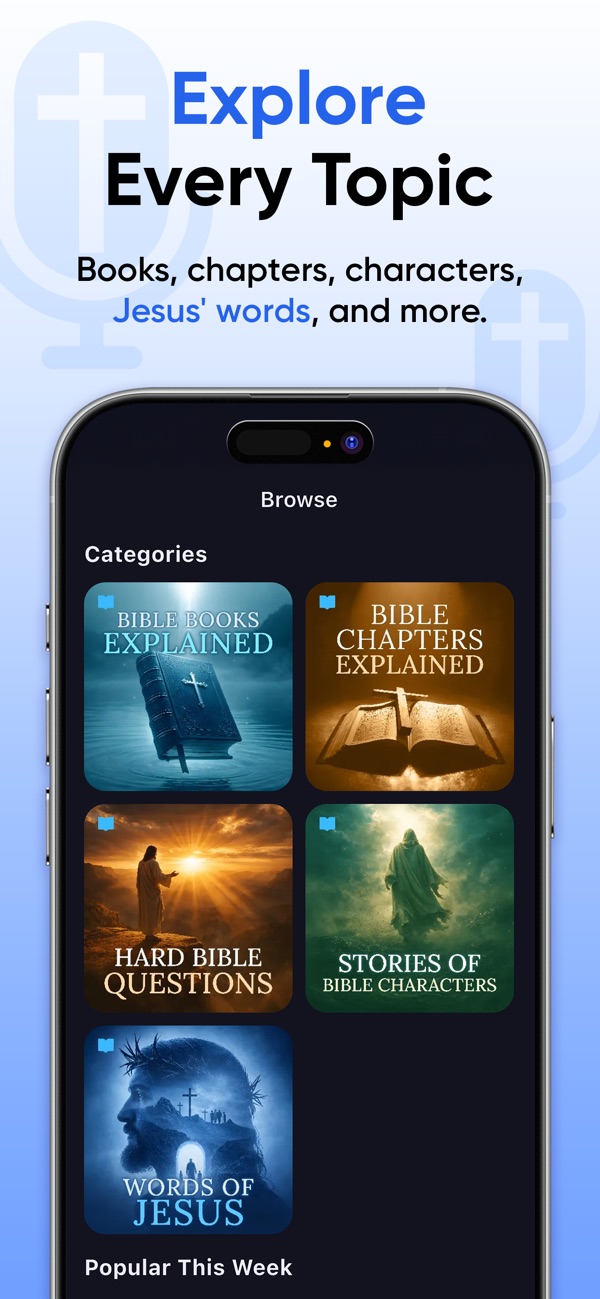
カテゴリ
Bible Chapters Explained
 37分
Bible Chapters Explained
Daniel Saw the End of the World Thousands of Years Ago. Here Is What He Wrote
An old man stands on the bank of the Tigris River. He was taken from his home as a boy, forced to serve kings who did not know his God, and has outlived more than one empire. Then a figure clothed in linen appears, with a face like lightning and eyes like burning fire, and shows Daniel the end of the world. Many people assume the Bible's words about the end must be a book of terror, or a code for clever people to crack. But Daniel did not write to frighten anyone. He wrote for people who feel small and afraid in a world that seems out of control, people who watch good things crumble and wonder if God has forgotten them. In this episode, we follow Daniel through his visions in the order he came to understand them. We look at the great statue of gold, silver, bronze, iron, and clay, and the stone cut without hands that becomes a mountain filling the earth. We see four beasts rise from a stormy sea, a heavenly courtroom where the books are opened, and one like the Son of Man coming with the clouds of heaven to receive an everlasting kingdom. We trace the ram and the goat, the Anointed One who would be cut off, the measured season of trouble, and the promise of resurrection at the very end of the book. Daniel was never given a date he could circle. What he was given, over and over, was a verdict, and it falls on the side of God and His people. He was not finally pointing at a date. He was pointing at a Person. Bible verses included in this episode: “In the days of these kings shall the God of heaven set up a kingdom, which shall never be destroyed: and the kingdom shall not be left to other people, but it shall break in pieces and consume all these kingdoms, and it shall stand for ever.” (Daniel 2:44) “I saw in the night visions, and, behold, one like the Son of man came with the clouds of heaven, and came to the Ancient of days, and they brought him near before him.” (Daniel 7:13) “To finish the transgression, and to make an end of sins, and to make reconciliation for iniquity, and to bring in everlasting righteousness.” (Daniel 9:24) “And many of them that sleep in the dust of the earth shall awake, some to everlasting life, and some to shame and everlasting contempt.” (Daniel 12:2) “And they that be wise shall shine as the brightness of the firmament; and they that turn many to righteousness as the stars for ever and ever.” (Daniel 12:3) “But go thou thy way till the end be: for thou shalt rest, and stand in thy lot at the end of the days.” (Daniel 12:13) If the world around you feels like it is coming apart, or you feel old, forgotten, and far from home, Daniel's last words are for you. The kingdoms that frighten you have an expiration date, and the One who meets us at the end is the Son of Man, with kindness in His eyes and a kingdom in His hands. Go your way, one faithful day at a time. You shall rest, and you shall rise, and you shall stand in your place among His own.
 33分
Bible Chapters Explained
Ezekiel and the Valley of Dry Bones: When God Brings Back What You Thought Was Dead
Our bones are dry. Our hope is lost. We are cut off. Those three sentences were spoken by God's own people in exile in Babylon. The temple was ash, the throne of David sat empty, and every visible evidence of God's promises had been destroyed. So they wrote the ending themselves: it is over. Heaven heard those three sentences. God's answer was to carry a prophet out in the Spirit and set him down in the middle of a valley full of bones, bones so old and so dry the sun had bleached them white. Then He made that prophet watch what He does with things everyone has agreed are finished. In this episode, we walk through Ezekiel chapter 37. We meet Ezekiel, a priest who never served a day in the temple, who lost his homeland, his calling, and his wife. We follow him as God walks him back and forth through the devastation, asks him, "Can these bones live?", and commands him to preach to the dead. We watch the bones rattle together, receive sinews, flesh, and skin, and still lie without breath, until God sends the ruach, the wind, breath, and Spirit, and they stand up an exceedingly great army. And we see how the vision reaches forward to the two sticks joined as one, to the promised shepherd from David's line, to the tomb of Lazarus, to the risen Jesus breathing on His disciples, and to the gospel itself. Salvation is not self improvement. It is resurrection. It always was. Bible verses included in this episode: “And He said to me, ‘Son of man, can these bones live?’ So I answered, ‘O Lord God, You know.’” (Ezekiel 37:3) “Thus says the Lord God to these bones: ‘Surely I will cause breath to enter into you, and you shall live.’” (Ezekiel 37:5) “And breath came into them, and they lived, and stood upon their feet, an exceedingly great army.” (Ezekiel 37:10) “I will put My Spirit in you, and you shall live, and I will place you in your own land.” (Ezekiel 37:14) “I am the resurrection and the life. He who believes in Me, though he may die, he shall live.” (John 11:25) “But God, who is rich in mercy, because of His great love with which He loved us, even when we were dead in trespasses, made us alive together with Christ.” (Ephesians 2:4-5) This message is for anyone with a valley of their own: a marriage that stopped sharing a heart, a child who walked away, a faith that has gone dry, or a calling buried long ago. God knows exactly how dead it is, He has heard your hopeless sentences, and He answers them without anger. So do not write the ending yourself. Keep the word of God moving over your valley, and ask Him for the breath. Can these bones live? He has already shown us His answer.
 37分
Bible Chapters Explained
What Jesus Did the Moment He Returned to Heaven
On the slope of the Mount of Olives, a group of ordinary men once stood with their eyes fixed on the sky, watching their teacher and friend rise away from them until a cloud hid Him from their sight. Then the hill went quiet. We usually stop the story there. But there is another side to that morning, a side the men on the hill could not see. From heaven's side, it was not a goodbye. It was an arrival, a homecoming, and the beginning of the work Jesus is still doing for you right now. For many believers, the ascension is the least understood part of the whole story of Jesus. Yet what He did the moment He returned tells us whether the cross actually worked, where He is now, and what He is doing about our sin, our prayers, and our future. In this episode, we explore what Jesus did on the other side of the cloud. He returned to the glory He shared with the Father before the world began. He sat down at the right hand of the Majesty in heaven, because the work of purification for sins was finished. He entered the true sanctuary, heaven itself, to appear for us in God's presence. He was exalted to the highest place, received the kingdom Daniel saw, carried our humanity to the throne, began to intercede for His people, and poured out the promised Holy Spirit. Bible verses included in this episode: “After he said this, he was taken up before their very eyes, and a cloud hid him from their sight.” (Acts 1:9) “After he had provided purification for sins, he sat down at the right hand of the Majesty in heaven.” (Hebrews 1:3) “The Lord says to my Lord: Sit at my right hand until I make your enemies a footstool for your feet.” (Psalm 110:1) “For Christ did not enter a sanctuary made with human hands that was only a copy of the true one; he entered heaven itself, now to appear for us in God's presence.” (Hebrews 9:24) “Therefore God exalted him to the highest place and gave him the name that is above every name.” (Philippians 2:9) “He always lives to intercede for them.” (Hebrews 7:25) “Exalted to the right hand of God, he has received from the Father the promised Holy Spirit and has poured out what you now see and hear.” (Acts 2:33) This message is for anyone who believes Jesus died and rose, but on some days feels He is far away. When you are afraid, remember that He sat down. When you cannot pray, remember that He always lives to intercede for you. When you feel alone, remember that by His Spirit He is closer than your own breath. You are not standing on an empty hill under an empty sky. He has not left you. He has gone ahead of you, and He is holding you all the way home.
 29分
Bible Chapters Explained
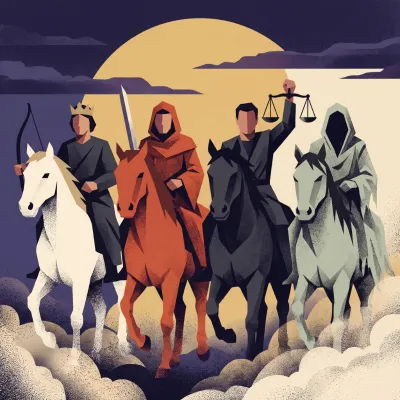
The Four Horsemen of the Apocalypse: The Book of Revelation
The book of Revelation was not written to frighten God's people. It was written to comfort them. Its first readers were ordinary believers in a hard and hostile world, afraid of what tomorrow would bring. And the vision John sends them does not begin with the horses. It begins in a throne room, with God seated at the center of everything, worshiped without pause. The word apocalypse does not mean disaster. It means an unveiling, the pulling back of a curtain so you can finally see what was there all along. Conquest, war, hunger, and death have ridden through every century. Revelation lets you see them clearly, and see the one thing you could never see with your own eyes: whose hand breaks the seals and sets the limits. In this episode, we walk through the four horsemen of Revelation chapter 6. We begin with the sealed scroll that no one was worthy to open, and the Lion of Judah who turns out to be a Lamb that was slain. We look at the living creatures who call each rider forward, the white horse of conquest, the red horse of war, the black horse of famine with its scales and its day's wage for a quart of wheat, and the pale horse named Death with Hades following behind. We trace how the prophets Jeremiah and Ezekiel spoke of the same sword, famine, plague, and wild beasts, and why the martyrs under the altar cry out, "How long?" Every rider is given, permitted, and limited. Evil in this vision is real, but it is never sovereign. Bible verses included in this episode: “Worthy is the Lamb who was slain.” (Revelation 5:12) “And I looked, and behold, a white horse! And its rider had a bow, and a crown was given to him, and he came out conquering, and to conquer.” (Revelation 6:2) “Its rider was permitted to take peace from the earth, so that people should slay one another, and he was given a great sword.” (Revelation 6:4) “A quart of wheat for a denarius, and three quarts of barley for a denarius, and do not harm the oil and wine!” (Revelation 6:6) “And its rider's name was Death, and Hades followed him. And they were given authority over a fourth of the earth, to kill with sword and with famine and with pestilence and by wild beasts of the earth.” (Revelation 6:8) This message is for anyone who watches the news and feels that everything is coming apart, or who feels the pale rider waiting at the end of the hall. The Bible does not tell you the riders are not real. It tells you they are not in charge. The riders are real, but they are held. The seals are broken, but only by wounded and loving hands. They answer to a Lamb, and the Lamb is for you.
 36分
Bible Chapters Explained
The 40 Days Jesus Was Tempted in the Wilderness, and How He Won
Before there was a battle, there was a voice. Jesus stood in the Jordan River, heaven opened, and the Father declared His love out loud. If you were writing the story, the next chapter would be triumph. Instead, the very next verse says the Spirit led Him into the wilderness to be tempted by the devil. We tend to believe that if God loves us, He will keep us out of the wilderness. The Bible shows us something different. Sometimes the wilderness is not the place where God's love ran out. Sometimes it is exactly where His love is leading. In this episode, we walk into the desert with Jesus and watch closely. We explore why forty is the number of testing, from Noah to Moses to Elijah, and how Jesus stepped into Israel's own story to stand where God's people had stumbled. We look at the three temptations, stones into bread, the leap from the temple, and the kingdoms of the world, and how each one attacked His identity, tempted Him to test God, and offered a crown without the cross. Every answer Jesus gave came from Deuteronomy, the very book Moses preached to the generation that failed. Jesus did not win by reaching for a power we do not have. He won with four weapons within reach of every believer: a heart full of Scripture, an identity resting in the Father's love, the power of the Spirit, and a settled refusal to take the shortcut. Bible verses included in this episode: “This is my Son, whom I love; with him I am well pleased.” (Matthew 3:17) “Then Jesus was led by the Spirit into the wilderness to be tempted by the devil.” (Matthew 4:1) “It is written: ‘Man shall not live on bread alone, but on every word that comes from the mouth of God.’” (Matthew 4:4) “It is also written: ‘Do not put the Lord your God to the test.’” (Matthew 4:7) “Away from me, Satan! For it is written: ‘Worship the Lord your God, and serve him only.’” (Matthew 4:10) “Because he himself suffered when he was tempted, he is able to help those who are being tempted.” (Hebrews 2:18) “And God is faithful; he will not let you be tempted beyond what you can bear. But when you are tempted, he will also provide a way out so that you can endure it.” (1 Corinthians 10:13) This message is for anyone in a wilderness right now, whether it is a hospital room, an empty house, a body growing older, or a faith that feels dry. Being led into a wilderness is not evidence that God has abandoned you, and you are not fighting anything your Lord has not felt in His own body. If your life feels like day forty, hold on. Angels came in the morning. The Father's supply was never late. And the Son who won in the desert is not finished with you.
 33分
Bible Chapters Explained
Isaiah Saw the Throne Room of God, and It Changed Him Forever
The most famous vision of God in the entire Old Testament is dated by a funeral. King Uzziah had ruled Judah for about fifty two years, and he died a leper, shut out of the temple of the Lord. Assyria was rising on the horizon. If you had asked anyone in Jerusalem what they saw that year, they would have said an empty throne. Isaiah looked at the same year and saw the throne that has never been empty for one second in all of eternity. What he saw rebuilt him from the inside out, and it answers the question that lives quietly in almost every believer's heart: what is God really like? In this episode, we walk through Isaiah chapter 6. We look at the Lord seated high and lifted up, the train of His robe filling the temple, and the seraphim, the burning ones, covering their faces as they cry holy, holy, holy. We hear Isaiah's cry, "Woe is me, for I am undone," and see why the conviction landed on his lips. We watch a live coal carried from the altar to cleanse him, contrast his humility with Uzziah's pride, and hear God ask, "Whom shall I send?" We also face the hard assignment Isaiah was given, the holy seed in the stump, and John's revelation of whose glory Isaiah actually saw. The terrifying holiness and the tender mercy of God are not two Gods, or two moods of God. They are one Person. Bible verses included in this episode: “In the year that King Uzziah died, I saw the Lord sitting on a throne, high and lifted up, and the train of His robe filled the temple.” (Isaiah 6:1) “Holy, holy, holy is the Lord of hosts; the whole earth is full of His glory!” (Isaiah 6:3) “Woe is me, for I am undone! Because I am a man of unclean lips, and I dwell in the midst of a people of unclean lips; for my eyes have seen the King, the Lord of hosts.” (Isaiah 6:5) “Behold, this has touched your lips; your iniquity is taken away, and your sin purged.” (Isaiah 6:7) “Also I heard the voice of the Lord, saying: ‘Whom shall I send, and who will go for Us?’ Then I said, ‘Here am I! Send me.’” (Isaiah 6:8) “These things Isaiah said when he saw His glory and spoke of Him.” (John 12:41) “There shall come forth a Rod from the stem of Jesse, and a Branch shall grow out of his roots.” (Isaiah 11:1) Everyone has an Uzziah, some pillar that makes the world feel steady, and for every one of us the year comes when it falls. If you are in that year right now, this vision was preserved for you. The King you cannot see is still seated, and His mercy still moves toward the broken before they can move toward Him. Whatever this year has taken from you, the throne room of God has lost nothing. He still reigns, still cleanses, and still calls. Here am I. Send me.
 32分
Bible Chapters Explained
The Book of Daniel: The Prophecy That Gave the Exact Year of the Messiah
There is a prophecy in the ninth chapter of Daniel that measured out the years until the Messiah would come. It is not a poem or a symbol. It is a count. A command goes out to rebuild a ruined city, a set number of years is marked off, and at the end of those years the Anointed One arrives. Follow the count, and it lands in the very generation when Jesus of Nazareth walked the roads of Judea. But God did not hand this timeline to an old man in exile so we could be impressed by arithmetic. He gave it inside an answer to a prayer about sin. And the first thing the prophecy promises is not a date on a calendar. It is an end to guilt. In this episode, we explore Daniel chapter 9. We find Daniel, old and far from home, reading the scroll of Jeremiah and falling to his knees to confess, "We have sinned," on behalf of his whole people. We watch Gabriel arrive while he is still praying, calling him greatly beloved. We look at the six purposes of the seventy sevens, all circling the ending of sin, then walk through the count of four hundred and eighty three years from the command to rebuild Jerusalem, and why every careful reckoning lands in the early decades of the first century. And we hear the words that turn a tragedy into the gospel: the Anointed One would be cut off, but not for himself. The prophecy told the world when. The cross told the world how. And the empty tomb told the world it was finished. Bible verses included in this episode: “We have sinned, and have committed iniquity, and have done wickedly, and have rebelled.” (Daniel 9:5) “Seventy weeks are decreed about your people and your holy city, to finish the transgression, to put an end to sin, and to atone for iniquity, to bring in everlasting righteousness, to seal both vision and prophet, and to anoint a most holy place.” (Daniel 9:24) “The going out of the word to restore and build Jerusalem.” (Daniel 9:25) “Cut off, but not for himself.” (Daniel 9:26) “He was cut off out of the land of the living: for the transgression of my people was he stricken.” (Isaiah 53:8) This message is for anyone who feels their failures have gone on too long, anyone waiting on God for a promise that has not yet come, and anyone who feels old, tired, or alone in their faith. Daniel died without seeing the prophecy fulfilled, and still he believed, because he knew the character of the God who made it. Your forgiveness was not an emergency repair. It was an appointment on God's calendar, and He kept it. The God who declared the end from the beginning is calling you, as He called Daniel, greatly beloved.
 34分
Bible Chapters Explained
The Seal of God: What Scripture Reveals About Those Who Belong to Him
You can love the Bible for forty years and still lie awake at two in the morning, wondering whether you truly belong to God. Paul wrote to people in that exact condition. Near the end of his life, to a young pastor holding together a shaken church, he described the seal of God and even told us what is written on it. That seal has two lines. The first is about something God knows. The second is about something that shows. Together, they are how Scripture describes the people who belong to Him. In this episode, we explore what the Bible reveals about the seal of God. We trace the first line back to Moses on a day when no one could tell who belonged to the Lord. We see Abraham receive circumcision as a seal of a righteousness he already had by faith, and learn why the Holy Spirit is not a token but a first installment of our inheritance. We walk through Judah handing his seal to Tamar, the gold plate engraved "Holy to the Lord" on the high priest's forehead, the mark Ezekiel saw placed on those who grieved, the signet ring pulled off Jehoiachin and given again to Zerubbabel, and the Lamb who alone could open the sealed scroll. A seal is not an emotion. It is something pressed in from outside by someone else. You do not carry the name because you can feel it. You carry it because He pressed it. Bible verses included in this episode: “Nevertheless, God's solid foundation stands firm, sealed with this inscription: ‘The Lord knows those who are his,’ and, ‘Everyone who confesses the name of the Lord must turn away from wickedness.’” (2 Timothy 2:19) “And he received circumcision as a sign, a seal of the righteousness that he had by faith while he was still uncircumcised.” (Romans 4:11) “And you also were included in Christ when you heard the message of truth, the gospel of your salvation. When you believed, you were marked in him with a seal, the promised Holy Spirit.” (Ephesians 1:13) “And do not grieve the Holy Spirit of God, with whom you were sealed for the day of redemption.” (Ephesians 4:30) “Go throughout the city of Jerusalem and put a mark on the foreheads of those who grieve and lament over all the detestable things that are done in it.” (Ezekiel 9:4) “They will see his face, and his name will be on their foreheads.” (Revelation 22:4) “The Spirit himself testifies with our spirit that we are God's children.” (Romans 8:16) This message is for anyone in a quiet house, worn out, or haunted by something in the past that whispers God must have written you off. Nothing in these passages ties the seal of God to your feelings. If something in you keeps turning toward Him, that is the second line of the inscription, showing. He knows those who are His. He pressed His name into you a long time ago, He did not do it lightly, and He is not going to lose you now.
 32分
Bible Chapters Explained
Where Was Jesus During Lucifer's Rebellion in Heaven?
The rebellion in heaven was aimed at Jesus. Lucifer wanted the highest seat there is, and that seat belonged to the Son of God. Every angel in heaven had been made by Him, including the one who turned against Him. So Lucifer reached for a throne that already had an owner. We often picture the Son somewhere in the background, watching a drama unfold between God and a rebellious angel. But Scripture shows us something far more personal. He was not in the background. He was the one being rebelled against. In this episode, we explore where Jesus was during Lucifer's rebellion. From Hebrews chapter 1 and Colossians chapter 1, we see that the adversary was never a rival to Jesus, but a creature of Jesus. We look at Isaiah and Ezekiel's portraits of a guardian cherub who was blameless until wickedness was found in him, Jesus' quiet words about the one who "does not stand in the truth," and the lightning fall in Luke 10, paired with the words almost everyone skips. We consider why the Son never drew a sword, why Michael said "The Lord rebuke you," how the accuser was answered in Zechariah's courtroom, and why there is no rescue mission for fallen angels, but there is one for us. The rebellion asked who deserves the throne. The answer turned out to be the One who was willing to leave it. Bible verses included in this episode: “Let all God's angels worship him.” (Hebrews 1:6) “I will make myself like the Most High.” (Isaiah 14:14) “For in him all things were created: things in heaven and on earth, visible and invisible, whether thrones or powers or rulers or authorities; all things have been created through him and for him.” (Colossians 1:16) “You were blameless in your ways from the day you were created till wickedness was found in you.” (Ezekiel 28:15) “I saw Satan fall like lightning from heaven.” (Luke 10:18) “Do not rejoice that the spirits submit to you, but rejoice that your names are written in heaven.” (Luke 10:20) “For surely it is not angels he helps, but Abraham's descendants.” (Hebrews 2:16) “They triumphed over him by the blood of the Lamb and by the word of their testimony.” (Revelation 12:11) Underneath this question there is often a more personal one: if God let the brightest one go, will He let me go too? The difference between the one who fell and the one who is held is not the size of the failure. Nobody came for the fallen angels, and Someone came for you. If you are tired, carrying an old shame, or feeling your faith grow thin, rejoice that your name is written in heaven. You are not the next one to fall. You are the reason He came down.
 37分
Bible Chapters Explained
If You Understand Proverbs 1, You Understand the Entire Bible
Proverbs chapter 1 puts one young man in a noisy street with three voices calling his name. His father, from inside the house. A group of men, from the road. And the voice of God's own wisdom, calling out loud in the busy market where anyone can hear. Three invitations, one life, and everything that follows depends on which one he answers. Most books of the Bible drop you straight into the middle of something. Proverbs stops first and tells you exactly what it is for. It was written for the simple who are just starting out, and for the wise who have walked with God for fifty years. The wise one is not the person who has finished. The wise one is the person who is still listening. In this episode, we walk through Proverbs 1 and the sentence the whole book is built on: the fear of the Lord is the beginning of knowledge. We explore why this fear draws you nearer rather than pushing you away, and why "beginning" means foundation, not a stage you outgrow. We hear a father's instruction at the door, the recruiting pitch of sinful men who promise "one purse," the net spread in sight of the bird, and Wisdom crying aloud in the street with an offer to pour out her spirit on anyone who turns. We also face the hard warning honestly, and see how the pattern of two voices runs from Eden to Moses, Elijah, Jesus, and the last invitation of Revelation. Everything Proverbs 1 says about wisdom, the New Testament eventually says about a Person. Christ is the wisdom of God, and the fear of the Lord has a face, and the face is kind. Bible verses included in this episode: “The fear of the Lord is the beginning of knowledge; fools despise wisdom and instruction.” (Proverbs 1:7) “Hear, my son, your father's instruction, and forsake not your mother's teaching.” (Proverbs 1:8) “My son, if sinful men entice you, do not give in to them.” (Proverbs 1:10) “Wisdom cries aloud in the street, in the markets she raises her voice.” (Proverbs 1:20) “If you turn at my reproof, behold, I will pour out my spirit to you; I will make my words known to you.” (Proverbs 1:23) “Let anyone who is thirsty come to me and drink.” (John 7:37) “But whoever listens to me will dwell secure and will be at ease, without dread of disaster.” (Proverbs 1:33) The voices calling you today may be quieter: too old, too far gone, unnoticed, unheard. Every one of them presents itself as the truth. But Wisdom is still out in the street, calling to exactly the kind of person you are afraid you are. She is still calling, which means it is not too late. Turn, and she will pour herself out. Whoever listens will dwell secure.
 32分
Bible Chapters Explained
If You Understand Matthew 24, You Understand the Entire Bible
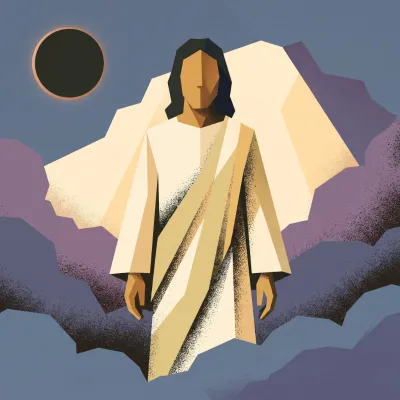
Most of us come to Matthew 24 looking for a schedule, wanting to know whether the world is finally falling apart. Jesus spends most of the chapter doing the opposite of what we expect. He takes the signs away, tells His friends to stop being alarmed, and gives them a handful of clear commands, and not one of them is "figure out when." Jesus taught that this world is going somewhere, and that He Himself is the ending. He said He would come back in person, in the open, where no one could miss it. He said no one knows the day. And He named the very things people always point to as proof, war and hunger and earthquakes, and said plainly that they are not the signal. In this episode, we walk through Matthew 24 from the beginning. We sit with the disciples on the Mount of Olives as they point at the temple and ask the question the whole chapter answers. We explore why wars are only the beginning of birth pains, why Jesus warned that the love of many would grow cold, and how the abomination of desolation and the flight to the hills were fulfilled when Rome destroyed Jerusalem in the year 70. We look at how the prophets spoke of near and far events together, why His coming will be like lightning, what the fig tree and "this generation" mean, and why the chapter ends not in the sky but in a kitchen. The disciples asked when. Jesus asked who. They asked for a sign in the sky, and He answered with a hungry neighbor. Bible verses included in this episode: “Truly I tell you, not one stone here will be left on another; every one will be thrown down.” (Matthew 24:2) “See to it that you are not alarmed. Such things must happen, but the end is still to come.” (Matthew 24:6) “Because of the increase of wickedness, the love of most will grow cold.” (Matthew 24:12) “For as lightning that comes from the east is visible even in the west, so will be the coming of the Son of Man.” (Matthew 24:27) “But about that day or hour no one knows, not even the angels in heaven, nor the Son, but only the Father.” (Matthew 24:36) “Therefore keep watch, because you do not know on what day your Lord will come.” (Matthew 24:42) “Who then is the faithful and wise servant, whom the master has put in charge of the servants in his household to give them their food at the proper time?” (Matthew 24:45) This message is for anyone afraid of the news, tired of failed predictions, or quietly ashamed that their life feels too small to matter. The One who is coming is the same Jesus who paused in the middle of a prophecy to worry about mothers with babies and cold winter roads. He is coming, and you cannot know when. The best thing you can be doing when He arrives is the small, ordinary good you were already trusted with today. Heaven and earth will pass away, but His words will not.
 32分
Bible Chapters Explained
If You Understand Genesis 3:15, You Understand the Entire Bible
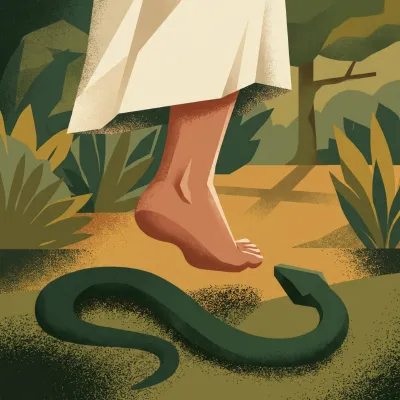
Genesis 3:15 is the first promise God ever made to guilty people, and everything the Bible does after it is God keeping that promise. One sentence, spoken in the worst hour in human history, in a garden that had just stopped being safe. Once you see what it is doing, the sixty six books of the Bible stop feeling like a stack of separate books and start reading like one story with one ending. God questioned the man. God questioned the woman. But He asked the serpent nothing. He turned to it and began sentencing, and Adam and Eve, hiding behind the trees, overheard God announce a war He was starting on their behalf. In this episode, we explore the promise hidden in Genesis 3:15. We notice that only the serpent and the ground are cursed, never the man and the woman. We unpack the rare Hebrew word for enmity, the single verb used for both the crushing of the head and the striking of the heel, and why ancient translators heard a person in this verse long before Jesus was born. We watch Adam name his wife Life, God clothe them with His own hands, Eve hold on to the word "offspring" after losing two sons, and Lamech name Noah in hope. And we follow the line through Tamar, Rahab, Ruth, and Mary to the cross, the empty tomb, and the last page of Revelation. The heel wound and the head wound are the same event described from two sides. The wound was the weapon. Bible verses included in this episode: “And I will put enmity between you and the woman, and between your offspring and hers; he will crush your head, and you will strike his heel.” (Genesis 3:15) “Adam named his wife Eve, because she would become the mother of all the living.” (Genesis 3:20) “The Lord God made garments of skin for Adam and his wife and clothed them.” (Genesis 3:21) “God has granted me another child in place of Abel, since Cain killed him.” (Genesis 4:25) “But when the set time had fully come, God sent his Son, born of a woman, born under the law.” (Galatians 4:4) “The reason the Son of God appeared was to destroy the devil's work.” (1 John 3:8) “No longer will there be any curse.” (Revelation 22:3) This message is for anyone carrying something they have never said out loud, anyone worn down by a life that keeps producing thorns, and anyone who feels God's promises were written for people with a cleaner history. God's first move toward failing people is a promise, and His anger has an enemy, and the enemy is not you. You can overhear something and still be the one it is for. The garden closed. The city opens. And the curse that started it all will not be there.
 33分
Bible Chapters Explained
The Biblical Cure for Anxiety Hidden in Philippians 4
What is the biblical cure for anxiety hidden in Philippians 4? When Paul wrote, “do not be anxious about anything,” he was not speaking from comfort, ease, or distance. He was writing from prison. He had been beaten, whipped, shipwrecked, hungry, cold, and burdened with concern for the churches. Yet from that place of suffering, he revealed a path to peace that had already been tested in the fire. In this episode, we explore Philippians 4 and the powerful cure for anxiety that Paul gives to every worried heart. His answer is not willpower, denial, or pretending everything is fine. It is transfer. Instead of carrying the weight alone, we are invited to bring every fear, every request, and every anxious thought to God in prayer. We’ll look at why thanksgiving matters when we are afraid, how the peace of God guards our hearts and minds, why Paul compares peace to a soldier standing at the gate, and how our thoughts must be redirected toward what is true, honorable, pure, lovely, and worthy of praise. This episode also explains the real meaning of “I can do all things through him who strengthens me.” Paul was not talking about achieving every dream or winning every battle. He was talking about enduring hunger, need, loss, weakness, and uncertainty through the strength of Christ. If you have ever lain awake at night with fear sitting on your chest, this message is for you. You were never meant to carry tomorrow’s weight with today’s strength. The God of peace invites you to bring it to Him, tonight, tomorrow, and every time the fear comes back. Bible verses included in this episode: “Do not be anxious about anything.” (Philippians 4:6) “Rejoice in the Lord always; again I will say, rejoice.” (Philippians 4:4) “The Lord is at hand.” (Philippians 4:5) “Do not be anxious about anything, but in everything by prayer and supplication with thanksgiving, let your requests be made known to God.” (Philippians 4:6) “And the peace of God, which surpasses all understanding, will guard your hearts and your minds in Christ Jesus.” (Philippians 4:7) “Whatever is true, whatever is honorable, whatever is just, whatever is pure, whatever is lovely, whatever is commendable, if there is any excellence, if there is anything worthy of praise, think about these things.” (Philippians 4:8) “I have learned in whatever situation I am to be content.” (Philippians 4:11) “I know how to be brought low, and I know how to abound. In any and every circumstance, I have learned the secret of facing plenty and hunger, abundance and need.” (Philippians 4:12) “I can do all things through him who strengthens me.” (Philippians 4:13) “And my God will supply every need of yours according to his riches in glory in Christ Jesus.” (Philippians 4:19) The cure for anxiety is not pretending fear is gone. It is bringing fear to the Father, remembering His faithfulness, and receiving the peace of God that stands guard over the heart. Bring it to Him. That is not weakness. That is the cure.
 33分
Bible Chapters Explained
Why Psalm 91 Is Not the Promise You Think It Is
Is Psalm 91 really a promise that nothing bad will ever happen to you? Many people read Psalm 91 as if it were a spiritual charm, a guarantee that danger, sickness, fear, and trouble will never touch the believer. But when pain comes anyway, they wonder if the promise failed. The truth is deeper, stronger, and more beautiful than that. In this episode, we explore why Psalm 91 is not the promise many people think it is. This psalm was placed right after Psalm 90, a prayer of Moses about death, weakness, and the shortness of human life. That means Psalm 91 is not pretending life is safe. It is God’s answer to people who know life is fragile. It does not promise that trouble will never come. It promises that God Himself will be your shelter in the middle of it. We’ll look at the meaning of dwelling in the shelter of the Most High, resting in the shadow of the Almighty, hiding under His wings, and trusting His faithfulness as your shield. We’ll also see why the devil quoted Psalm 91 to Jesus in the wilderness, and why Jesus refused to turn God’s promise into a test. This episode reveals the true comfort of Psalm 91. It is not magic words. It is not a guarantee of an easy road. It is a home in God. The arrows may fly. The night may come. The body may fail. But nothing that touches you can finally have you, because the last word of this psalm is not safety. It is salvation. Bible verses included in this episode: “Whoever dwells in the shelter of the Most High will rest in the shadow of the Almighty.” (Psalm 91:1) “I will say of the Lord, ‘He is my refuge and my fortress, my God, in whom I trust.’” (Psalm 91:2) “He will cover you with his feathers, and under his wings you will find refuge; his faithfulness will be your shield and rampart.” (Psalm 91:4) “You will not fear the terror of night, nor the arrow that flies by day.” (Psalm 91:5) “Nor the pestilence that stalks in the darkness, nor the plague that destroys at midday.” (Psalm 91:6) “A thousand may fall at your side, ten thousand at your right hand, but it will not come near you.” (Psalm 91:7) “Surely he will save you from the fowler’s snare and from the deadly pestilence.” (Psalm 91:3) “For he will command his angels concerning you to guard you in all your ways.” (Psalm 91:11) “If you say, ‘The Lord is my refuge,’ and you make the Most High your dwelling.” (Psalm 91:9) “You will tread on the lion and the cobra; you will trample the great lion and the serpent.” (Psalm 91:13) “Because he loves me,” says the Lord, “I will rescue him; I will protect him, for he acknowledges my name.” (Psalm 91:14) “He will call on me, and I will answer him; I will be with him in trouble, I will deliver him and honor him.” (Psalm 91:15) “With long life I will satisfy him and show him my salvation.” (Psalm 91:16) Psalm 91 is not a promise that you will never face the night. It is a promise that you will never face the night alone. The shelter is not for people who have no fear. It is for people who bring their fear into the presence of God and learn to live under His wings.
 29分
Bible Chapters Explained
Ephesians 3 - When Faith Feels Weak
What do you read when your faith still exists, but it feels weak, tired, and barely alive? In this episode, we walk through Ephesians 3, one of the most powerful chapters in the New Testament for seasons when belief feels more like a burden than a fire. From Paul’s prison cell comes a message of hope, strength, love, and supernatural power for anyone who feels discouraged. Paul says, “Although I am less than the least of all the Lord’s people, this grace was given me: to preach to the Gentiles the boundless riches of Christ.” (Ephesians 3:8) He also writes, “I ask you, therefore, not to be discouraged because of my sufferings for you, which are your glory.” (Ephesians 3:13) Then Paul bows in prayer and says, “For this reason I kneel before the Father, from whom every family in heaven and on earth derives its name.” (Ephesians 3:14 to 15) He prays, “I pray that out of his glorious riches he may strengthen you with power through his Spirit in your inner being.” (Ephesians 3:16) He continues, “So that Christ may dwell in your hearts through faith.” (Ephesians 3:17) And, “And I pray that you, being rooted and established in love, may have power, together with all the Lord’s holy people, to grasp how wide and long and high and deep is the love of Christ.” (Ephesians 3:17 to 18) Paul then prays, “To know this love that surpasses knowledge, that you may be filled to the measure of all the fullness of God.” (Ephesians 3:19) And he closes with one of the greatest promises in Scripture, “Now to him who is able to do immeasurably more than all we ask or imagine, according to his power that is at work within us, to him be glory in the church and in Christ Jesus throughout all generations, for ever and ever! Amen.” (Ephesians 3:20 to 21) This episode is for the person whose faith feels like a flicker. Ephesians 3 reminds us that God strengthens the inner being, roots us in the love of Christ, fills us with His fullness, and works within us with a power greater than anything we can ask or imagine.
 34分
Bible Chapters Explained
Galatians 5 - Flesh vs Spirit
In this episode, we explore Paul’s urgent message about freedom, grace, the danger of legalism, and the daily war between the flesh and the Spirit. This chapter reveals why salvation cannot be earned, why true freedom is not a license to sin, and how the Holy Spirit produces a life that rules and rituals never could. Paul begins with this powerful declaration, “It is for freedom that Christ has set us free. Stand firm, then, and do not let yourselves be burdened again by a yoke of slavery.” (Galatians 5:1) He then gives a sobering warning, “You who are trying to be justified by the law have been alienated from Christ; you have fallen away from grace.” (Galatians 5:4) Paul gives the true definition of Christian living in one sentence, “The only thing that counts is faith expressing itself through love.” (Galatians 5:6) He also explains what freedom is for, “You, my brothers and sisters, were called to be free. But do not use your freedom to indulge the flesh; rather, serve one another humbly in love.” (Galatians 5:13) And he sums up the heart of the law with this command, “For the entire law is fulfilled in keeping this one command: Love your neighbor as yourself.” (Galatians 5:14) At the center of the chapter, Paul reveals the invisible war inside every believer, “So I say, walk by the Spirit, and you will not gratify the desires of the flesh. For the flesh desires what is contrary to the Spirit, and the Spirit what is contrary to the flesh. They are in conflict with each other.” (Galatians 5:16 to 17) He warns about the works of the flesh, then shows the beauty of a life ruled by God, “But the fruit of the Spirit is love, joy, peace, forbearance, kindness, goodness, faithfulness, gentleness and self control. Against such things there is no law.” (Galatians 5:22 to 23) And he reminds believers of their new identity, “Those who belong to Christ Jesus have crucified the flesh with its passions and desires.” (Galatians 5:24) Then he closes with this call, “Since we live by the Spirit, let us keep in step with the Spirit.” (Galatians 5:25) This episode is a call to leave behind the heavy yoke of performance, reject the slavery of the flesh, and walk in the true freedom that only the Spirit of God can give.
 30分
Bible Chapters Explained
Hebrews 11 - The Most Important Chapter In The Bible
Why is Hebrews 11 considered by so many to be the most important chapter in the Bible? In this episode, we explore the chapter often called the Hall of Faith and uncover why it stands at the center of the Christian life. Hebrews 11 does not just tell us what faith looks like. It defines it, proves it through the lives of God’s people, and shows how ordinary believers can trust God for the impossible. The chapter begins with this powerful definition: “Now faith is confidence in what we hope for and assurance about what we do not see.” (Hebrews 11:1) It then takes us back to the beginning of creation: “By faith we understand that the universe was formed at God’s command, so that what is seen was not made out of what was visible.” (Hebrews 11:3) The writer gives us the golden rule of walking with God: “And without faith it is impossible to please God, because anyone who comes to him must believe that he exists and that he rewards those who earnestly seek him.” (Hebrews 11:6) We see faith in action through Abraham: “By faith Abraham, when called to go to a place he would later receive as his inheritance, obeyed and went, even though he did not know where he was going.” (Hebrews 11:8) And through Sarah: “And by faith even Sarah, who was past childbearing age, was enabled to bear children because she considered him faithful who had made the promise.” (Hebrews 11:11) The chapter also shows us radical obedience: “By faith Abraham, when God tested him, offered Isaac as a sacrifice. He who had embraced the promises was about to sacrifice his one and only son.” (Hebrews 11:17) It shows us victory through impossible circumstances: “By faith the walls of Jericho fell, after the army had marched around them for seven days.” (Hebrews 11:30) And mercy for those with a broken past: “By faith the prostitute Rahab, because she welcomed the spies, was not killed with those who were disobedient.” (Hebrews 11:31) But Hebrews 11 also tells the hard truth of faith: “These were all commended for their faith, yet none of them received what had been promised.” (Hebrews 11:39) Then comes the stunning conclusion: “Since God had planned something better for us so that only together with us would they be made perfect.” (Hebrews 11:40) And this leads to the call for every believer today: “Therefore, since we are surrounded by such a great cloud of witnesses, let us throw off everything that hinders and the sin that so easily entangles. And let us run with perseverance the race marked out for us.” (Hebrews 12:1) Above all, this chapter points us to Christ: “Fixing our eyes on Jesus, the pioneer and perfecter of faith.” (Hebrews 12:2) This episode is a deep look at why Hebrews 11 matters so much. It teaches that faith is not wishful thinking, but confidence in the word of God. It shows that faith can face miracles, suffering, waiting, and sacrifice. And it reminds us that the same God who was faithful to Abel, Noah, Abraham, Moses, Rahab, and the martyrs is still faithful today.
 28分
Bible Chapters Explained
Hebrews 9 - The Eternal Inheritance
Why did Jesus have to die? In this episode, we walk through Hebrews chapter 9 to uncover three powerful reasons the cross was necessary. This message shows that the death of Christ was more than a sacrifice. It opened the way into God’s presence, cleansed the conscience, covered the evidence of human failure with mercy, and activated the eternal inheritance God promised to His people. Hebrews says, “How much more shall the blood of Christ, who through the eternal Spirit offered Himself without spot to God, cleanse your conscience from dead works to serve the living God?” (Hebrews 9:14) Leviticus explains, “For the life of the flesh is in the blood, and I have given it to you upon the altar to make atonement for your souls for it is the blood that makes atonement for the soul.” (Leviticus 17:11) And Hebrews declares, “And according to the law almost all things are purified with blood, and without shedding of blood there is no remission.” (Hebrews 9:22) Then the chapter reveals something extraordinary, “And for this reason He is the Mediator of the new covenant, by means of death, for the redemption of the transgressions under the first covenant, that those who are called may receive the promise of the eternal inheritance. For where there is a testament, there must also of necessity be the death of the testator. For a testament is in force after men are dead, since it has no power at all while the testator lives.” (Hebrews 9:15 to 17) It also says, “Not that He should offer Himself often, as the high priest enters the Most Holy Place every year with blood of another He then would have had to suffer often since the foundation of the world but now, once at the end of the ages, He has appeared to put away sin by the sacrifice of Himself.” (Hebrews 9:25 to 26) And the chapter closes with this promise, “And as it is appointed for men to die once, but after this the judgment, so Christ was offered once to bear the sins of many. To those who eagerly wait for Him He will appear a second time, apart from sin, for salvation.” (Hebrews 9:27 to 28) This episode reveals that the cross was not only about forgiveness. It was the once for all sacrifice that reached the conscience, paid the debt of life, and opened the will of God so that every promise could finally be given to those who belong to Christ.
 29分
Bible Chapters Explained
Isaiah 53 - The Suffering Servant
Why is Isaiah 53 the most important prophecy every Christian needs to hear? In this episode, we walk through the suffering servant passage that begins in Isaiah 52:13 and reaches its full depth in Isaiah 53. This prophecy reveals a servant who is rejected, crushed, buried, and yet somehow lives again to see the result of his suffering. It shows that the Messiah would not only die, but die in the place of the guilty, bear the sin of many, justify many, and then see life beyond death. The passage begins with glory: “Behold, my servant shall act wisely he shall be exalted and lifted up, and shall be very high. Just as many were astonished at you, so his appearance was marred beyond human likeness, and his form beyond that of the children of men. So shall he sprinkle many nations. Kings shall shut their mouths because of him, for what had not been told them they shall see, and what they had not heard they shall understand.” (Isaiah 52:13 to 15) Then comes the confession: “Who has believed our report? And to whom has the arm of the Lord been revealed?” (Isaiah 53:1) Isaiah says of the servant, “For he grew up before him like a tender plant, and like a root out of dry ground. He had no form or majesty that we should look at him, and no beauty that we should desire him. He was despised and rejected by men, a man of sorrows and acquainted with grief. And we hid, as it were, our faces from him he was despised, and we did not esteem him.” (Isaiah 53:2 to 3) Then the heart of the prophecy is revealed: “Surely he has borne our griefs and carried our sorrows yet we esteemed him stricken, smitten by God, and afflicted. But he was wounded for our transgressions, he was crushed for our iniquities the punishment that brought us peace was upon him, and by his wounds we are healed.” (Isaiah 53:4 to 5) And Isaiah gives the great mirror verse: “All we like sheep have gone astray we have turned, every one, to his own way and the Lord has laid on him the iniquity of us all.” (Isaiah 53:6) The servant goes willingly: “He was oppressed, and he was afflicted, yet he opened not his mouth he was led like a lamb to the slaughter, and as a sheep before its shearers is silent, so he opened not his mouth.” (Isaiah 53:7) His death and burial are described with stunning detail: “He was taken away by oppression and judgment, and who considered his fate? For he was cut off out of the land of the living, struck down for the transgression of my people.” (Isaiah 53:8) “They made his grave with the wicked, but with the rich man in his death, because he had done no violence, nor was any deceit in his mouth.” (Isaiah 53:9) Then comes the verse that changes everything: “Yet it pleased the Lord to crush him he has put him to grief. When his soul makes an offering for guilt, he shall see his offspring, he shall prolong his days, and the will of the Lord shall prosper in his hand.” (Isaiah 53:10) And the victory continues: “By his knowledge my righteous servant shall justify many, for he shall bear their iniquities.” (Isaiah 53:11) “Therefore I will divide him a portion with the great, and he shall divide the spoil with the strong, because he poured out his soul to death and was numbered with the transgressors, yet he bore the sin of many and makes intercession for the transgressors.” (Isaiah 53:12) Jesus Himself claimed this passage when He said, “For I tell you that this Scripture must be fulfilled in me: ‘And he was numbered with the transgressors.’ For what is written about me has its fulfillment” (Luke 22:37) And He described His mission this way: “For even the Son of Man came not to be served but to serve, and to give his life as a ransom for many.” (Mark 10:45) This episode reveals why Isaiah 53 is not just a prophecy of suffering, but a prophecy of substitution, burial, resurrection, justification, and glory. The servant was crushed, but not defeated. He bore the sin of many, and through Him the riddle of Isaiah 53 is solved.
 30分
Bible Chapters Explained
John 14 - The Most Beautiful Message from Jesus
Why is a message spoken in a dark room just hours before an execution considered the most beautiful words ever recorded? In this episode, we uncover the mystery of John 14 and why Jesus chose the moment of His greatest pain to give us our greatest comfort. We explore the brilliant distinction between the trouble outside of you and the trouble inside of you, and why your heart has a door that only you can guard. We look at the promise of a permanent home prepared by a divine carpenter and the revolutionary claim that knowing a person is better than having a map. This journey reveals how a distorted image of God can be healed by looking at a single face and why you are never truly alone even in your darkest hour. From the cure for the orphan spirit to a peace that defies human logic, we see how these words provide a blueprint for a broken heart. "Do not let your hearts be troubled. You believe in God; believe also in me." (John 14:1) "My Father’s house has many rooms; if that were not so, would I have told you that I am going there to prepare a place for you?" (John 14:2) "And if I go and prepare a place for you, I will come back and take you to be with me that you also may be where I am." (John 14:3) "Jesus answered, I am the way and the truth and the life. No one comes to the Father except through me." (John 14:6) "Anyone who has seen me has seen the Father." (John 14:9) "Very truly I tell you, whoever believes in me will do the works I have been doing, and they will do even greater things than these, because I am going to the Father." (John 14:12) "And I will do whatever you ask in my name, so that the Father may be glorified in the Son." (John 14:13) "I will not leave you as orphans; I will come to you." (John 14:18) "And I will ask the Father, and he will give you another advocate to help you and be with you forever." (John 14:16) "Peace I leave with you; my peace I give you. I do not give to you as the world gives. Do not let your hearts be troubled and do not be afraid." (John 14:27) "Come now; let us leave." (John 14:31) This episode shows that John 14 is the ultimate exchange where our human frailty meets divine strength. It is a call to step out of the safe room and into the storm with the confidence that the King of Kings is walking right beside you.
 36分
Bible Chapters Explained
John 3 - You Must Be Born Again
What does it really mean to be born again? In this episode, we walk through John 3 and uncover the life changing conversation between Jesus and Nicodemus, a religious leader who had knowledge, status, and morality, yet still needed a miracle from God. This chapter reveals that religion, good works, and human effort can never save us. Jesus makes it clear that unless a person is born again, he cannot see the Kingdom of God. Jesus said, “Most assuredly, I say to you, unless one is born again, he cannot see the kingdom of God.” (John 3:3) He then explained, “Most assuredly, I say to you, unless one is born of water and the Spirit, he cannot enter the kingdom of God. That which is born of the flesh is flesh, and that which is born of the Spirit is spirit.” (John 3:5 to 6) Jesus also revealed the mystery of the Spirit, saying, “The wind blows where it wishes, and you hear the sound of it, but cannot tell where it comes from and where it goes. So is everyone who is born of the Spirit.” (John 3:8) Pointing back to the wilderness, Jesus said, “And as Moses lifted up the serpent in the wilderness, even so must the Son of Man be lifted up, that whoever believes in Him should not perish but have eternal life.” (John 3:14 to 15) Then comes the greatest promise in Scripture, “For God so loved the world that He gave His only begotten Son, that whoever believes in Him should not perish but have everlasting life.” (John 3:16) Jesus makes God’s purpose clear, “For God did not send His Son into the world to condemn the world, but that the world through Him might be saved.” (John 3:17) And He gives this warning, “He who believes in Him is not condemned; but he who does not believe is condemned already, because he has not believed in the name of the only begotten Son of God.” (John 3:18) Jesus also exposes the human heart, “And this is the condemnation, that the light has come into the world, and men loved darkness rather than light, because their deeds were evil.” (John 3:19) John the Baptist gives the right response to Christ, “He must increase, but I must decrease.” (John 3:30) And the chapter closes with one of the most urgent warnings in the Bible, “He who believes in the Son has everlasting life; and he who does not believe the Son shall not see life, but the wrath of God abides on him.” (John 3:36) This episode is a call to stop trusting in religion, look to Christ alone, and receive the new life that only the Holy Spirit can give.
 29分
Bible Chapters Explained
Matthew 25 - The Closed Door
When most people imagine the judgment of God, they picture a world of thunder and lightning. But when Jesus Christ describes the final reality of human accountability, He uses an image that is far more ordinary and deeply unsettling. In this episode, we explore the quiet terror of a closed door and the mystery of the Parable of the Ten Virgins. We travel back to a Tuesday on the Mount of Olives to uncover the historical reality of ancient Jewish weddings and the specific design of the torches that required a constant supply of oil. We examine the illusion of perfect sameness where the wise and the foolish look identical until the midnight cry reveals the truth. This journey forces us to look past outward religious routines to find the hidden reservoir of our spiritual lives. We discuss the debated mysteries of the oil and the legal weight of a bridegroom disowning his guests from behind a locked threshold. This episode is a call to move beyond an empty shell of religion and secure the authentic life that cannot be borrowed or bought when it is finally too late. Scripture References "Assuredly, I say to you, I do not know you." (Matthew 25:12) "And He will set the sheep on His right hand, but the goats on the left." (Matthew 25:33) "And these will go away into everlasting punishment, but the righteous into eternal life." (Matthew 25:46) "Watch therefore, for you know neither the day nor the hour in which the Son of Man is coming." (Matthew 25:13) This episode shows that the delay of the Bridegroom is the ultimate revealer of truth. It is an urgent plea to find the living oil of genuine faith today so that when the final hour strikes, your light will burn brightly and you will enter the joy of your Lord.
 31分
Bible Chapters Explained
Matthew 5 – 7 - The Greatest Sermon Ever Preached
What if the most famous speech in human history was actually a claim to be God? In this episode, we explore why the Sermon on the Mount is far more than just a collection of nice moral teachings. We investigate the six specific times Jesus said the words that no other prophet or priest ever dared to say and how those words moved the law of God from tablets of stone to the human heart. We journey to a mountainside in Galilee to see why the people who heard Jesus were not just comforted but absolutely stunned by His authority. From the upside down blessings of the Beatitudes to the radical call to love our enemies, we break down how these 107 verses cover the entire range of human experience. We look at the secret to overcoming worry, the true meaning of the most misquoted verse in the Bible, and the sobering warning of the narrow gate. This episode reveals that the greatest sermon ever preached is not a checklist for us to follow but a mirror that shows us our need for a Savior and a rock upon which we must build our lives. Scripture References "I will put my law in their minds and write it on their hearts." (Jeremiah 31:33) "Blessed are the poor in spirit, for theirs is the kingdom of heaven. Blessed are those who mourn, for they will be comforted. Blessed are the meek, for they will inherit the earth." (Matthew 5:3 to 5) "Blessed are the merciful, for they will be shown mercy. Blessed are the pure in heart, for they will see God. Blessed are the peacemakers, for they will be called children of God." (Matthew 5:7 to 9) "Blessed are those who are persecuted because of righteousness, for theirs is the kingdom of heaven." (Matthew 5:10) "You are the salt of the earth. You are the light of the world." (Matthew 5:13 to 14) "In the same way, let your light shine before others, that they may see your good deeds and glorify your Father in heaven." (Matthew 5:16) "Do not think that I have come to abolish the Law or the Prophets; I have not come to abolish them but to fulfill them." (Matthew 5:17) "You have heard that it was said, 'You shall not murder, and anyone who murders will be subject to judgment.' But I tell you that anyone who is angry with a brother or sister will be subject to judgment." (Matthew 5:21 to 22) "You have heard that it was said, 'You shall not commit adultery.' But I tell you that anyone who looks at a woman lustfully has already committed adultery with her in his heart." (Matthew 5:27 to 28) "All you need to say is simply 'Yes' or 'No'; anything beyond this comes from the evil one." (Matthew 5:37) "If anyone slaps you on the right cheek, turn to them the other cheek also." (Matthew 5:39) "If anyone forces you to go one mile, go with them two miles." (Matthew 5:41) "You have heard that it was said, 'Love your neighbor and hate your enemy.' But I tell you, love your enemies and pray for those who persecute you, that you may be children of your Father in heaven." (Matthew 5:43 to 45) "Be perfect, therefore, as your heavenly Father is perfect." (Matthew 5:48) "God made him who had no sin to be sin for us, so that in him we might become the righteousness of God." (2 Corinthians 5:21) "This, then, is how you should pray: 'Our Father in heaven, hallowed be your name, your kingdom come, your will be done, on earth as it is in heaven. Give us today our daily bread. And forgive us our debts, as we also have forgiven our debtors. And lead us not into temptation, but deliver us from the evil one.'" (Matthew 6:9 to 13) "For if you forgive other people when they sin against you, your heavenly Father will also forgive you. But if you do not forgive others their sins, your Father will not forgive your sins." (Matthew 6:14 to 15) "But seek first his kingdom and his righteousness, and all these things will be given to you as well." (Matthew 6:33) "Do not judge, or you too will be judged." (Matthew 7:1) "First take the plank out of your own eye, and then you will see clearly to remove the speck from your brother's eye." (Matthew 7:5) "So in everything, do to others what you would have them do to you, for this sums up the Law and the Prophets." (Matthew 7:12) "Enter through the narrow gate. For wide is the gate and broad is the road that leads to destruction, and many enter through it. But small is the gate and narrow the road that leads to life, and only a few find it." (Matthew 7:13 to 14) "Watch out for false prophets. They come to you in sheep's clothing, but inwardly they are ferocious wolves. By their fruit you will recognize them." (Matthew 7:15 to 16) "Not everyone who says to me, 'Lord, Lord,' will enter the kingdom of heaven, but only the one who does the will of my Father who is in heaven. Many will say to me on that day, 'Lord, Lord, did we not prophesy in your name, and in your name drive out demons and in your name perform many miracles?' Then I will tell them plainly, 'I never knew you. Away from me, you evildoers!'" (Matthew 7:21 to 23) "Everyone who hears these words of mine and puts them into practice is like a wise man who built his house on the rock. The rain came down, the streams rose, and the winds blew and beat against that house; yet it did not fall, because it had its foundation on the rock. But everyone who hears these words of mine and does not put them into practice is like a foolish man who built his house on sand. The rain came down, the streams rose, and the winds blew and beat against that house, and it fell with a great crash." (Matthew 7:24 to 27) "When Jesus had finished saying these things, the crowds were amazed at his teaching, because he taught as one who had authority, and not as their teachers of the law." (Matthew 7:28 to 29) This episode shows that the Sermon on the Mount is the most honest message ever delivered. It invites you to stop relying on your own effort and start building on the only foundation that can survive the storm.
 31分
Bible Chapters Explained
Psalm 23 - The Lord is My Shepherd
What is the powerful message behind Psalm 23? Many people know the words, “The Lord is my shepherd,” but because they are so familiar, we can easily repeat them without truly hearing them. Psalm 23 is not just a comforting poem. It is David’s personal testimony of a God who leads, provides, restores, protects, corrects, honors, and brings His people home. In this episode, we walk through Psalm 23 line by line and uncover the deeper meaning behind each phrase. David wrote as a man who knew the life of a shepherd. He had cared for sheep, faced danger in lonely places, and learned that God’s care was not distant or general, but personal. The Lord was not only Israel’s shepherd. He was David’s shepherd. We’ll explore what it means to say, “I shall not want,” why God sometimes makes us lie down in green pastures, how He restores the soul, why valleys do not mean God has abandoned us, and how His rod and staff bring comfort rather than fear. We’ll also see how Psalm 23 points forward to Jesus, the Good Shepherd, who laid down His life for His sheep. This psalm begins with trust and ends with a promise. Between those two truths is every season of life: rest, restoration, righteousness, darkness, correction, provision, overflow, mercy, and home. If the Lord truly is your shepherd, then you are not walking alone. Bible verses included in this episode: “The Lord is my shepherd; I shall not want.” (Psalm 23:1) “I am the good shepherd. The good shepherd lays down his life for the sheep.” (John 10:11) “He makes me lie down in green pastures. He leads me beside still waters.” (Psalm 23:2) “Whoever drinks of the water that I will give him will never be thirsty again.” (John 4:14) “He restores my soul. He leads me in paths of righteousness for his name’s sake.” (Psalm 23:3) “Restore to me the joy of your salvation.” (Psalm 51:12) “Even though I walk through the valley of the shadow of death, I will fear no evil, for you are with me.” (Psalm 23:4) “Sorrowful and troubled.” (Matthew 26:37) “Very sorrowful, even to death.” (Matthew 26:38) “Your rod and your staff, they comfort me.” (Psalm 23:4) “You prepare a table before me in the presence of my enemies.” (Psalm 23:5) “You anoint my head with oil; my cup overflows.” (Psalm 23:5) “Then Samuel took the horn of oil and anointed him in the midst of his brothers. And the Spirit of the Lord rushed upon David from that day forward.” (1 Samuel 16:13) “Surely goodness and mercy shall follow me all the days of my life.” (Psalm 23:6) “And I shall dwell in the house of the Lord forever.” (Psalm 23:6) “In my Father’s house are many rooms. I go to prepare a place for you.” (John 14:2) Psalm 23 reminds us that the Shepherd is not only ahead of us, leading the way. He is beside us in the valley, behind us with goodness and mercy, and before us with a promised home. The Lord is my shepherd. That truth changes how we walk through every season.