
Episode podcast
 32 mnt
Hard Bible Questions
Who Was the Angel of the Lord Who Appeared Before Jesus Was Born?
There was a figure who kept appearing to ordinary people, and no one who met him was ever the same. He came to a runaway slave in the desert, to a shepherd at a burning bush, to a frightened man by a river at night, and to a soldier outside a walled city. The text would call him a messenger, and then, a few words later, it would call him God. Who was the Angel of the Lord? And why does this mysterious figure stop appearing after the Old Testament closes? In this episode, we follow the Angel of the Lord through the pages of Scripture. We meet Hagar, who named Him the God who sees. We watch Jacob wrestle a stranger until dawn, Moses hide his face at the burning bush, Manoah hear a name too wonderful to be spoken, Gideon find peace in a winepress, and Joshua take off his sandals before the commander of the Lord's army. Again and again this messenger speaks as God, receives worship, carries God's name, and holds authority to forgive. Then we turn to the New Testament, where Jesus declares, "Before Abraham was, I am," and John writes that the Son has made the invisible God known. The trail of these appearances leads to Bethlehem. Bible verses included in this episode: “For I have seen God face to face, and yet my life has been delivered.” (Genesis 32:30) “I am the God of your father, the God of Abraham, the God of Isaac, and the God of Jacob.” (Exodus 3:6) “For my name is in him.” (Exodus 23:21) “Why do you ask my name, seeing it is wonderful?” (Judges 13:18) “Before Abraham was, I am.” (John 8:58) “The only Son, who is at the Father’s side, he has made him known.” (John 1:18) He stopped appearing in temporary forms because He had come in a permanent one. The One whose name was too wonderful to tell Manoah let Mary name Him Jesus. He found Hagar by a spring and an old shepherd in the wilderness. He still comes down to the tired and forgotten, and He is closer to you right now than you have ever known.
 32 mnt
Hard Bible Questions
What the Glory of God Actually Is
Most people have heard about the glory of God their whole lives and were never once told what it actually means. And the way you picture God's glory shapes how you believe He feels about you. If you imagine only power, distance, and blinding light, you may keep your head down and your distance too. But when God once described His own glory in His own words, He did not lead with power. He led with mercy. In this episode, we explore what the glory of God really is: the weight of who He is, His worth made visible. We climb Mount Sinai with Moses as he asks, "Please show me your glory," and hear God proclaim Himself merciful, gracious, slow to anger, and abounding in steadfast love. We see how creation declares that glory, why Isaiah felt undone in God's presence and was cleansed, and what it means that all have sinned and fall short of the glory of God. We follow God's glory from the tabernacle and the temple to the Word made flesh, and to the place Jesus called the hour of His glory, the cross. This message also shows how ordinary, tired believers are being transformed from one degree of glory to another. Bible verses included in this episode: “Please show me your glory.” (Exodus 33:18) “The Lord, the Lord, a God merciful and gracious, slow to anger, and abounding in steadfast love and faithfulness.” (Exodus 34:6) “The heavens declare the glory of God, and the sky above proclaims his handiwork.” (Psalm 19:1) “For all have sinned and fall short of the glory of God.” (Romans 3:23) “And the Word became flesh and dwelt among us, and we have seen his glory, glory as of the only Son from the Father, full of grace and truth.” (John 1:14) “He is the radiance of the glory of God and the exact imprint of his nature.” (Hebrews 1:3) “We all, with unveiled face, beholding the glory of the Lord, are being transformed into the same image from one degree of glory to another.” (2 Corinthians 3:18) The glory Moses could not look upon came down and turned its face toward the very people who had failed it. In Jesus, you can look into the face of God and live, and what looks back is mercy that draws you in. You are seen by a God whose greatness is His goodness, and you are being carried, slowly and surely, home to Him.
 30 mnt
Hard Bible Questions
Where Did God Come From? Who He Was Before Anything Existed
Every child asks it eventually, and every honest adult still wonders it in the quiet. If God made everything, then who made God? The answer is that God did not come from anywhere. He was not born and He was not built. Before there was a somewhere for anything to come from, there was only Him. And if there truly is a Being who never began, then existence is not an accident, and neither are you. In this episode, we explore where God came from and who He was before anything existed. We look at the first words of Scripture, which speak of the beginning of the heavens and the earth, not the beginning of God. We reflect on the name God gave Moses, I AM WHO I AM, and on a God who does not live inside time but holds the whole story in His hands at once. We see why the God who has life in Himself needs nothing from the world, and why the God who needs nothing does not change. Then we turn to the most beautiful answer of all. Before the world began, God was not a lonely figure in an endless dark. There was already a Father loving a Son in the joy of the Spirit. Love is older than the story, and the world came pouring out of that fullness. Bible verses included in this episode: “In the beginning God created the heavens and the earth.” (Genesis 1:1) “I am who I am.” (Exodus 3:14) “Before the mountains were brought forth, or ever you had formed the earth and the world, from everlasting to everlasting you are God.” (Psalm 90:2) “The God who made the world and everything in it is not served by human hands, as though he needed anything, since he himself gives to everyone life and breath and everything else.” (Acts 17:24-25) “For I the Lord do not change.” (Malachi 3:6) “In the beginning was the Word, and the Word was with God, and the Word was God.” (John 1:1) “He is before all things, and in him all things hold together.” (Colossians 1:17) The God who needed nothing still made you. You were not a tool He required, but a gift He wanted. His love has no first day you could arrive too late for, and no last day when it will run dry. He simply is. He always was. He always will be. And He knows your name.
 33 mnt
Stories of Bible Characters
Why Wasn't AARON EXECUTED With The 3,000 Who Made The Golden Calf?
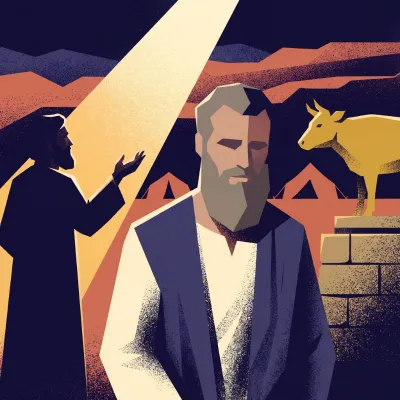
The Levites moved through the camp of Israel with swords in their hands, and by sundown three thousand people were dead. They walked past tent after tent, and at some point they walked past the one man who had melted the gold, shaped the idol with his own tool, built an altar before it, and announced the feast. They walked past Aaron, and not one sword touched him. Within months, the man who made the golden calf was standing before God in holy garments as the first high priest of Israel. How can that be right? Why was Aaron spared when three thousand others were not? In this episode, we explore the real answer the Bible gives, hidden in a single verse Moses did not speak until forty years later. We feel the fear and impatience at the foot of Sinai, look honestly at the full weight of Aaron's sin, and see that God's first sentence was against the whole nation. We discover that the Lord was angry enough with Aaron to destroy him, and that Aaron lived because Moses prayed for him by name. We also follow Moses as he "stood in the breach" and offered to be blotted out of God's book for the people, and why God refused. We trace Aaron's life after the calf: the sin offering for himself at his ordination, his failures with Miriam and at Meribah, and his death on Mount Hor. And we see how his story points to the one Mediator whose offer heaven did not refuse. Bible verses included in this episode: “Whoever is for the Lord, come to me.” (Exodus 32:26) “And the Lord was angry enough with Aaron to destroy him, but at that time I prayed for Aaron too.” (Deuteronomy 9:20) “Had not Moses, his chosen one, stood in the breach before him to keep his wrath from destroying them.” (Psalm 106:23) “But if not, then blot me out of the book you have written.” (Exodus 32:32) “Therefore he is able to save completely those who come to God through him, because he always lives to intercede for them.” (Hebrews 7:25) If you have failed under pressure and wondered whether God could ever use you again, look at what He did with Aaron. God's callings are not reserved for people with clean histories. They are given to forgiven people. Aaron did not know Moses was praying for him. If you belong to Jesus, He always lives to intercede for you. The sentence has already fallen on Him, and the God who kept a place for the man who made the golden calf has kept a place for you.
 30 mnt
Hard Bible Questions
Why God Still Sends His Angels to Watch Over You
The Bible reveals a powerful truth that our eyes cannot always see. God has not left His children to walk through danger alone. From Elisha surrounded by chariots of fire, to Hagar in the wilderness, to Elijah under the tree, to Daniel in the lions’ den, Scripture shows again and again that heaven is closer than we think. In this episode, we explore what angels really are according to the Bible. They are not decorations, myths, or gentle figures from greeting cards. They are powerful servants of the living God, sent by His command to minister to those who belong to Him. But angels are never the center of the story. The true comfort is not that angels are watching, but that God is the One who sends them. We’ll look at the unseen protection around Elisha, the promise of Psalm 91, the angel who found Hagar in the desert, the angel who cared for Elijah when he wanted to die, Peter’s miraculous prison escape, Daniel’s night among the lions, and the warning that angels must never be worshiped in place of God. This episode also answers a hard question: if angels watch over God’s people, why do believers still suffer? The Bible does not promise a life without pain. It promises that God’s people are never abandoned in it. Sometimes God delivers before the fire. Sometimes He meets us inside the fire. But His care never fails. Bible verses included in this episode: “Then the Lord opened the servant's eyes, and he looked and saw the hills full of horses and chariots of fire all around Elisha.” (2 Kings 6:17) “Are not all angels ministering spirits sent to serve those who will inherit salvation?” (Hebrews 1:14) “For he will command his angels concerning you to guard you in all your ways.” (Psalm 91:11) “Do not forget to show hospitality to strangers, for by so doing some people have shown hospitality to angels without knowing it.” (Hebrews 13:2) “My God sent his angel, and he shut the mouths of the lions. They have not hurt me.” (Daniel 6:22) “The angel of the Lord encamps around those who fear him, and he delivers them.” (Psalm 34:7) “See that you do not despise one of these little ones. For I tell you that their angels in heaven always see the face of my Father in heaven.” (Matthew 18:10) “See, I am sending an angel ahead of you to guard you along the way and to bring you to the place I have prepared.” (Exodus 23:20) God’s angels are real, but they are not the source of our hope. They point us back to the God who commands them, the Savior they obey, and the Father who watches over even the smallest and most forgotten of His children. You are not as alone as you feared. The God who watched over His people then still watches over His people now.
 35 mnt
Bible Books Explained
The Book of Exodus
The Book of Genesis ends with preservation and hope, but as you turn the page to Exodus, everything has changed. Four hundred years of silence have passed, and the family of Jacob is now a nation trapped in a crushing system of slavery. In this episode, we explore the mystery of the nameless king and the remembered promise. We examine why the Bible intentionally ignores the name of the mighty Pharaoh while immortalizing two humble midwives named Shiphrah and Puah. We follow the transformation of Moses from a prince of Egypt to a simple shepherd in the quiet desert of Midian. We uncover the technical reality of the ten plagues as a systematic divine war against the specific false gods of Egypt. From the blood of the Passover lamb to the parting of the sea, we see how God turns a terrifying dead end into a wide highway for rescue. Finally, we look at the Tabernacle as a miniature version of Eden, showing that the ultimate goal of the Exodus was not just physical freedom, but the glory of God living intimately among His people. This journey proves that God does not abandon His people in the mud pits of the world; He hears, He remembers, and He comes down to save. Scripture References "And God heard their groaning, and God remembered his covenant with Abraham, with Isaac, and with Jacob." (Exodus 2:24) "God said to Moses, 'I am who I am.' And he said, 'Say this to the people of Israel: I am has sent me to you.'" (Exodus 3:14) "For I will pass through the land of Egypt that night, and I will strike all the firstborn in the land of Egypt, both man and beast; and on all the gods of Egypt I will execute judgments: I am the Lord." (Exodus 12:12) "And Moses said to the people, 'Fear not, stand firm, and see the salvation of the Lord, which he will work for you today. For the Egyptians whom you see today, you shall never see again.'" (Exodus 14:13) "The Lord will fight for you, and you have only to be silent." (Exodus 14:14) "Now therefore, if you will indeed obey my voice and keep my covenant, you shall be my treasured possession among all peoples, for all the earth is mine." (Exodus 19:5) "Then the cloud covered the tent of meeting, and the glory of the Lord filled the tabernacle." (Exodus 40:34)
 31 mnt
Hard Bible Questions
Who Are The FALSE GODS In The BIBLE
Have you ever wondered why the Bible spends so much time talking about other gods? If there is only one Creator, why does the Old Testament feel like a constant war against strange and dark figures like Baal, Molech, and Dagon? Most of us grew up thinking these were just harmless statues or blocks of wood, but the Bible reveals a much more disturbing reality. In this episode, we unmask the secret war of the scriptures and look at the real, intelligent spiritual beings hiding behind the idols. We explore the mystery of the Divine Council and the rebellion of the sons of God who sought to enslave humanity. We journey through the history of these ancient enemies, from the violent storm god of Canaan to the horrifying devourer of children in the valley of Hinnom. We witness the systematic dismantling of the Egyptian gods during the plagues and see the humiliation of the fish god Dagon as he falls before the Ark of the Covenant. This episode also exposes the subtle idols we create today, like the golden calves of our own making and the modern master known as Mammon. By looking at these defeated powers, we discover the true nature of the cosmic battle for our hearts and the ultimate victory of the King of Kings. Scripture References "God presides in the great assembly; he renders judgment among the gods." (Psalm 82:1) "When the Most High gave the nations their inheritance, when he divided all mankind, he set up boundaries for the peoples according to the number of the sons of God." (Deuteronomy 32:8) "But there was no response, no one answered, no one paid attention." (1 Kings 18:29) "Do not set up any wooden Asherah pole beside the altar you build to the Lord your God." (Deuteronomy 16:21) "Do not give any of your children to be sacrificed to Molech, for you must not profane the name of your God. I am the Lord." (Leviticus 18:21) "They built high places for Baal in the Valley of Ben Hinnom to sacrifice their sons and daughters to Molech, though I never commanded—nor did it enter my mind—that they should do such a detestable thing and so make Judah sin." (Jeremiah 32:35) "On that same night I will pass through Egypt and strike down every firstborn of both people and animals, and I will bring judgment on all the gods of Egypt. I am the Lord." (Exodus 12:12) "When the people of Ashdod rose early the next day, there was Dagon, fallen on his face on the ground before the ark of the Lord! They took Dagon and put him back in his place." (1 Samuel 5:3) "But the following morning when they rose, there was Dagon, fallen on his face on the ground before the ark of the Lord! His head and hands had been broken off and were lying on the threshold; only his body remained." (1 Samuel 5:4) "Then they said, 'These are your gods, Israel, who brought you up out of the land of Egypt.'" (Exodus 32:4) "Then he took his firstborn son, who was to succeed him as king, and offered him as a sacrifice on the city wall. The fury against Israel was great; they withdrew and returned to their own land." (2 Kings 3:27) "On a hill east of Jerusalem, Solomon built a high place for Chemosh the detestable god of Moab, and for Molech the detestable god of the Ammonites." (1 Kings 11:7) "We will certainly do everything we said we would: We will burn incense to the Queen of Heaven and will pour out drink offerings to her... At that time we had plenty of food and were well off and suffered no harm." (Jeremiah 44:17) "He broke into pieces the bronze snake Moses had made, for up to that time the Israelites had been burning incense to it. It was called Nehushtan." (2 Kings 18:4) "A silversmith named Demetrius, who made silver shrines of Artemis, brought in a lot of business for the craftsmen there. He called them together... and said: 'You know, my friends, that we receive a good income from this business.'" (Acts 19:24 to 25) "Great is Artemis of the Ephesians!" (Acts 19:34) "No, but the sacrifices of pagans are offered to demons, not to God, and I do not want you to be participants with demons." (1 Corinthians 10:20) "The god of this age has blinded the minds of unbelievers, so that they cannot see the light of the gospel that displays the glory of Christ, who is the image of God." (2 Corinthians 4:4) "No one can serve two masters. Either you will hate the one and love the other, or you will be devoted to the one and despise the other. You cannot serve both God and money." (Matthew 6:24) "What do you want with us, Jesus of Nazareth? Have you come to destroy us? I know who you are—the Holy One of God!" (Mark 1:24) "And having disarmed the powers and authorities, he made a public spectacle of them, triumphing over them by the cross." (Colossians 2:15) "Then Jesus came to them and said, 'All authority in heaven and on earth has been given to me.'" (Matthew 28:18) "How long will you waver between two opinions? If the Lord is God, follow him; but if Baal is God, follow him." (1 Kings 18:21) This episode shows that the false gods are empty shadows compared to the True God. It challenges us to look past the modern idols of our time and serve the only Source of life who gave everything for us.
 43 mnt
Hard Bible Questions
Why the Sons of Moses Were Erased from History
Why did the sons of Moses disappear from history? In this episode, we explore one of the most shocking silences in Scripture. Moses stood before Pharaoh, parted the Red Sea, and spoke with God face to face, yet his own sons never rose to lead Israel. Instead, their family line faded into the background, and one grandson became linked to one of the darkest acts of idolatry in the Bible. This message uncovers the mystery, the warning, and the hope hidden in that forgotten lineage. Moses named his first son Gershom, saying, “I have become a foreigner in a foreign land.” (Exodus 2:22) He named his second son Eliezer, saying, “My father’s God was my helper; he saved me from the sword of Pharaoh.” (Exodus 18:4) Then came the terrifying moment on the journey back to Egypt, “At a lodging place on the way, the Lord met Moses and was about to kill him.” (Exodus 4:24) When God established the priesthood, He said, “Have Aaron your brother brought to you from among the Israelites, along with his sons Nadab and Abihu, Eleazar and Ithamar, so they may serve me as priests.” (Exodus 28:1) Later, judgment fell on Aaron’s sons, “So fire came out from the presence of the Lord and consumed them, and they died before the Lord.” (Leviticus 10:2) In the time of the Judges, the Bible says, “In those days Israel had no king; everyone did as they saw fit.” (Judges 17:6) Then comes the scandalous reveal, “There the Danites set up for themselves the idol, and Jonathan son of Gershom, the son of Moses, and his sons were priests for the tribe of Dan until the time of the captivity of the land.” (Judges 18:30) God had already commanded, “You shall not make for yourself an image in the form of anything in heaven above or on the earth beneath.” (Exodus 20:4) Yet generations later, the descendants of Moses were not completely lost. Scripture says, “The sons of Gershom: Shebuel was the first.” (1 Chronicles 23:16) And later, “Shebuel, a descendant of Gershom son of Moses, was the official in charge of the treasuries.” (1 Chronicles 26:24) Jesus Himself reminds us, “Your Father, who sees what is done in secret, will reward you.” (Matthew 6:4) And the greater hope is found here, “Jesus has been found worthy of greater honor than Moses, just as the builder of a house has greater honor than the house itself.” (Hebrews 3:3) This episode is a warning that faith is not inherited by bloodline, a reminder that hidden service still matters to God, and a call to fix our eyes not on human legacy, but on Jesus, the true Son who will never be erased.
 34 mnt
Words of Jesus
What did Jesus mean when He said “I AM”
What did Jesus mean when He said, “I am”? In this episode, we explore why these two words carry such enormous weight in Scripture. From the burning bush in Exodus to the temple courts in John’s Gospel, this study traces how the divine name reveals God’s eternal nature, faithful presence, and saving power, and why Jesus’ use of “I am” became one of the clearest and most powerful statements about His identity. When God revealed His name to Moses, He said, “I am who I am… Say this to the people of Israel: ‘I am has sent me to you’” (Exodus 3:14) Later, Jesus spoke these words in the temple, “Before Abraham was, I am” (John 8:58) The response was immediate, “So they picked up stones to throw at him” (John 8:59) Isaiah records the Lord saying, “That you may know and believe me and understand that I am he. Before me no god was formed, nor shall there be any after me. I, even I, am the Lord, and besides me there is no savior” (Isaiah 43:10 to 11) Jesus also told His disciples, “I am telling you this now, before it takes place, that when it does take place you may believe that I am he” (John 13:19) And in the garden, when those who came to arrest Him asked for Jesus of Nazareth, “Jesus said to them, ‘I am he’… When Jesus said to them, ‘I am he,’ they drew back and fell to the ground” (John 18:5 to 6) Throughout John’s Gospel, Jesus also said, “I am the bread of life” (John 6:35) “I am the light of the world” (John 8:12) “I am the good shepherd” (John 10:11) “I am the resurrection and the life” (John 11:25) “I am the way, and the truth, and the life” (John 14:6) And “I am the true vine” (John 15:1) This episode reflects on what these words reveal about Jesus, His authority, His nearness, and His saving work. If Jesus truly bears the name “I am,” then He is not only a teacher pointing to God, but the One who reveals God’s life, truth, and mercy in full view.
 30 mnt
Words of Jesus
“I am the Light of the World”
What did Jesus mean when He said, “I am the Light of the world”? In this episode, we explore the full meaning of one of Jesus’ most powerful statements, how it connects to Israel’s story, and what it means to follow His light today. This message looks at how Jesus reveals truth, leads people out of darkness, and gives the light of life to those who follow Him. Jesus said, “I am the light of the world. Whoever follows me will never walk in darkness, but will have the light of life” (John 8:12) Later, Jesus said, “While I am in the world, I am the light of the world” (John 9:5) The Scriptures say of God’s guidance to Israel, “By night in a pillar of fire to give them light” (Exodus 13:21) Isaiah foretold, “The people walking in darkness have seen a great light” (Isaiah 9:2) And God said, “I will also make you a light for the Gentiles, that my salvation may reach to the ends of the earth” (Isaiah 49:6) The Gospel of John also says of Jesus, “In him was life, and that life was the light of men. The light shines in the darkness and the darkness has not overcome it” (John 1:4 to 5) This episode reflects on how Jesus is not merely a teacher of truth, but the Light Himself, the One who reveals God, guides our steps, and brings hope where darkness has ruled. It is an invitation to understand His words more deeply and to consider what it means to walk in His light.
 42 mnt
Words of Jesus
“I am the way, the truth, and the life”
What did Jesus mean when He said, “I am the way, the truth, and the life”? In this episode, we walk carefully through one of the most important statements Jesus ever made. These words are not just titles placed beside His name. They reveal who He is, how He brings people to the Father, and why peace, truth, and eternal life are found in Him alone. We explore how Jesus is the way who brings us to God, the truth who reveals the Father, and the life who gives hope stronger than death. Jesus said, “I am the way, the truth, and the life. No one comes to the Father except through Me.” (John 14:6) The Gospel of John also says, “In Him was life, and the life was the light of men.” (John 1:4) And it says, “And the Word became flesh and dwelt among us, and we beheld His glory, the glory as of the only begotten of the Father, full of grace and truth.” (John 1:14) Jesus declared, “Before Abraham was, I AM.” (John 8:58) God said to Moses, “I AM WHO I AM.” (Exodus 3:14) Jesus also said, “I and My Father are one.” (John 10:30) And when Philip wanted to see the Father, Jesus answered, “He who has seen Me has seen the Father.” (John 14:9) Jesus spoke these words of hope as well, “I am the resurrection and the life. He who believes in Me, though he may die, he shall live.” (John 11:25) And the apostles later proclaimed, “Nor is there salvation in any other, for there is no other name under heaven given among men by which we must be saved.” (Acts 4:12) This episode is a deep look at the heart of Jesus’ claim and what it means for faith, assurance, and daily life. If you have ever felt lost, confused, or spiritually tired, these words of Jesus still stand with strength and mercy today.